Learn the words first
Twenty-three words about the spiritual life, with how to say them, what they mean, and a sentence to try. Words like mystic, devotion and surrender do most of the work on this page. Listen and Repeat practises them one at a time. The speaking drill opens the microphone and checks your pronunciation.
二十三个谈论心灵生活的词,附发音、释义和例句。神秘者、虔诚、交托这类词承载了本页大部分内容。点"跟读"可逐词练习,点"口语练习"会打开麦克风检查发音。
คำศัพท์ยี่สิบสามคำสำหรับพูดถึงชีวิตทางจิตวิญญาณ พร้อมคำอ่าน ความหมาย และประโยคให้ลองพูด คำอย่าง mystic, devotion และ surrender คือหัวใจของหน้านี้ กดฟังแล้วพูดตามเพื่อฝึกทีละคำ หรือเปิดไมโครโฟนเพื่อตรวจการออกเสียง
English took its spiritual words from many old languages. Some come from Greek, some from Latin. A few, like guru and darshan, came straight from Sanskrit and were never translated. Learn these twenty-three words first, and the four stories below will be easy to read.
Listen & Repeat reads each word and then waits for you to say it back. Speaking drill turns on the microphone and checks if your words are clear. On each card, say it reads the word, and tell me more opens a longer explanation and a sentence to try.
🎤 Speaking drill — set 1 of 5
Press the microphone, then say all the words in the set out loud.
- English borrowed guru and darshan from Sanskrit without translating them. What spiritual words in your language can English not translate? Choose one and try to explain it in English anyway.
- Surrender is a war word — an army surrenders. Why do you think the spiritual life uses a war word for one of its most important ideas?
- Choose the one word on this list that is hardest for you to believe in. Say why, in two sentences.
The woman who fed her demons
Machig Labdrön was a Tibetan yogini, born around 1055. She worked as a paid reader of Buddhist texts, married, and had children. Then she created Chöd — its name means "cutting". A Chöd practitioner goes at night to frightening places. She imagines giving her own body as food to demons. In this way she cuts the fear and self-importance that the demons stand for. It is the one famous Buddhist practice created by a woman, and monks and nuns still do it today.
玛吉拉准是一位约生于1055年的西藏瑜伽女。她最初以诵经为业,结婚生子,后来创立了"施身法"(断法)——名字的意思是"斩断"。修行者夜里前往可怖之地,观想将自己的身体布施给魔众为食,以此斩断魔所代表的恐惧与我执。这是唯一一个由女性创立而闻名的佛教法门,至今仍有僧尼在修。
มาจิก ลับดรอน เป็นโยคินีชาวทิเบต เกิดราวปี ค.ศ. 1055 เริ่มจากอาชีพอ่านคัมภีร์ แต่งงานมีลูก แล้วจึงสร้างการปฏิบัติชื่อ "เชอ" ที่แปลว่า "ตัด" ผู้ปฏิบัติจะไปยังที่น่ากลัวตอนกลางคืน แล้วจินตนาการถวายร่างกายตนเป็นอาหารแก่มาร เพื่อตัดความกลัวและความยึดตัวตนที่มารเป็นตัวแทน นี่คือการปฏิบัติทางพุทธที่มีชื่อเสียงเพียงหนึ่งเดียวที่ผู้หญิงเป็นผู้สร้าง และยังปฏิบัติกันถึงทุกวันนี้
Most religious practices ask you to move toward good things — light, peace, kindness. Machig Labdrön built one that walks straight toward fear. Her one-line instruction for it may be the most quoted sentence any Tibetan woman ever spoke.
Machig Labdrön was born in the Tibetan region of Labchi around 1055. As a girl she was famous for reading huge Buddhist texts very fast. Rich families paid her to read in their houses, because people believed a sacred text blesses the house where it is read. She studied with the Indian teacher Dampa Sangye. She took a partner and had children. Then, in her forties, she became a wandering yogini and teacher.
That last detail matters. Tibetan religious life was built around monasteries, and monasteries were built around men. She was a married mother with no monastery. She still became one of the most respected teachers of her century — against the whole system of her time.
Read the painting
A thangka is written, not just painted — every colour, hand and object is a sentence. Tap the numbers to read this one.
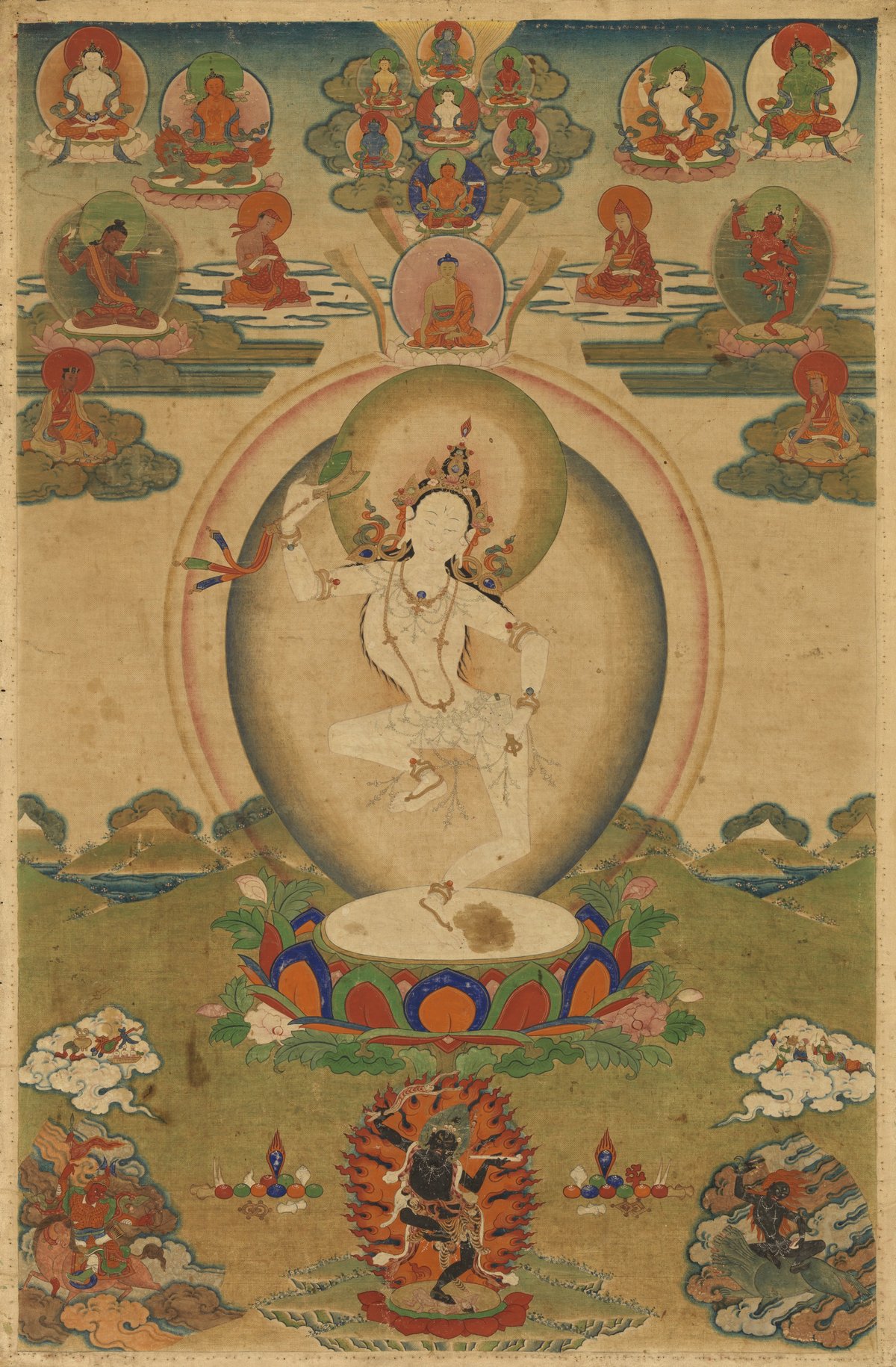
Eleven sentences in one picture
Tap a numbered mark on the painting — start with ① her white body — or step through them with the buttons below.
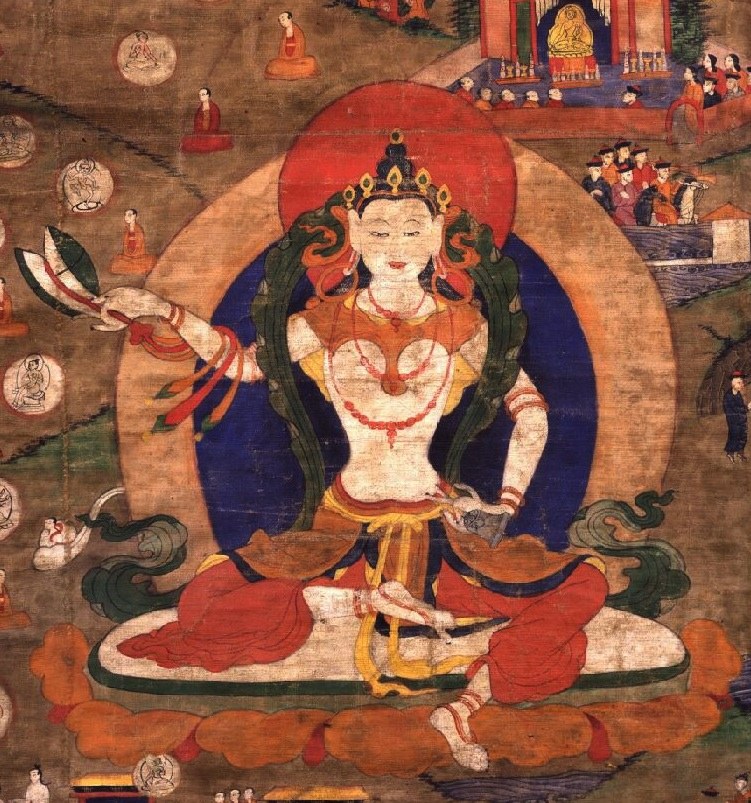
The practice she created is called Chöd — in Tibetan, "cutting". You do it alone, at night, in the places people fear most: cemeteries, burial grounds, empty mountain passes. The practitioner sings and plays a drum. Then she does something that sounds impossible: she imagines her own body being cut up, cooked, and served as a meal — to the demons.
In Chöd, a demon is not a monster in the dark. It is anything you run from: fear, anger, shame, sickness, the voice that says you are not good enough. Machig's discovery was this: fighting these things feeds them. What you fight grows stronger. But if you face them with kindness, they lose their power. You cannot be chased by something you have invited to dinner.
The offered body matters too. The thing we protect most is me — my body, my comfort, my importance. In your mind, you offer exactly that. This loosens the grip of the ego — which is what all Buddhist practice tries to do. Chöd simply does it in one dramatic move, in the dark, with a drum.
Tibetan tradition says Indian scholars heard of Machig's fame and sent examiners to test her. She answered so well, the story says, that her teaching became the only Buddhist practice to travel from Tibet back to India — against the current that first carried Buddhism into Tibet. Historians cannot confirm the journey. But part of the story can be checked another way: Chöd spread into every school of Tibetan Buddhism. Almost no single practice does that.
Tradition also gives her past lives, dreams that told the future, and a light that filled the house when she was born. Holy biographies do this for everyone they love. The parts you can still check are the practice, the texts, and the lineage of teachers from her to today.
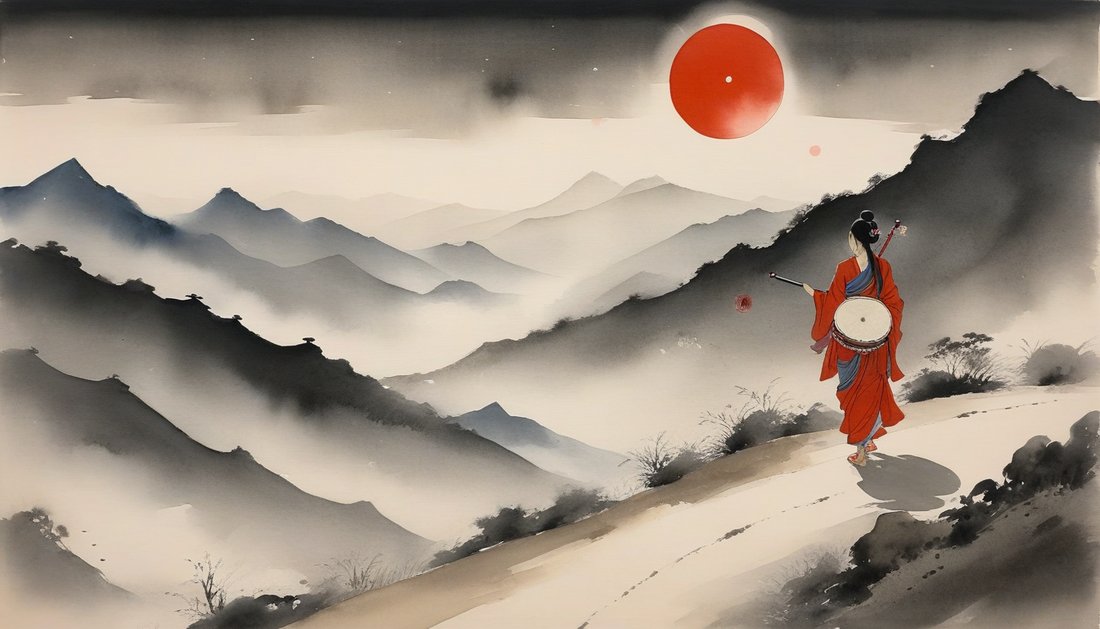
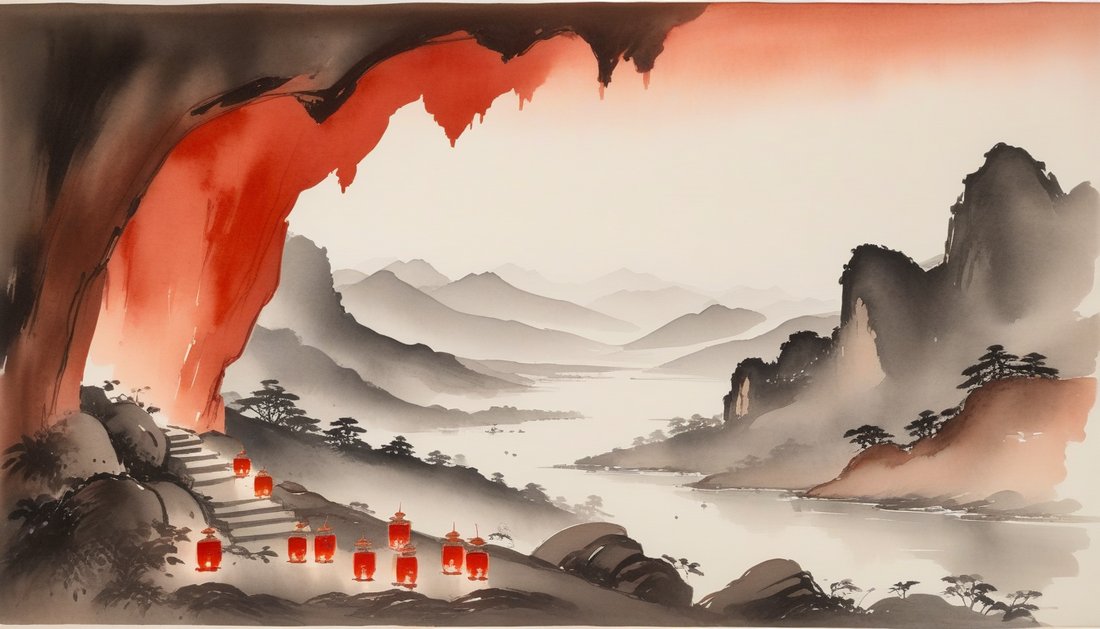
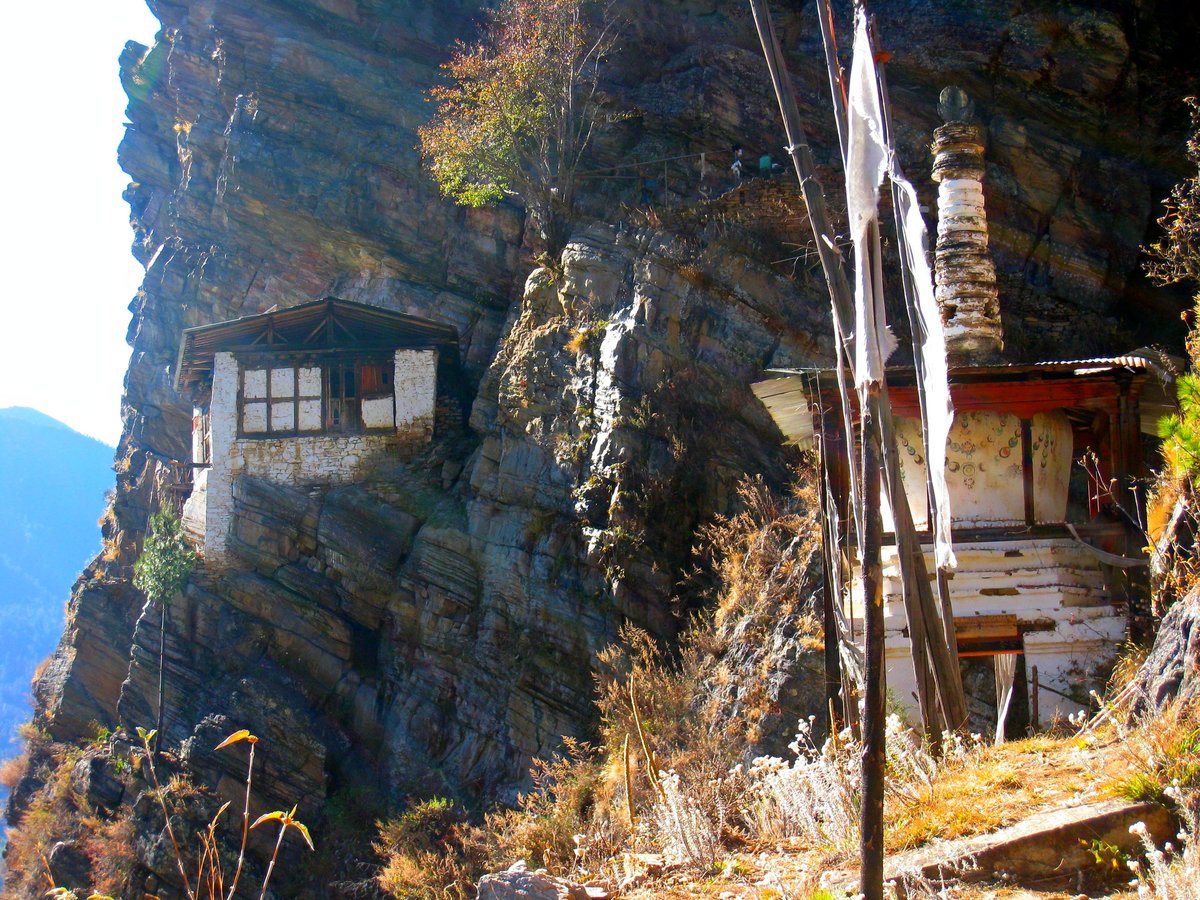
Machig lived to about ninety-four, teaching from a cave at Zangri Khangmar — "the red house on the copper mountain". Her practice outlived the Tibetan empire. It survived the near-destruction of Tibetan religion in the twentieth century. Today it is taught on every continent. In the West, the American teacher Tsultrim Allione gave the method a modern name: feeding your demons. The drum is optional. The dinner is not.
- Name one "demon" in your own life — not a monster, but something you avoid. What would it mean to feed it instead of fighting it?
- Machig's practice is done alone, at night, in frightening places. Modern life mostly removes fear on purpose. Have we lost anything by making our lives so safe?
- Machig was a married mother in a religious world built for monks. Who in your country succeeded in a system that was not built for them — and what did it cost?
- The painting above shows her naked, and the tradition calls that sacred (mark ②). A censor would call the same picture indecent. A modern critic might say a female master is taking the female body back from shame. A doubter might ask how it is different from pornography. Which reading do you think is most honest — spiritual symbol, taking the body back, pornography, or something else? And what exactly decides it: the artist's intention, the viewer's reaction, the context around it — or something in the picture itself?
The poet two religions refuse to share
Lal Ded was born near Srinagar in Kashmir around 1320. She was married at twelve into a cruel house. In her twenties she walked out. She spent the rest of her life wandering and singing short four-line poems called vakhs. The poems say God is not in the temple or the mosque, but inside you. Hindus call her Lalleshwari, and Muslims call her Lal Arifa. Seven hundred years later, both religions still say she is theirs — and her poems are the start of Kashmiri literature.
拉尔·黛德约1320年生于克什米尔斯利那加附近。十二岁嫁入刻薄的婆家,二十多岁时离家出走,此后终生流浪,吟唱一种四行短诗"瓦克"。诗中说,神不在庙里也不在清真寺里,而在你心中。印度教徒称她拉莱什瓦丽,穆斯林称她拉尔·阿里法——七百年后两个宗教仍在争认她,她的诗也是克什米尔文学的起点。
ลัล เดด เกิดใกล้เมืองศรีนครในแคชเมียร์ราวปี 1320 แต่งงานตอนอายุสิบสองเข้าบ้านที่ใจร้าย พออายุยี่สิบกว่าจึงเดินออกมา แล้วใช้ชีวิตที่เหลือเร่ร่อนขับร้องบทกวีสั้นสี่บรรทัดที่เรียกว่า "วาข์" บทกวีบอกว่าพระเจ้าไม่ได้อยู่ในวัดหรือมัสยิด แต่อยู่ในตัวเรา ชาวฮินดูเรียกเธอว่าลัลเลศวรี ชาวมุสลิมเรียกว่าลัล อารีฟา — เจ็ดร้อยปีผ่านไป สองศาสนายังคงถือว่าเธอเป็นของตน
Some teachers build practices. Some build monasteries. Lal Ded built nothing at all. She left behind about a hundred and forty short poems — and the poems have lasted longer than buildings.
Lal Ded was born to a Brahmin family near Srinagar around 1320. She was married at about twelve, like most girls of her time. The house was unkind. The most famous story says her mother-in-law put a stone in her bowl and covered it with a thin layer of rice. The girl looked fed, and stayed hungry. Lal Ded never complained. A village saying still remembers it: "whether they kill the big sheep or the small one, Lalla will get her stone."
In her mid-twenties she walked out — out of the marriage, out of the house, out of the whole plan for a woman's life in her time. She became a wandering singer. She studied with a Shaivite teacher named Sed Bayu. Later, tradition says, she met the Sufi saints who were arriving in Kashmir.
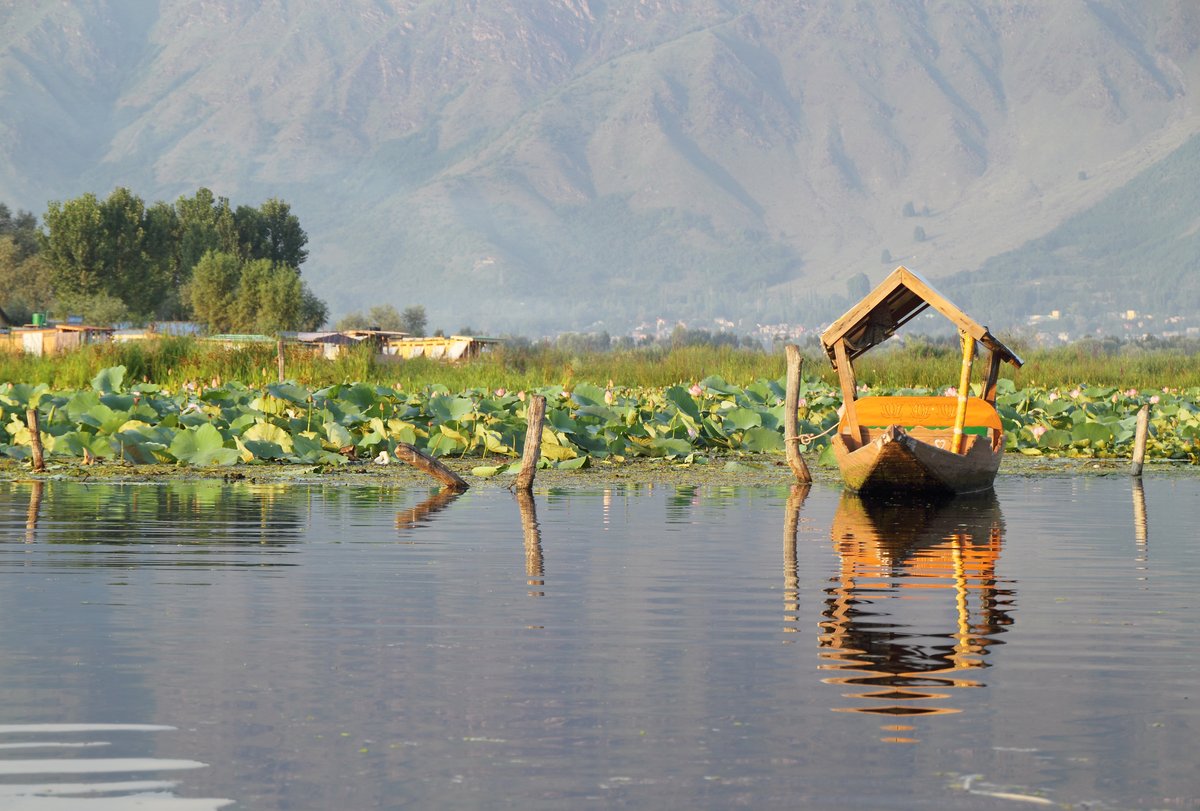
She sang vakhs — "spoken things" — poems of four lines in Kashmiri, the language of farmers, not Sanskrit, the language of scholars. That choice is half of why she matters. Her poems are the oldest literature in the Kashmiri language. For seven hundred years, people who never read a book have known her lines by heart.
No one could have found the secret by trying.
Then I turned inward — and there it was:
the wine-shop was in my own house. Lal Ded · vakh, 14th century (English rendering)
The vakhs repeat one idea in a hundred ways: you will not find God by going somewhere — not the temple, not the mosque, not the holy river. The idol is stone, she sings, and the temple is stone. What you are looking for is awareness itself, and you already carry it. The search fails because the searcher is the treasure.
Singing this was not safe. It went against the priests of her own religion, and against the clerics of the new one arriving in Kashmir. In the end, both decided she was theirs.
How a vakh works
A vakh has four short lines. It is made to be spoken, not read. Lal Ded often signs her own name inside the poem — many begin "I, Lalla". And she builds the poems from things she handled every day: thread, boats, clay cups, rice. The biggest ideas arrive inside the smallest objects. That is her style. It is also why the poems were easy to remember for seven hundred years. Here are two more, in simple English:
Searching, I passed the day and the night.
Then I saw the wise one — in my own house.
That was my lucky star, and my lucky moment. Lal Ded · vakh 3 in Grierson & Barnett, 1920 (simplified rendering)
The temple is a lump of stone.
Top to bottom, it is all one stone.
Learned priest — what is it you are praying to? Lal Ded · vakh 17 in Grierson & Barnett, 1920 (simplified rendering)
Hindus remember her as Lalleshwari, a Shaivite yogini. Kashmiri Muslims remember her as Lal Arifa, a Sufi saint who, tradition says, blessed the great Nund Rishi when he was a baby. Legend adds that she wandered, singing and dancing, with no clothes at all. Why? She had decided that people who could not see God had no eyes worth dressing for. And the story of her death says her body disappeared — so each community got a shrine, and there was nothing left to fight over.
Each of those stories is doing a job: each community pulled the poet toward its own house. The poems themselves refuse to move either way. That is probably the point.
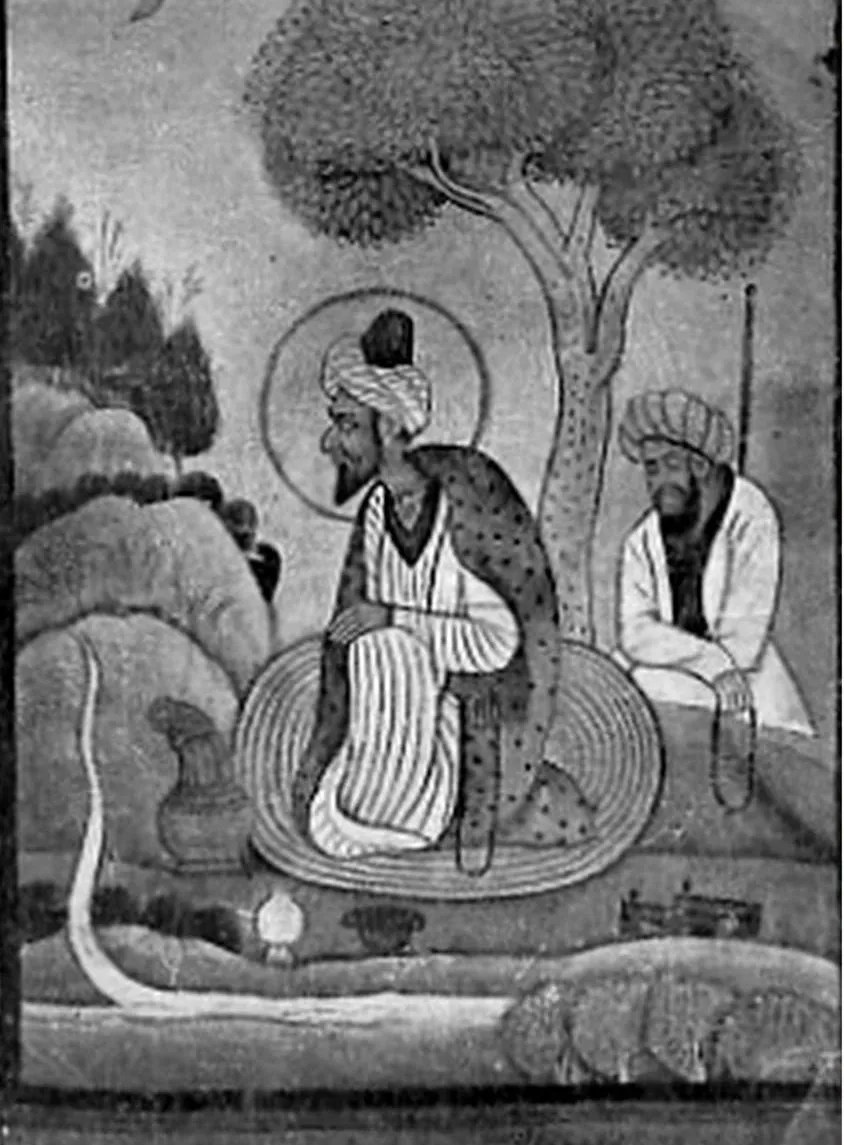
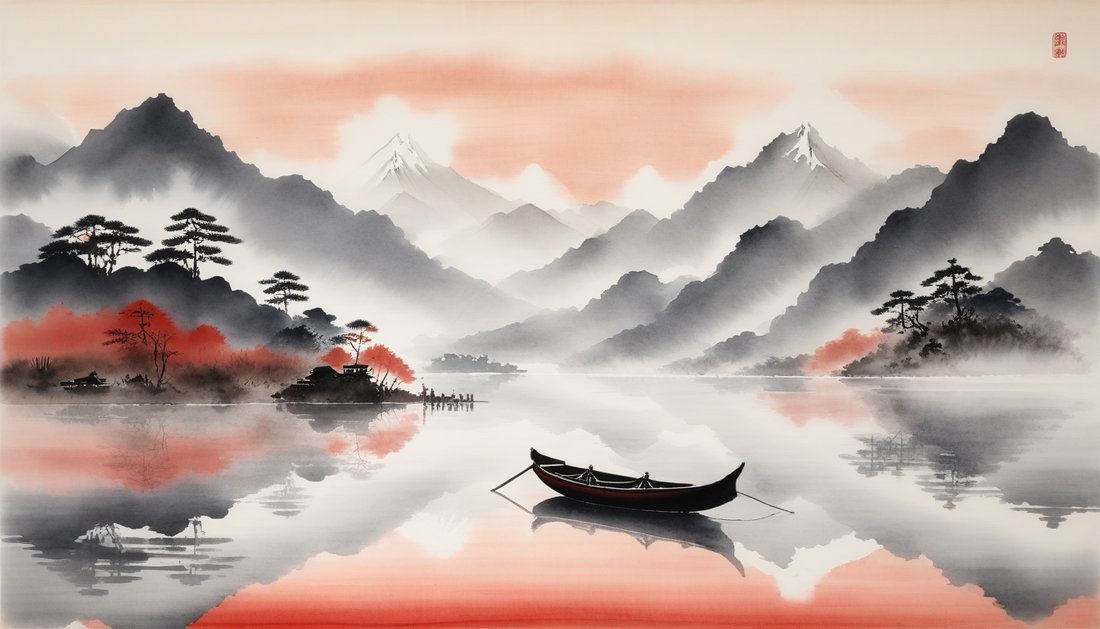
Not every vakh is a victory. Some are tired. In her most famous sad one, she is a boat on the water country of Kashmir — and the boat is in trouble:
I am towing my boat across the sea.
Will God hear me, and bring me across?
Like water in a cup of unbaked clay,
I am slowly leaking away. I want to go home. Lal Ded · the boat vakh, after Grierson & Barnett, 1920 (simplified rendering)
Look at what the poem is made of: thread, a boat, a cheap clay cup. A woman's working day. The thread is too weak for the job, and the cup cannot hold its water. She is talking about her own life — and about yours. Seven centuries later, no reader needs a footnote.
Shiva lives in all that is, everywhere — then do not divide a Hindu from a Muslim.
Seven hundred years later, that valley has seen long conflict between the two communities that share her. Her line has never stopped being quoted. That tells you it has never stopped being needed.
- Lal Ded sang in Kashmiri, the everyday language, instead of Sanskrit, the scholars' language. What changes when a big idea moves into ordinary words? What is gained — and is anything lost?
- Two religions both claim her. Is that a compliment to her, a failure to listen to her, or both?
- "The wine-shop was in my own house." Say this vakh in your own words, as if explaining it to a ten-year-old.
The teacher who never had a teacher
Anandamayi Ma was born Nirmala Sundari in a Bengal village in 1896. She had almost no school and never took a guru. In 1922 she gave herself initiation — she was teacher and student in one ceremony. Her name means "the joy-filled mother". She said she acted only on kheyala, a divine impulse that comes by itself, and that she had been the same since before she was born. When she died in 1982 she had ashrams across India, and Yogananda's famous book had carried her name around the world.
阿南达玛依·玛1896年生于孟加拉乡村,本名尼尔玛拉·孙达丽。她几乎没上过学,也从未拜师——1922年她为自己授了皈依礼,一人兼任师父与弟子。她的名字意为"充满喜悦之母"。她说自己只依"凯亚拉"——一种自发的神圣冲动——行事,并说自己从出生之前起就始终如一。到1982年去世时,她的道场遍布印度,尤迦南达的《一个瑜伽行者的自传》更把她的名字带到了全世界。
อานันทมยีมา เกิดในหมู่บ้านแคว้นเบงกอลปี 1896 ชื่อเดิมว่านิรมลา ซุนดารี แทบไม่ได้เรียนหนังสือและไม่เคยมีคุรุ — ปี 1922 เธอทำพิธีรับศีลให้ตัวเอง เป็นทั้งครูและศิษย์ในพิธีเดียว ชื่อของเธอแปลว่า "มารดาผู้เปี่ยมด้วยความปีติ" เธอบอกว่าทำทุกอย่างตาม "เขยาล" คือแรงดลใจอันศักดิ์สิทธิ์ที่เกิดขึ้นเอง และว่าเธอ "เหมือนเดิมเสมอ" ตั้งแต่ก่อนเกิด เมื่อถึงปี 1982 อาศรมของเธอมีอยู่ทั่วอินเดีย
Every tradition on this page works by passing the teaching on: a teacher gives it to a student, and the student becomes a teacher. Anandamayi Ma is the famous exception — a link in the chain with no link before it.
She was born Nirmala Sundari in 1896 in Kheora, a village in East Bengal (now Bangladesh). Her family was poor, and she had about two years of school. At twelve she was married to Ramani Mohan Chakrabarti. Everyone says she was a quiet, capable village wife — until her mid-twenties. Then deep spiritual states, lasting hours, began to interrupt her housework. Neighbours told her husband to call an exorcist. Instead, he became her first and most devoted follower.
In 1922, on a full-moon night, she gave herself initiation — a ceremony that normally needs a guru. She said later that she played both parts at once. Over the next sixty years she never started an organisation. Still, she became perhaps the most loved holy woman of twentieth-century India. About twenty-five ashrams grew up around her. Her visitors went from villagers to Gandhi's circle and Prime Minister Nehru's family. She died in 1982. Her shrine at Kankhal, near Haridwar, is a place of pilgrimage today.
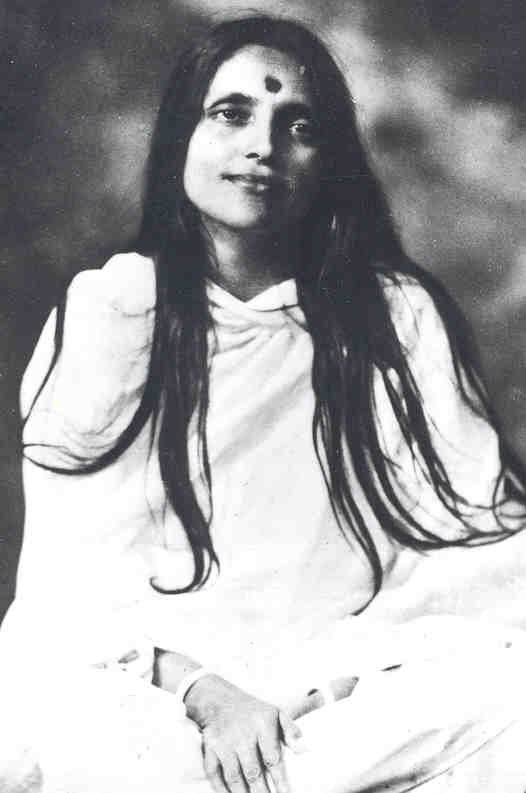
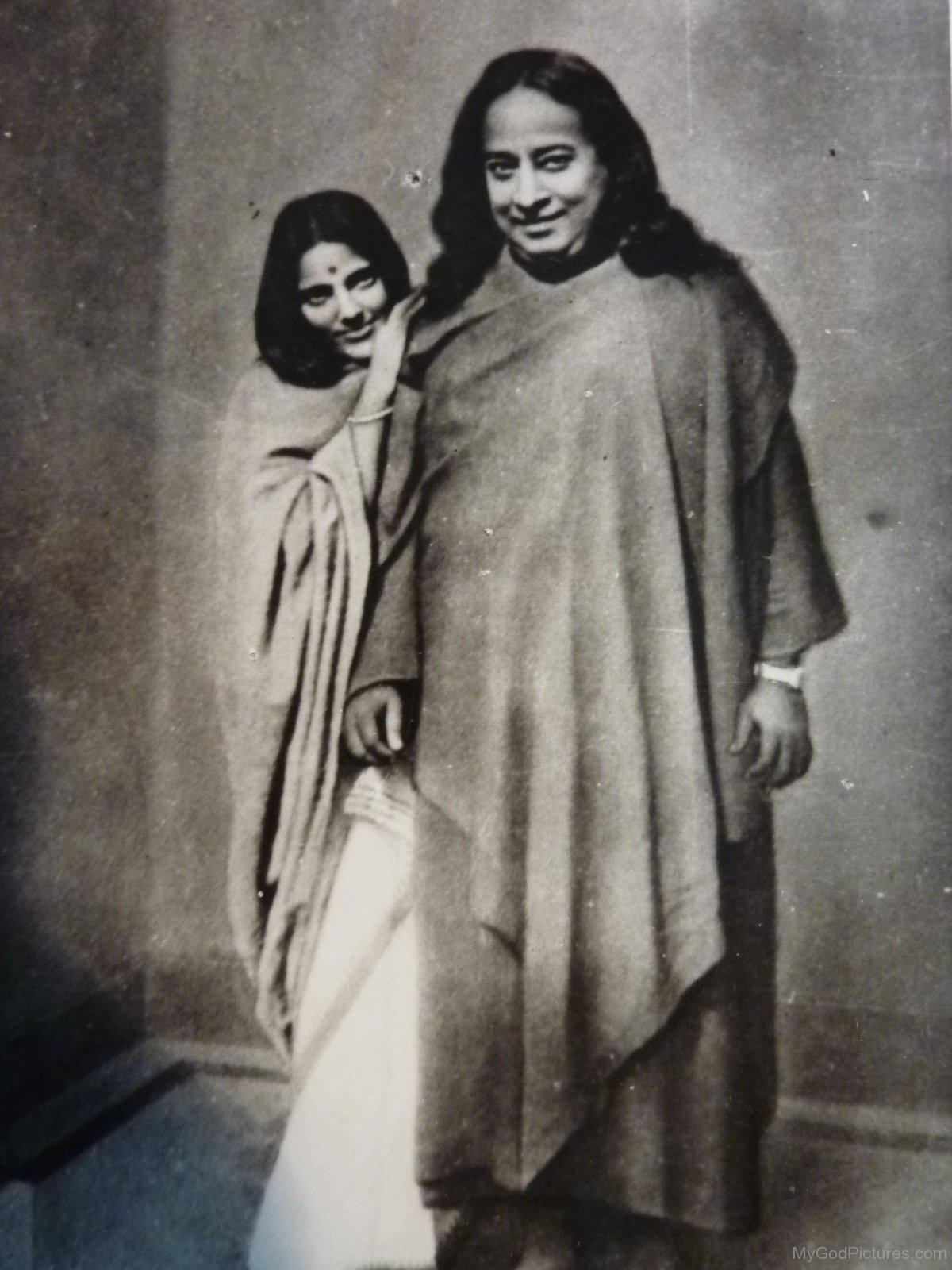
Her famous name was given in 1925 by a devotee who watched her deep in joy: Anandamayi Ma, "the joy-filled mother". The yogi Paramahansa Yogananda visited her and gave her a whole chapter of his Autobiography of a Yogi — the book that carried her, and half of Indian spirituality, to the West.
When people asked why she did anything — travel, sing, stay silent for months, eat only what others fed her — she gave one answer: kheyala, a Bengali word for a flash of will that comes by itself. She said she had no plans, no decisions, and no wishes of her own. The body moved when the kheyala came, like a leaf when the wind comes. Her teaching worked the same way: she never prepared talks, never wrote a book, and answered each question as if she was finding the answer for the first time.
Under it all was one claim, repeated for sixty years: there is only one Self, and you are it. "All is He, and all is one." The search for God, she said, is "the search of the I for the I". Everything else she said was that one sentence, resized for whoever was asking.
People asked who she was — a saint? an avatar? God? Her famous answer: she was the same before she was born, the same as a child, the same now, and would be the same after death — consciousness itself, wearing a body the way you wear a coat. Devotees heard this as a plain claim to divinity. Stories gathered around her: illnesses she took from others, yoga positions she performed without being taught, mantras in languages she never learned.
None of that can be checked. Here is what can: a village woman with no school held her own with scholars and heads of state for sixty years. And in all that time, no scandal — about money, power or conduct — ever attached to her name. For a public spiritual life of that length, historians note, this alone is remarkable.
She followed no method herself, but she gave visitors a very practical one. Set a fixed time for meditation every day, she said, and keep it — the way a child is made to sit and study. Sit still. Quietly repeat one of God's names, or simply watch the breath come and go. When the mind runs away, bring it back gently, without anger. Do not wait for a special feeling: the daily habit is the practice. Keep it long enough, she promised, and remembering God becomes part of your nature. The rest of the day counts too — do your ordinary work, but do it as service to Him.
She never studied philosophy. Still, her words flow from two old Indian rivers. "All is He, and all is one" is the heart of Advaita Vedanta — the teaching that there are not two things, only one Self. And the path she gave — repeating and loving God's name — is bhakti, the way of devotion that Bengal has sung for centuries. Scholars still discuss how a village woman carried both so lightly. She never discussed it at all.
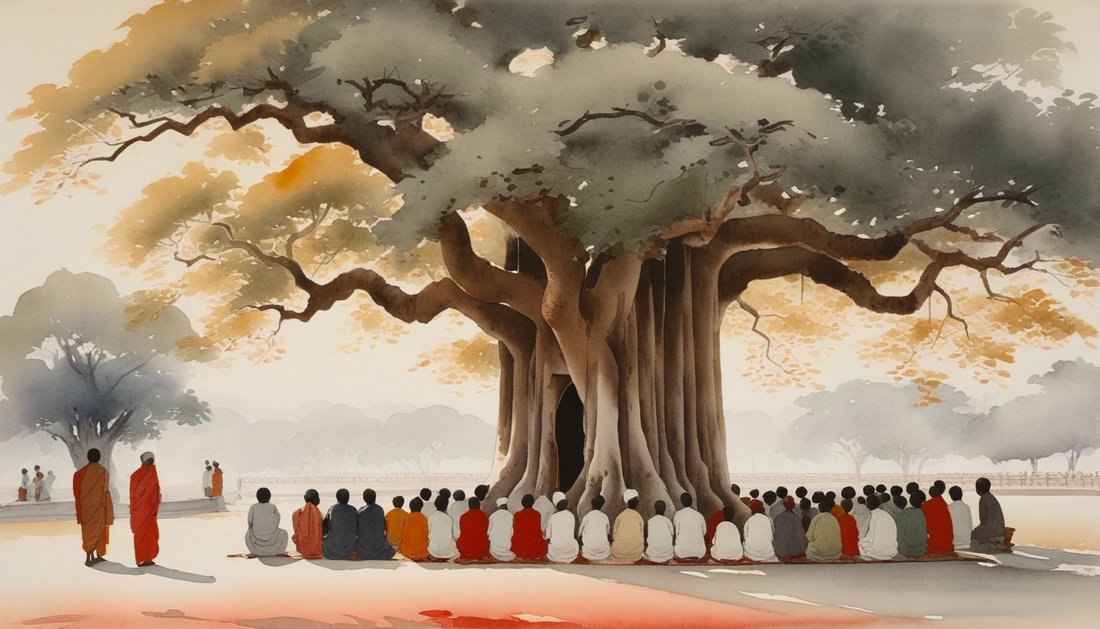
- Anandamayi Ma had no teacher, no school and no plan — the opposite of how we are told success works. What does her story say about what teachers are really for?
- Kheyala means acting on a spontaneous impulse rather than a decision. When did you last do something important without deciding it? How did it go?
- Her husband was expected to send his "mad" wife to an exorcist. He became her student instead. What would you have done in his place, honestly?
The teacher who says nothing at all
Mother Meera was born Kamala Reddy in a south Indian village in 1960 and has lived since the 1980s in Thalheim, a small German town. Her teaching is darshan: thousands of visitors sit in complete silence, and one by one she holds each person's head in her hands and looks into their eyes for a few seconds. No talk, no fee, no joining. Devotees say she transmits a divine light; she tells visitors to stay in their own religion. She is the only teacher on this page you could still meet.
梅拉母亲1960年生于南印度乡村,本名卡玛拉·雷迪,1980年代起定居德国小镇塔尔海姆。她的教导方式是"达善":成千上万的来访者静默而坐,她逐一用双手捧住每个人的头,注视对方眼睛几秒钟。不讲话,不收费,不必入教。信众说她传递一种神圣之光;她则让来访者留在自己原本的宗教里。她是本页唯一一位你如今仍能见到的老师。
มาเธอร์ มีรา เกิดปี 1960 ในหมู่บ้านทางอินเดียใต้ ชื่อเดิมกมลา เรดดี ตั้งแต่ทศวรรษ 1980 อาศัยอยู่ที่ทาลไฮม์ เมืองเล็ก ๆ ในเยอรมนี การสอนของเธอคือ "ทรรศนะ" ผู้มาเยือนหลายพันคนนั่งเงียบสนิท แล้วเธอจะจับศีรษะแต่ละคนไว้ในมือ และมองตาอยู่ไม่กี่วินาที ทีละคน ไม่มีการพูด ไม่เก็บเงิน ไม่ต้องเข้าสังกัด ศิษย์บอกว่าเธอส่งผ่านแสงศักดิ์สิทธิ์ ส่วนเธอบอกให้ทุกคนอยู่ในศาสนาเดิมของตน
Machig left a practice. Lal Ded left poems. Anandamayi Ma left an answer. Mother Meera's teaching, night after night for forty years, is a few seconds of silence for each person. That makes her either the easiest teacher on this page to wave away — or the hardest one to explain.
She was born Kamala Reddy in 1960 in Chandepalle, a farming village in Andhra Pradesh, in southern India. As a child she often fell into long, deep quiet states. Her uncle, Balgur Venkat Reddy, became sure she was an embodiment of the Divine Mother, and gave his life to her. Through devotees she travelled to Germany in the early 1980s. She settled in Thalheim, a village near Limburg — and she has stayed, married quietly, and held darshan ever since.
The facts of her operation are unusual for her world, and easy to check: darshan is free. There is no membership. No belief is required. No organisation recruits in her name. And she has founded schools in India — the Mother Meera schools — paid for by her charity. Tens of thousands of people have come to her evenings in Germany and on her travels.
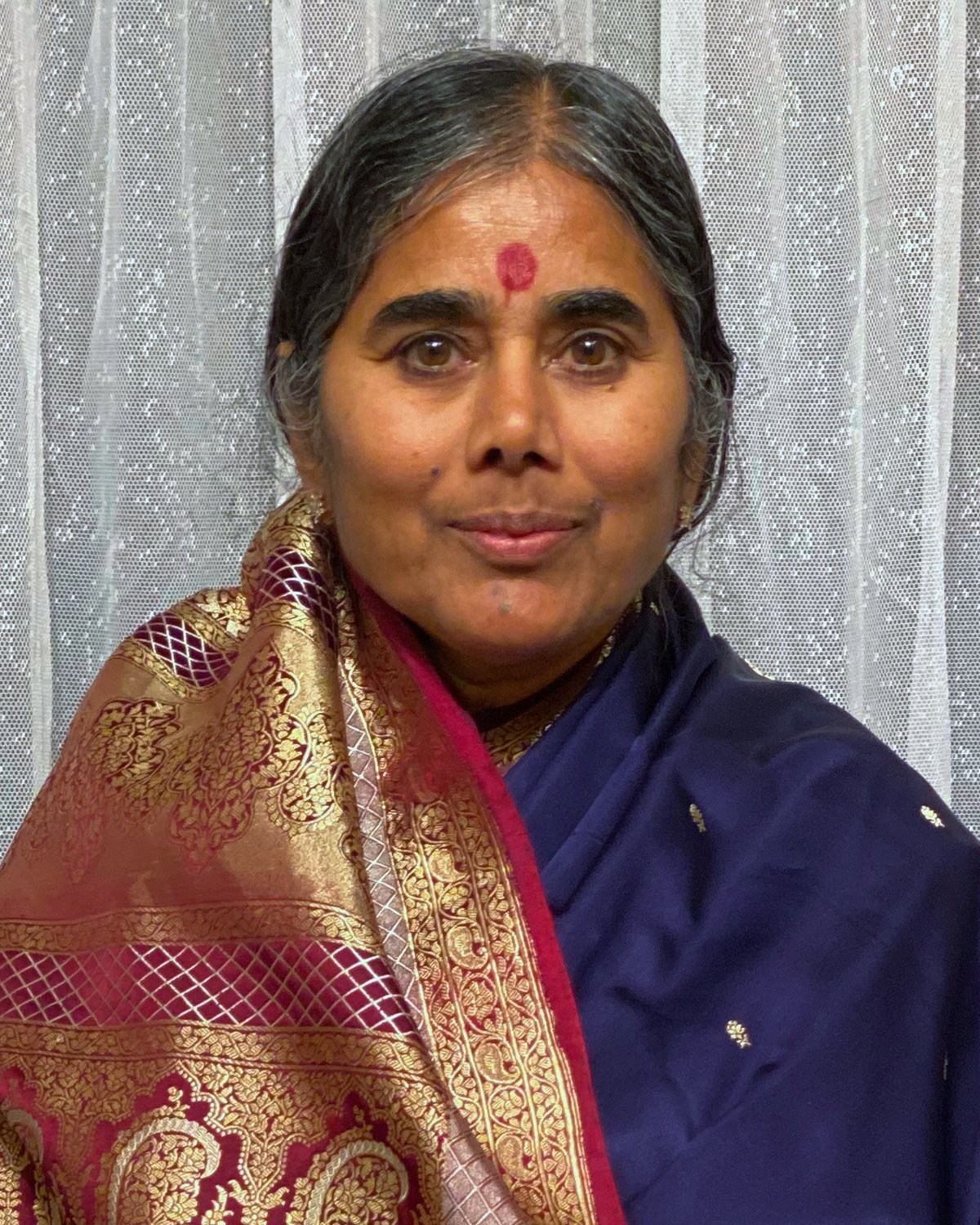
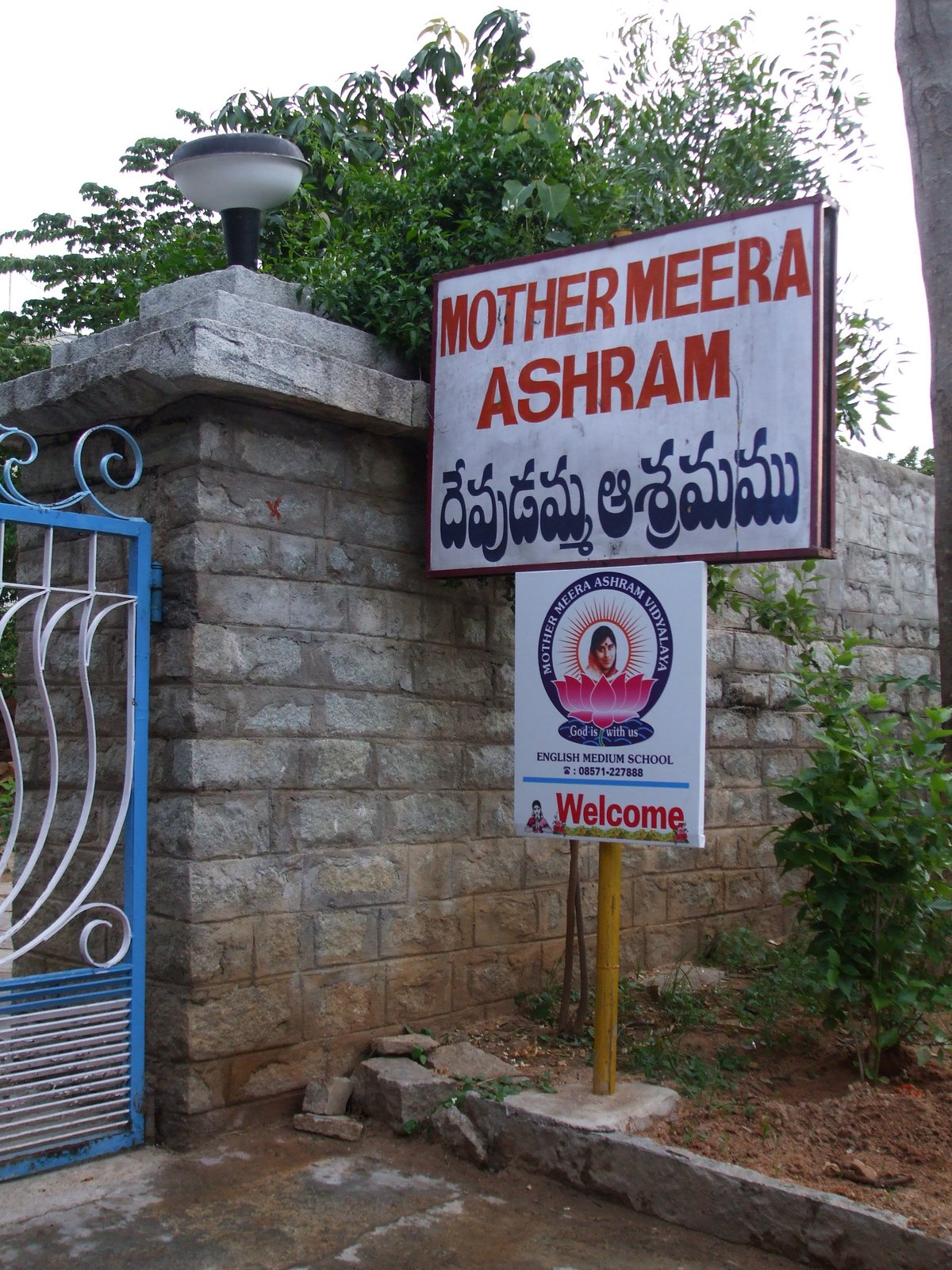
A darshan evening works like this. Several hundred people sit in a hall in silence — no music, no talk, phones away. One by one, each visitor kneels in front of her. She holds the person's head lightly between her hands for a few seconds. Then the visitor looks up, and she looks into their eyes. Then it is the next person's turn. Two hours of this, most nights, for forty years. She almost never speaks in public. Her few books are short answers to visitors' written questions.
Devotees understand the silence like this: she is an avatar — a direct embodiment of the Divine Mother. In darshan, they say, she unties knots in the visitor's subtle body and pours in what she calls the Paramatman light, the light of the highest Self. The work is silent, she has said, because words only reach the mind, and the light works below it.
None of that can be checked, and this page will not pretend it can. A visitor can only check their own experience. Reports go from lives quietly changed, to pleasant calm, to honestly nothing. Her own advice is the modest end of the claim: keep your own religion, do your own work, and treat the light as help with your work — not as a replacement for it.
Take away the metaphysics, and something remains that the other three women would recognise. Her written answers repeat: the divine is as near as your own breath, in Germany as in India. Ordinary daily work, done with attention and offered up, is practice enough. And no one needs to leave home, family or religion to find what they are looking for. The address, once again, is inside.
Even the silence is an argument. Every other channel to a modern audience is made of words and pictures shouting for attention. A teacher who offers a few seconds of eye contact, with nothing to buy, is at least running the one experiment nobody else is running.
Her philosophy has a family tree. At thirteen she gave her first darshans at the ashram of Sri Aurobindo in Pondicherry, where her uncle was a devotee. Aurobindo taught something unusual: the divine light does not carry people away from the world — it comes down into the world, to slowly change it. Mother Meera's work is that idea made simple. She says she calls down the Paramatman light, the light of the highest Self, and that it works on daily life, not instead of it. The light, she says, is everywhere — like electricity. The work is learning to switch it on.
The practice she recommends most is also the simplest: japa — quietly repeating a divine name, any name, from any religion, through the ordinary day. Her books are short answers to visitors' written questions, and they keep returning to the same three points: be open, do your work, and love where you are. No leaving home, no new religion, no fee. Of the four teachers on this page, she asks for the least — and claims to give the most.
Four teachers, one instruction, four dialects: what you are looking for is already where you are.
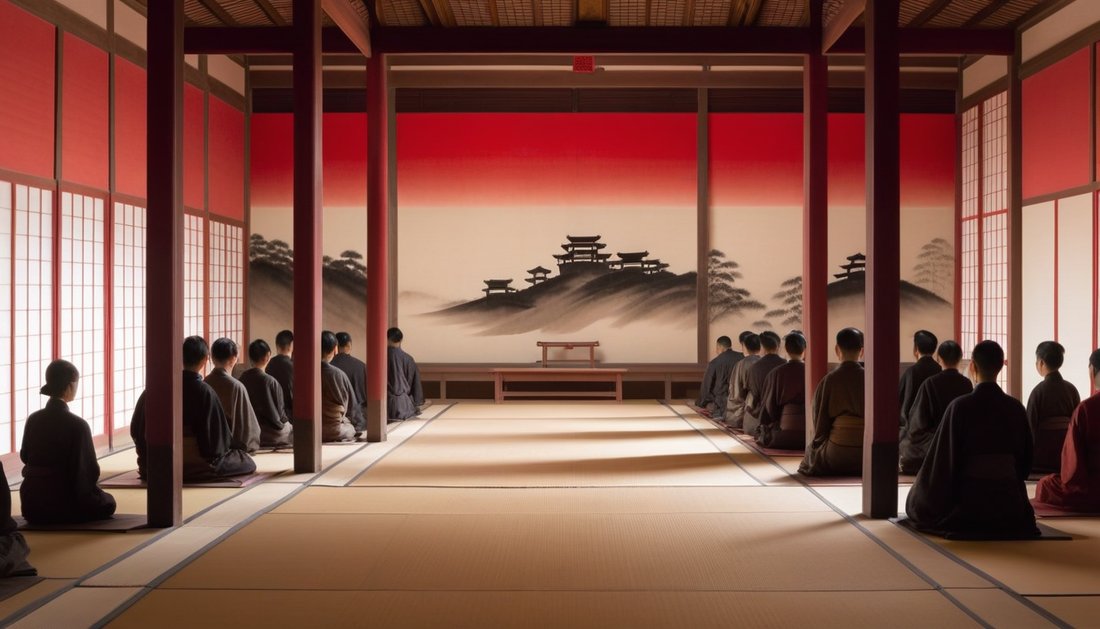
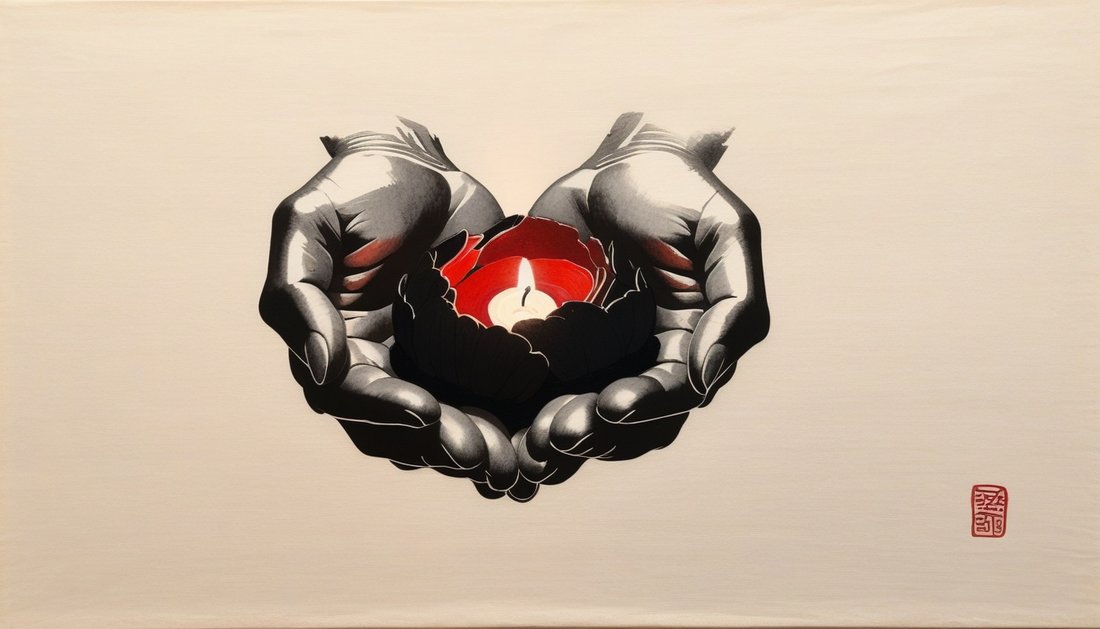
- Could a few seconds of silent eye contact change a person? Give the best argument you can for yes, then the best for no — whatever you really believe.
- Darshan is free, and there is nothing to join. Does that make the claim of divine light easier for you to believe, or does it change nothing?
- Mother Meera tells visitors to stay in their own religion. Compare that to how most organisations treat newcomers. What does an organisation want when it does not ask you to join?
Put them side by side
Four women, four centuries, four religions, one repeated message: what you are looking for is inside you, so stop fighting your fear, your neighbour's religion, and your own ordinary life. Each paid a price for saying it — a lost home, a lost reputation, a lost normal life. The Chinese proverb on this page says it in four characters: all rivers return to the sea.
四位女性,四个世纪,四种宗教,反复说着同一句话:你寻找的就在你心里——所以别再与你的恐惧、邻人的宗教和自己的平凡生活为敌。为了说出这句话,她们各自付出了代价:失去家、失去名声、失去寻常人生。本页的中国成语用四个字概括:百川归海。
ผู้หญิงสี่คน สี่ศตวรรษ สี่ศาสนา กับสารเดียวที่พูดซ้ำ ๆ ว่า สิ่งที่เราตามหาอยู่ข้างในตัวเราเอง — จงเลิกสู้กับความกลัวของตน ศาสนาของเพื่อนบ้าน และชีวิตธรรมดาของตัวเอง แต่ละคนจ่ายราคาเพื่อพูดสิ่งนี้ ทั้งเสียบ้าน เสียชื่อเสียง เสียชีวิตปกติ สุภาษิตจีนบนหน้านี้สรุปในสี่ตัวอักษร: แม่น้ำร้อยสายไหลคืนสู่ทะเล
Machig Labdrön
- Left behind
- A practice — Chöd, still done today.
- Method
- Walk into fear; feed the demons instead of fighting them.
- The price she paid
- Left settled life to wander; taught against a system built for monks.
- One line
- "Go to the places that scare you."
Lal Ded
- Left behind
- About 140 poems — the start of Kashmiri literature.
- Method
- Sing the truth in the people's own language.
- The price she paid
- Walked out of marriage and respectability into the road.
- One line
- "The wine-shop was in my own house."
Anandamayi Ma
- Left behind
- No book, no method — ashrams, and sixty years of answers.
- Method
- None. Kheyala — the act arrives by itself.
- The price she paid
- Gave up every private thing; even her meals were fed to her.
- One line
- "I am always the same."
Mother Meera
- Left behind
- Still here — schools in India, and forty years of silent evenings.
- Method
- Darshan: a few seconds of hands and eyes, no words at all.
- The price she paid
- A public life with no public voice, watched by strangers every night.
- One line
- "The divine is as near as your own breath."
Put them side by side and the differences are loud: a thousand years, four religions, a drum in a graveyard against a silent hall in Germany. The agreements are quieter and stranger. All four put the sacred inside the ordinary person — against every institution that put it in a building, a book or a priesthood. All four were women in traditions run by men, and none of them asked permission. And all four answered the biggest question — how should I live? — not with a rule but with a direction: turn around. You are looking outside for something that is standing behind your own eyes.
Is that the one sea the four rivers reach? Or just four stories that sound alike? This page cannot decide that for you. But it is exactly the kind of question a language is for.
- You can ask one question to one of the four. Which teacher, which question — and what do you honestly expect the answer would be?
- All four are women who succeeded in systems built by men, and none asked permission. Is that fact a key part of their message, or just an accident of history? Argue both sides.
- "Four rivers, one sea" — do the world's religions really point at one thing? Use one piece of evidence from this page for yes, and one for no.
- The page marked every claim History, Tradition or Teaching. Find one claim you would move to a different category, and defend the move.