Listen to the Story — ฟังเรื่องราว
Hero Narration by Amazon Polly
🎵 The Hidden Meaning of Music — ความหมายที่ซ่อนอยู่ของดนตรี
ภาษาไทย
คุณเคยสงสัยไหมว่าคำว่า "music" มาจากไหน? คนส่วนใหญ่บอกว่ามาจากคำกรีก "mousike" ซึ่งหมายถึง "ศิลปะของเทพธิดามิวส์" แต่มีเรื่องราวที่ลึกซึ้งกว่านั้นซ่อนอยู่ — เรื่องราวจากประเพณีซูฟีของศาสนาอิสลาม ที่เชื่อมโยงดนตรีกับศาสดามูซา (โมเสส) และเสียงเรียกจากพระเจ้า
English
Have you ever wondered where the word "music" comes from? Most people say it comes from the Greek word "mousike", meaning "the art of the Muses." But there is a deeper story hidden within it — a story from the Sufi tradition of Islam that connects music to the Prophet Musa (Moses) and a call from God.
🙏 Hazrat Inayat Khan — ฮาซรัต อินายัต ข่าน
ภาษาไทย
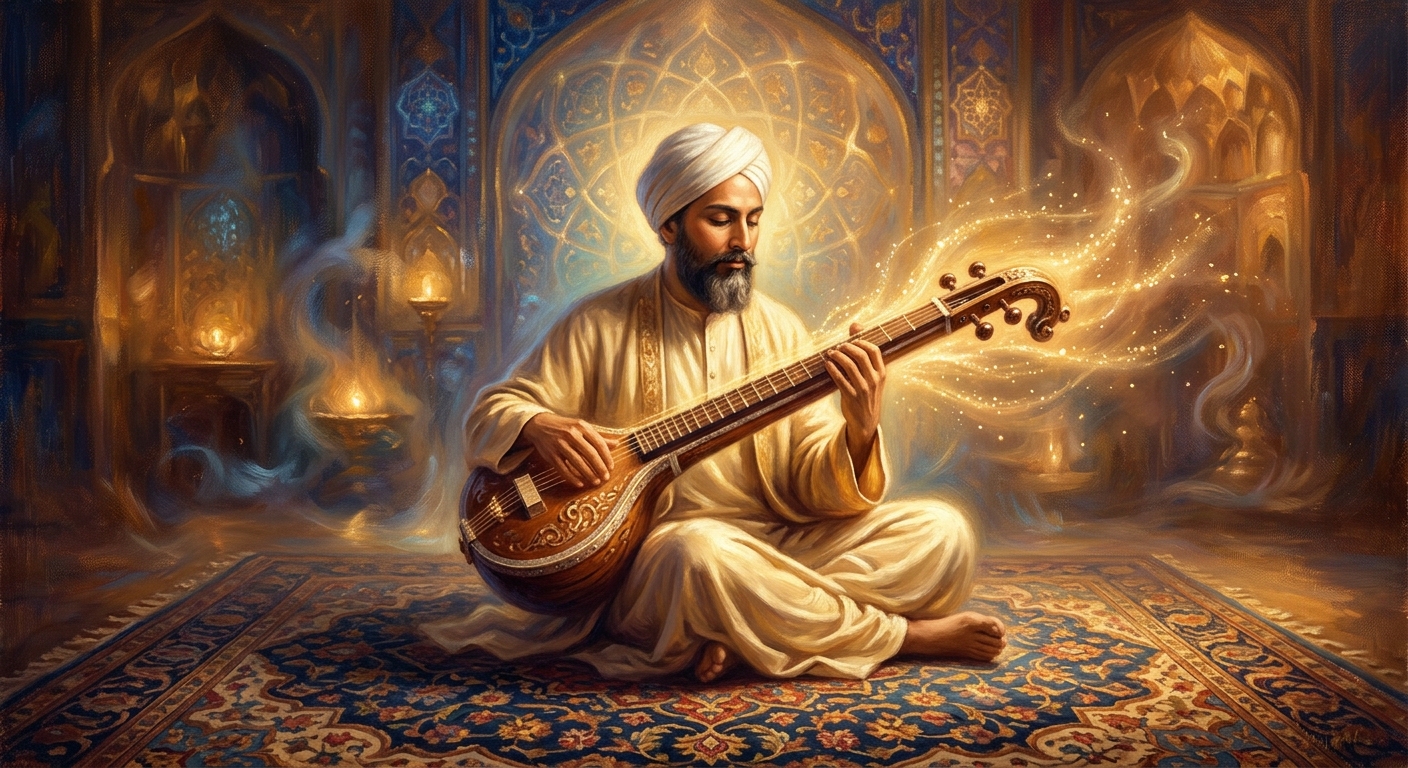
ฮาซรัต อินายัต ข่าน (ค.ศ. 1882-1927) เป็นนักดนตรีและนักพรตซูฟีจากอินเดีย เขาเป็นปรมาจารย์ด้านวีณา (เครื่องสายอินเดีย) และเป็นคนแรกที่นำคำสอนซูฟีมาสู่ตะวันตก
เขาสอนว่าดนตรีไม่ใช่แค่ความบันเทิง แต่เป็น ภาพสะท้อนของความกลมกลืนที่ลึกที่สุดของจักรวาล ทุกสิ่งในธรรมชาติ — แม่น้ำ ลม นก หัวใจ — ล้วนสั่นสะเทือนเป็นเพลงเดียวกัน
English
Hazrat Inayat Khan (1882-1927) was a musician and Sufi mystic from India. He was a master of the veena (an Indian string instrument) and the first teacher to bring Sufi teachings to the West.
He taught that music is not just entertainment, but a reflection of the deepest harmony of the universe. Everything in nature — rivers, wind, birds, heartbeats — all vibrate together in one song.
"ดนตรีคือจำลองย่อของความกลมกลืนแห่งจักรวาลทั้งมวล เพราะความกลมกลืนของจักรวาลคือชีวิตนั่นเอง"
🔥 Moses and the Burning Bush — มูซากับพุ่มไม้ที่ลุกไหม้
ภาษาไทย
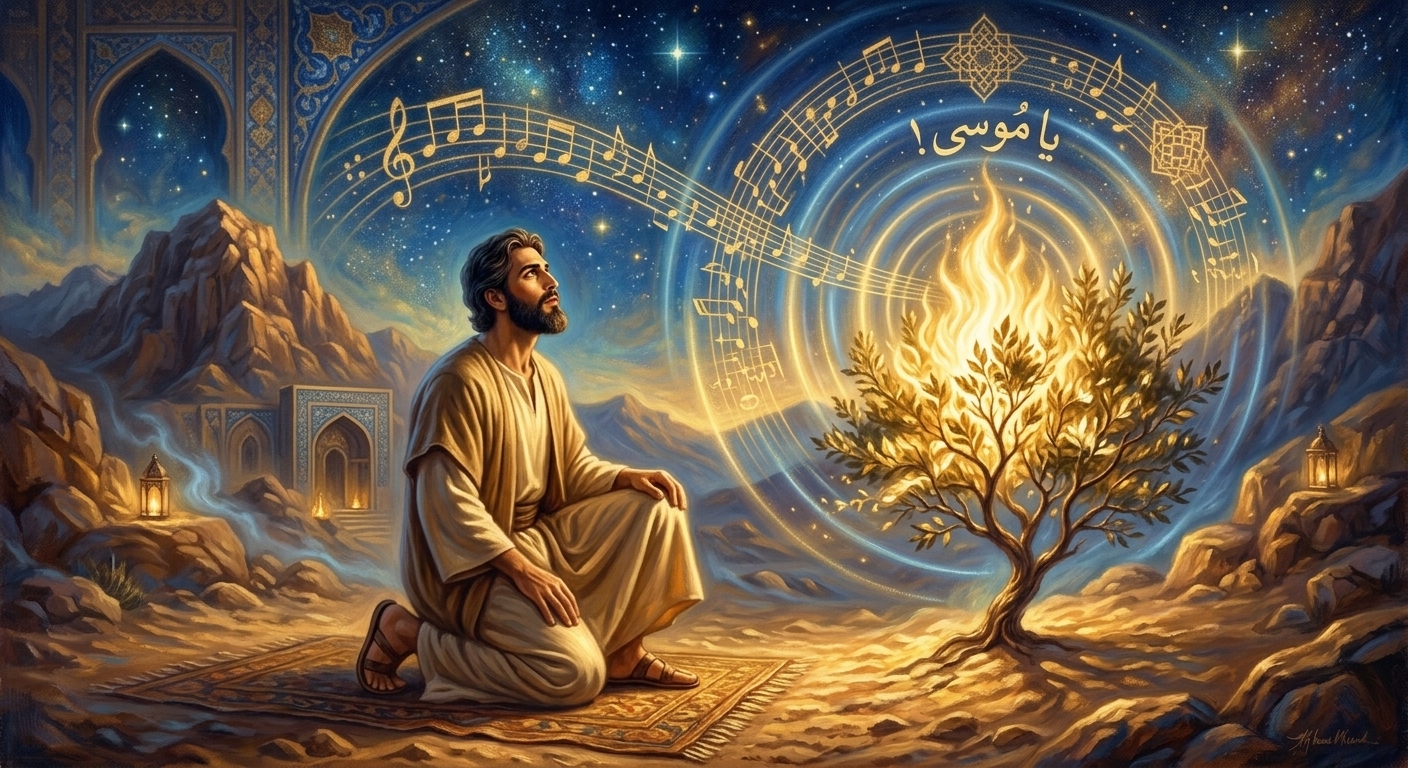
ตามคัมภีร์อัลกุรอาน (ซูเราะห์ ฏอฮา 20:11-13) เมื่อศาสดามูซา (โมเสส) เดินเข้าใกล้พุ่มไม้ที่ลุกไหม้บนภูเขาซีนาย พระเจ้าทรงเรียกเขาโดยตรง:
"ยา มูซา!" — "โอ มูซา จงฟัง!"
ในช่วงเวลาแห่งการฟังอันศักดิ์สิทธิ์นั้น มูซาได้ยินสิ่งที่เกินกว่าเสียงธรรมดา เขาได้ยินสิ่งที่ชาวซูฟีเรียกว่า "ซอต-อิ ซาร์มัด" — เสียงดั้งเดิมที่แผ่ซ่านไปทั่วสรรพสิ่ง
English
According to the Quran (Surah Ta Ha 20:11-13), when the Prophet Musa (Moses) approached the burning bush on Mount Sinai, God called out to him directly:
"Ya Musa!" — "O Moses, hear!"
In that moment of sacred listening, Moses heard something beyond ordinary sound. He heard what the Sufis call the "Saut-i Sarmad" — the primordial sound that pervades all of creation.
Did You Know? — รู้หรือเปล่า?
English: Hazrat Inayat Khan wrote that "Moses heard this very sound on Mount Sinai, when in communion with God" — referring to the Saut-i Sarmad, the abstract sound behind all creation.
ไทย: ฮาซรัต อินายัต ข่าน เขียนว่า "มูซาได้ยินเสียงนี้บนภูเขาซีนาย เมื่อสื่อสารกับพระเจ้า" — หมายถึง ซอต-อิ ซาร์มัด เสียงนามธรรมเบื้องหลังสรรพสิ่ง
📖 "Musa, ke!" — The Word Becomes "Music" — คำกลายเป็น "ดนตรี"
ภาษาไทย
คำสอนของซูฟีเสนอว่าคำว่า "music" สะท้อนคำสั่งดั้งเดิม: "มูซา เกอ!" — "มูซา จงฟัง!" สิ่งที่มูซาได้ยินคือ ความเป็นหนึ่งเดียว ที่อยู่เบื้องหลังทุกสิ่ง — บทเพลงเดียวที่สรรพสัตว์ ก้อนหิน และดวงดาวทุกดวงมีส่วนร่วม
มีนิรุกติศาสตร์พื้นบ้านอาหรับอีกเรื่องหนึ่ง: นักวิชาการ อัล-มุสลิม อัล-เมาศิลี เสนอว่าคำอาหรับ "มูซีกอ" มาจาก "มูซา" เมื่อมูซาตีหิน น้ำพุ 12 สายไหลออกมา แต่ละสายสร้างเสียงที่แตกต่างกัน — กลายเป็นบันไดเสียง 12 ระดับ (มะกอม)
English
The Sufi teaching suggests that the word "music" echoes this original command: "Musa, ke!" — "Moses, hear!" What Moses heard was the oneness underlying all things — the single song that every creature, every stone, every star participates in.
There is also an Arabic folk etymology: the scholar al-Muslim al-Mawsili proposed that the Arabic word "mūsīqā" derives from "Musa." When Moses struck the rock, twelve springs flowed out, each producing a different tone — giving rise to the twelve musical scales (maqamat).
🌍 The Harmony of Nature — ความกลมกลืนของธรรมชาติ

ภาษาไทย
ไม่ว่าจะมองผ่านประเพณีกรีก อาหรับ หรือซูฟี ข้อความเดียวกันปรากฏขึ้น: ดนตรีไม่ใช่สิ่งที่มนุษย์ประดิษฐ์ขึ้น แต่เป็นสิ่งที่เราค้นพบ
เหมือนคำสอนในพระพุทธศาสนาเรื่อง "ธรรม" — ความจริงที่มีอยู่แล้วก่อนที่พระพุทธเจ้าจะค้นพบ ดนตรีก็เช่นกัน — มันเป็นความจริงของจักรวาลที่รอให้เราฟัง
ลองนึกดู: เสียงฝนตก เสียงจักจั่น เสียงลมพัดผ่านต้นไผ่ — ทั้งหมดนี้คือดนตรี ทั้งหมดนี้คือ ซอต-อิ ซาร์มัด
English
Whether through Greek, Arabic, or Sufi tradition, the same message appears: music is not something we invented — it is something we discovered.
Like the Buddhist teaching of "Dharma" — truth that existed before the Buddha discovered it — music is a universal truth waiting for us to listen.
Think about it: the sound of rain, the chorus of cicadas, the wind through bamboo — all of this is music. All of this is the Saut-i Sarmad.
Buddhist Connection — ความเชื่อมโยงกับพุทธศาสนา
English: In Buddhism, the concept of nada (inner sound) is used in meditation. Thai monks chant to create vibrations that harmonize mind and body — the same universal sound the Sufis describe.
ไทย: ในพุทธศาสนา แนวคิดเรื่อง นาท (เสียงภายใน) ใช้ในการทำสมาธิ พระสงฆ์ไทยสวดมนต์เพื่อสร้างการสั่นสะเทือนที่ทำให้จิตและกายกลมกลืนกัน — เสียงสากลเดียวกันกับที่ชาวซูฟีอธิบาย
📚 Key Vocabulary — คำศัพท์สำคัญ
✅ Quick Check — ตรวจสอบความเข้าใจ
Test Your Understanding — ทดสอบความเข้าใจ
1. What instrument did Hazrat Inayat Khan play? — ฮาซรัต อินายัต ข่าน เล่นเครื่องดนตรีอะไร?
2. What does "Saut-i Sarmad" mean? — "ซอต-อิ ซาร์มัด" หมายถึงอะไร?
3. In the Sufi teaching, what does "Musa, ke!" mean? — ในคำสอนซูฟี "มูซา เกอ!" แปลว่าอะไร?
4. How many springs flowed when Moses struck the rock? — เมื่อมูซาตีหิน น้ำพุกี่สายไหลออกมา?
5. According to the lesson, music is... — ตามบทเรียนนี้ ดนตรีคือ...
🎶 Listen to the World! — ฟังโลกรอบตัว!
Next time you hear rain, wind, or birds singing — remember: you are hearing the same music Moses heard on the mountain.
ครั้งหน้าที่คุณได้ยินเสียงฝน ลม หรือนกร้อง — จำไว้: คุณกำลังฟังดนตรีเดียวกันกับที่มูซาได้ยินบนภูเขา
References & Further Reading — เอกสารอ้างอิง
- Hazrat Inayat Khan — The Mysticism of Sound and Music — Full text of Khan's teachings on sound, music, and cosmic harmony.
- The Abstract Sound (Saut-i Sarmad) — Khan's chapter on the primordial sound Moses heard on Mount Sinai.
- Abarim Publications — Moses: Meaning and Etymology — The Greek connection between Moses, Muse, and Music through the verb muso (to hide/cover).
- Quran, Surah Ta Ha 20:9-16 — The Quranic account of God calling "Ya Musa!" at the burning bush.
- Quran, Surah Al-Qasas 28:30 — The story of Moses hearing the divine voice.
- Rumi — The Song of the Reed (Masnavi) — Rumi's famous poem about divine secrets hidden in the notes of the flute.
- Rumi — Moses and the Shepherd — Rumi's teaching about the oneness underlying diverse forms of worship.
- Etymonline — "Music" — Standard etymology: Greek mousike → Latin musica → English "music."
- PMC — Sufism, Hazrat Inayat Khan, and His Music — Academic article on Khan's life and musical philosophy.