Almost all of it happened before writing
Written history covers about five thousand years. Stone tools go back three and a third million. All three strips below are drawn to true scale, so the gaps you see are the gaps that actually elapsed.
有文字记载的历史只有约五千年,而石器的历史长达三百三十万年。下面三条时间轴都按真实比例绘制,所以看到的间隔就是真正流逝的时间。
ประวัติศาสตร์ที่มีบันทึกเป็นลายลักษณ์อักษรมีเพียงราวห้าพันปี แต่เครื่องมือหินย้อนไปถึง 3.3 ล้านปี แถบเวลาทั้งสามข้างล่างเป็นมาตราส่วนจริง ระยะห่างที่เห็นจึงคือเวลาที่ผ่านไปจริง
Written history covers roughly the last five thousand years. Stone tools go back three and a third million. If the whole toolmaking record were a single day, writing would begin about two and a half minutes before midnight.
The chart below keeps real proportions. Every one of its three strips is an ordinary, evenly spaced timeline, so the gaps you see are the gaps that actually elapsed. The catch is that almost everything happens in the last sliver of the top strip — so each strip magnifies the tail of the one above it, and says by how much.
Click any find on the strips above — or tab to one and press enter — to read what was actually found there.
- Almost everything humans have ever done happened before anyone could write it down. If the only record of your own life were the objects you left behind, what would a stranger get right about you — and what would they get badly wrong?
- The Acheulean handaxe stayed in production for over a million years. Nothing we make now lasts a decade. What does it take for a design to survive that long, and what did we give up in exchange for constant change?
- Writing appears in the last two and a half minutes of a day-long timeline. Does that make the written past more important than everything before it, or less?
The record is not centred on Europe
Plot the sites by their real coordinates and the oldest evidence turns out not to be European. Drag the slider to watch them appear in the order the evidence says they were made.
把遗址按真实经纬度标出来就会看到:最早的证据大多不在欧洲。拖动滑块,就能按证据给出的年代顺序看它们逐一出现。
เมื่อพล็อตแหล่งโบราณคดีตามพิกัดจริง จะเห็นว่าหลักฐานเก่าแก่ที่สุดไม่ได้อยู่ในยุโรป ลากแถบเลื่อนเพื่อดูแหล่งต่าง ๆ ปรากฏตามลำดับอายุที่หลักฐานบอก
Ordering those sites by age produces a list in which Europe appears late and intermittently. Which continent holds the first of any given innovation is a less stable fact than it sounds — it depends on how narrowly the category is drawn, and it moves whenever something older is dug up or redated. The map is a record of where the surviving evidence happens to be, not a league table.
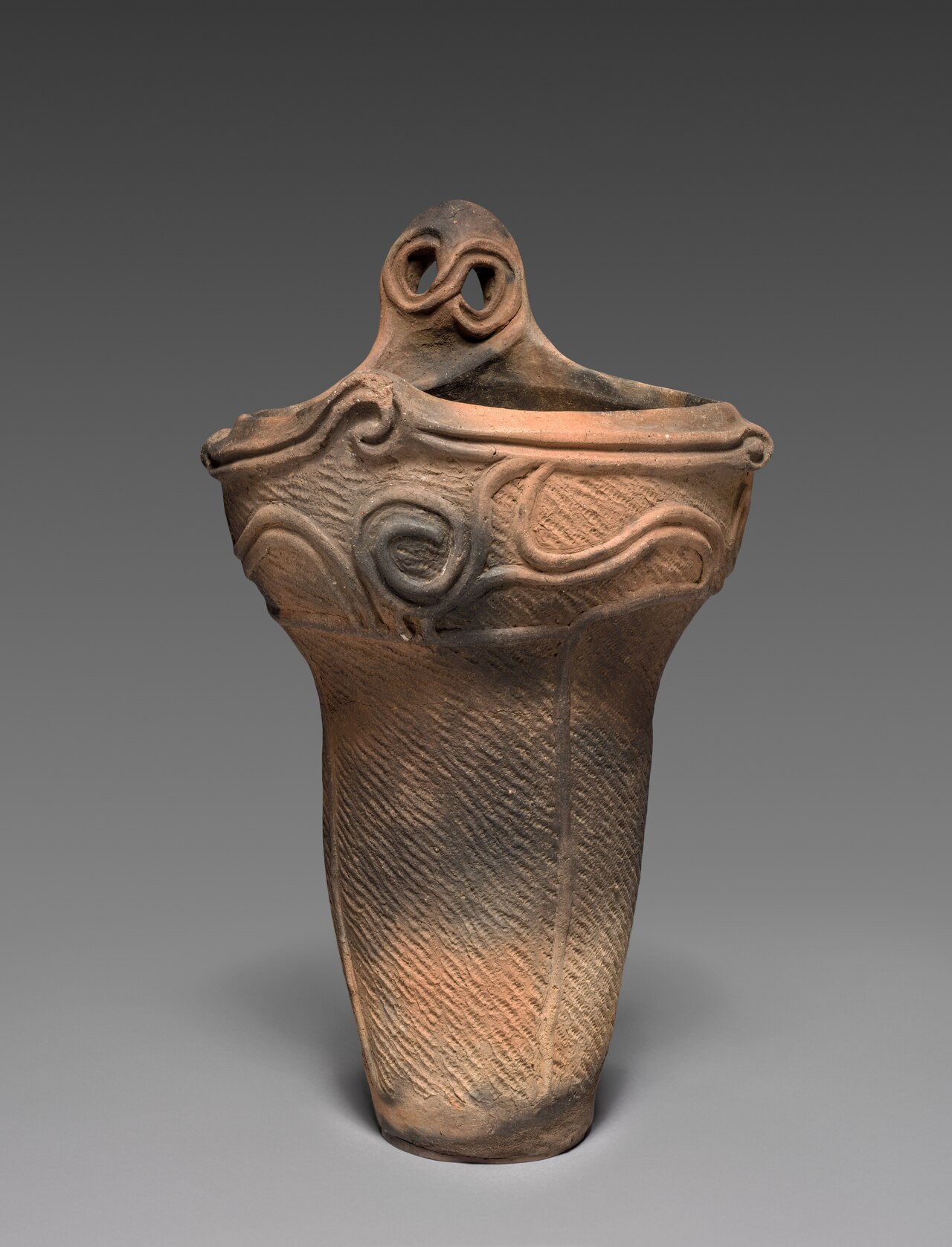
Pottery fragments from Xianrendong date to about 20,000 years ago — the depth of the last glacial maximum. They were made by mobile foragers, roughly ten thousand years before anyone in the region farmed anything.
Pottery had long been treated as a marker of settled agricultural life. In East Asia it is nothing of the kind: it arrives first as cooking equipment for hunter-gatherers.
- The oldest tools, the oldest bodies of our own species, the oldest ornament and the oldest pigment are all African. Why do you think the story so often gets told starting in Europe?
- The oldest known painting of a scene is in Indonesia, and it was only dated in 2024. What else do you think is sitting unexcavated, or excavated but undated, right now?
- If a find next year moved the oldest art somewhere nobody expected, whose version of human history would have to change the most?
The record starts before us
The oldest stone tools are three point three million years old, about seven hundred thousand years older than our own genus. The Acheulean handaxe was made to the same design for over a million years.
最早的石器距今三百三十万年,比我们所属的“人属”还早约七十万年。阿舍利手斧沿用了一百多万年,是人类史上最长寿的设计。
เครื่องมือหินที่เก่าที่สุดมีอายุ 3.3 ล้านปี เก่ากว่าสกุล Homo ราว 700,000 ปี ขวานกำปั้นแบบอาชูเลียนถูกทำตามแบบเดิมนานกว่าหนึ่งล้านปี นับเป็นการออกแบบที่ใช้ยาวนานที่สุดของมนุษย์
At Lomekwi 3, west of Lake Turkana in Kenya, stone flakes and cores were struck deliberately 3.3 million years ago. That is around 700,000 years before the earliest fossil assigned to Homo. Whoever knapped them — Kenyanthropus and Australopithecus are both candidates — the behaviour we think of as definitively human was already underway in a body that was not.
The Oldowan industry follows from about 2.6 million years ago at Gona in Ethiopia: simple cores and sharp flakes, effective and unfussy. Then, from roughly 1.76 million years ago at Kokiselei in Kenya, the Acheulean handaxe — worked on both faces to a symmetrical teardrop, made to the same template across Africa, Europe and Asia for over a million years. It is the longest-running design in human history by an enormous margin.
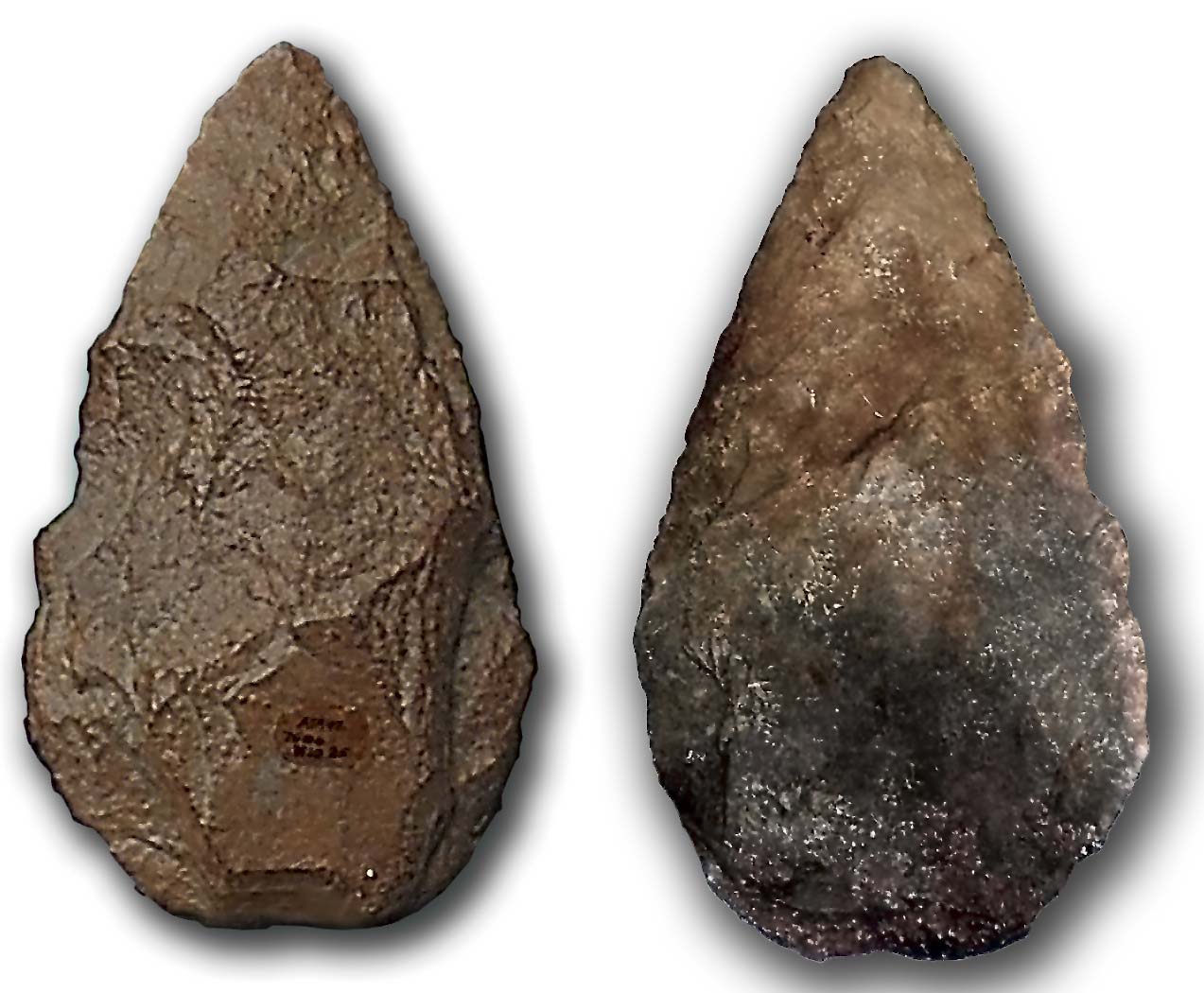
The Acheulean handaxe · the design from c. 1.76 million years ago, front and back. Worked on both faces to a deliberate symmetry that exceeds any obvious functional requirement.
Made to recognisably the same design from roughly 1.76 million years ago until about 130,000 years ago — across three continents, by at least three different human species.
Nothing we have made since has stayed in production for a comparable length of time.
Burnt bone and ashed plant material at Wonderwerk Cave, South Africa, suggest fire inside a cave around a million years ago, and Gesher Benot Ya'aqov in Israel gives good evidence by roughly 790,000 years ago. Some researchers argue from human anatomy — smaller guts, smaller teeth — that cooking began earlier still, perhaps 1.4 million years ago.
The difficulty is telling a controlled hearth from a natural burn in sediment that old. Treat "about a million years" as the defensible floor and everything earlier as argument.
- The oldest stone tools are 700,000 years older than our own genus. If toolmaking is not what makes us human, what is?
- The handaxe is far more symmetrical than it needs to be to cut anything. Why would someone spend extra hours on a symmetry that adds nothing to the edge?
- Fire lets you cook, see after dark, stay warm and keep animals away. Which of those do you think mattered most to the first people who managed to keep one alive?
For most of the story we were not alone
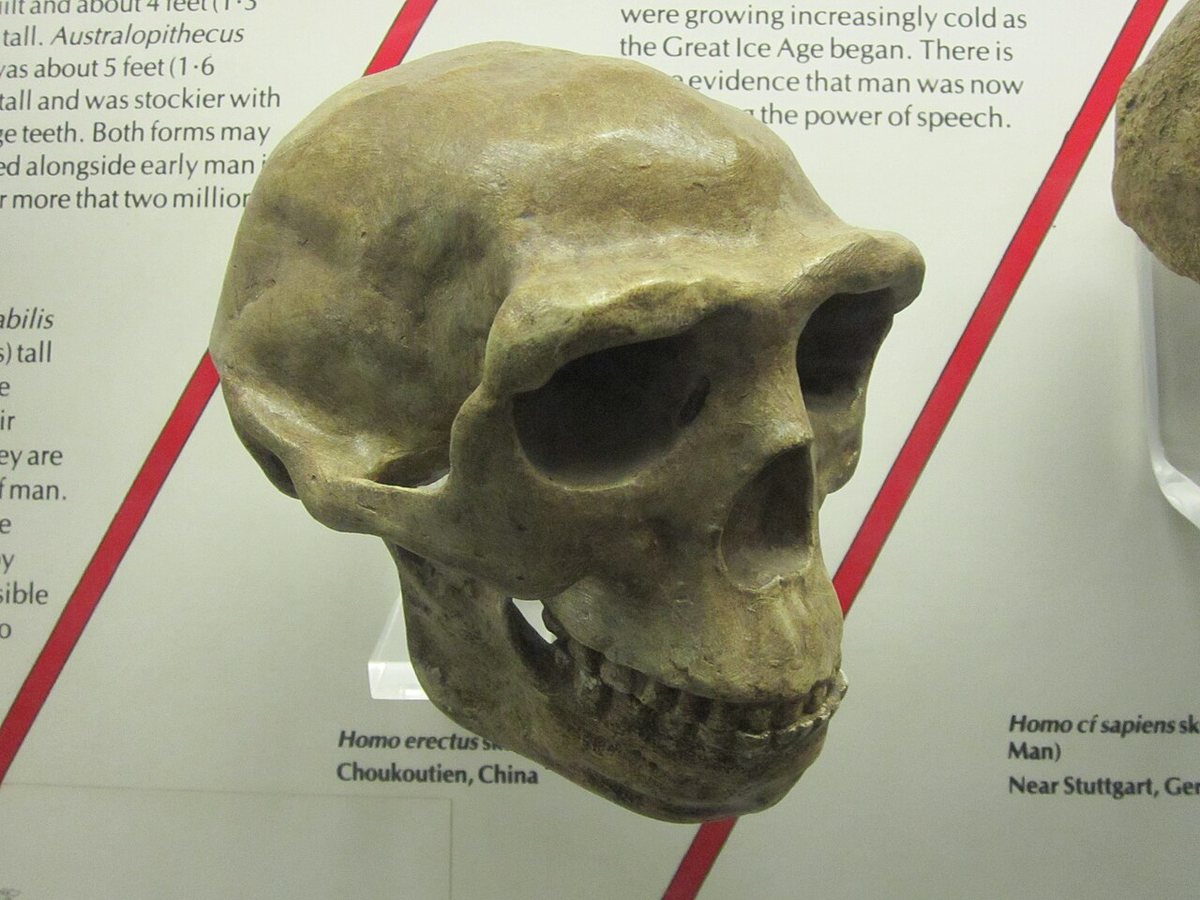
A single human species on Earth is recent and unusual. For most of prehistory several were alive at once, including Neanderthals and Denisovans.
地球上只剩一种人类,是很晚近也很不寻常的情况。史前大部分时间里,尼安德特人、丹尼索瓦人等多个人种同时存在。
การมีมนุษย์เพียงสปีชีส์เดียวบนโลกเป็นเรื่องใหม่และผิดปกติมาก ตลอดยุคก่อนประวัติศาสตร์ส่วนใหญ่ มีมนุษย์หลายสปีชีส์อยู่ร่วมสมัยกัน
A single human species on Earth is a very recent and very unusual situation. For nearly all of prehistory there were several, overlapping in time and often in place.
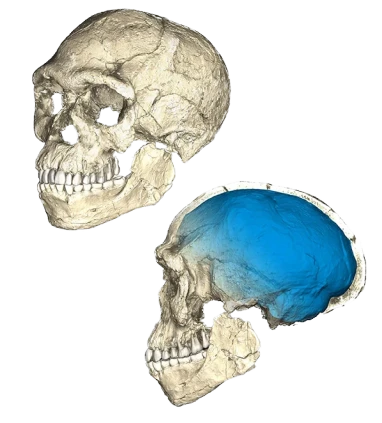
The colours answer the obvious question about relatedness. Neanderthals and Denisovans are sister lineages — our common ancestor with both is around 600,000 years ago, and those two parted from each other about 400,000 years ago. Homo erectus and Homo heidelbergensis sit on our own line, or close enough to it that the argument is about detail. Homo naledi, Homo floresiensis and Homo luzonensis are cousins whose branching points are genuinely unresolved; the shared ancestor is probably somewhere near two million years back for each, but nobody should pretend that is settled.
Neanderthals were not a failed draft of us. They buried their dead, made birch-bark tar — which requires heating bark in the absence of oxygen, a genuinely difficult process — collected eagle talons that look like ornaments at Krapina about 130,000 years ago, and in one case went 336 metres into a French cave and built something.
Deep inside Bruniquel Cave, Neanderthals snapped several hundred stalagmites to roughly even lengths and arranged them into two rings, the larger about seven metres across, with evidence of fire used on them. Uranium-series dating of the regrown calcite puts the construction at 176,500 ± 2,100 years ago.
That is far beyond daylight. It required planning, portable light, and a reason to go. We do not know the reason.
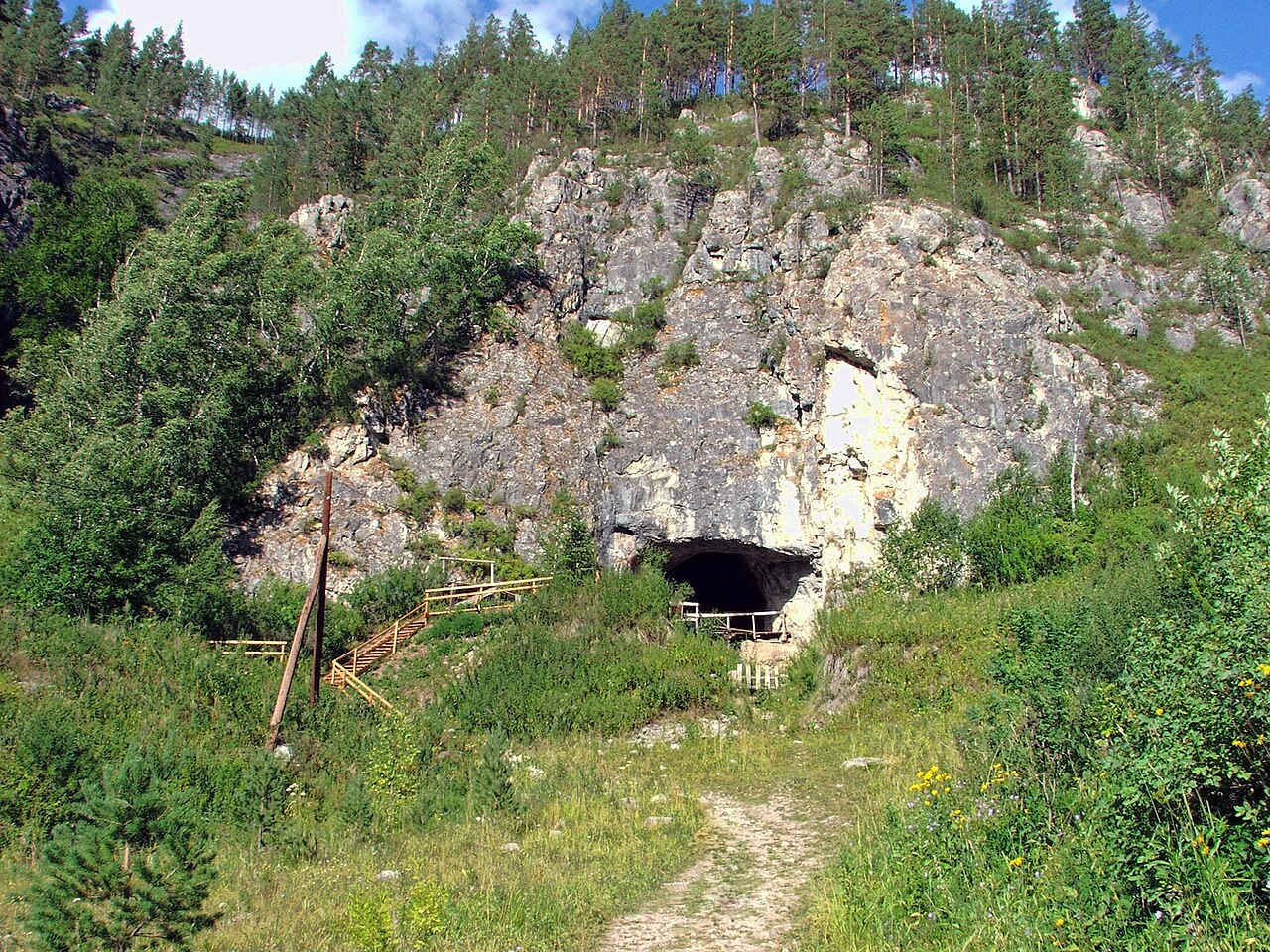
Denisovans are stranger still: a whole population first identified in 2010 from a fingerbone in the Altai, and known mostly from DNA rather than bones. One individual from Denisova Cave, nicknamed Denny, turned out to have a Neanderthal mother and a Denisovan father — a first-generation hybrid, found on the first try, which suggests such pairings were not rare.
- Humans carry the DNA of other species. What do you think life was like when several kinds of human were alive at the same time and could have children together?
- If you met a Neanderthal family, what do you think would be hardest to explain to them — and what would need no explaining at all?
- We are the only human species left. Do you think that is luck, or something we did?
The oldest art is not where it was said to be
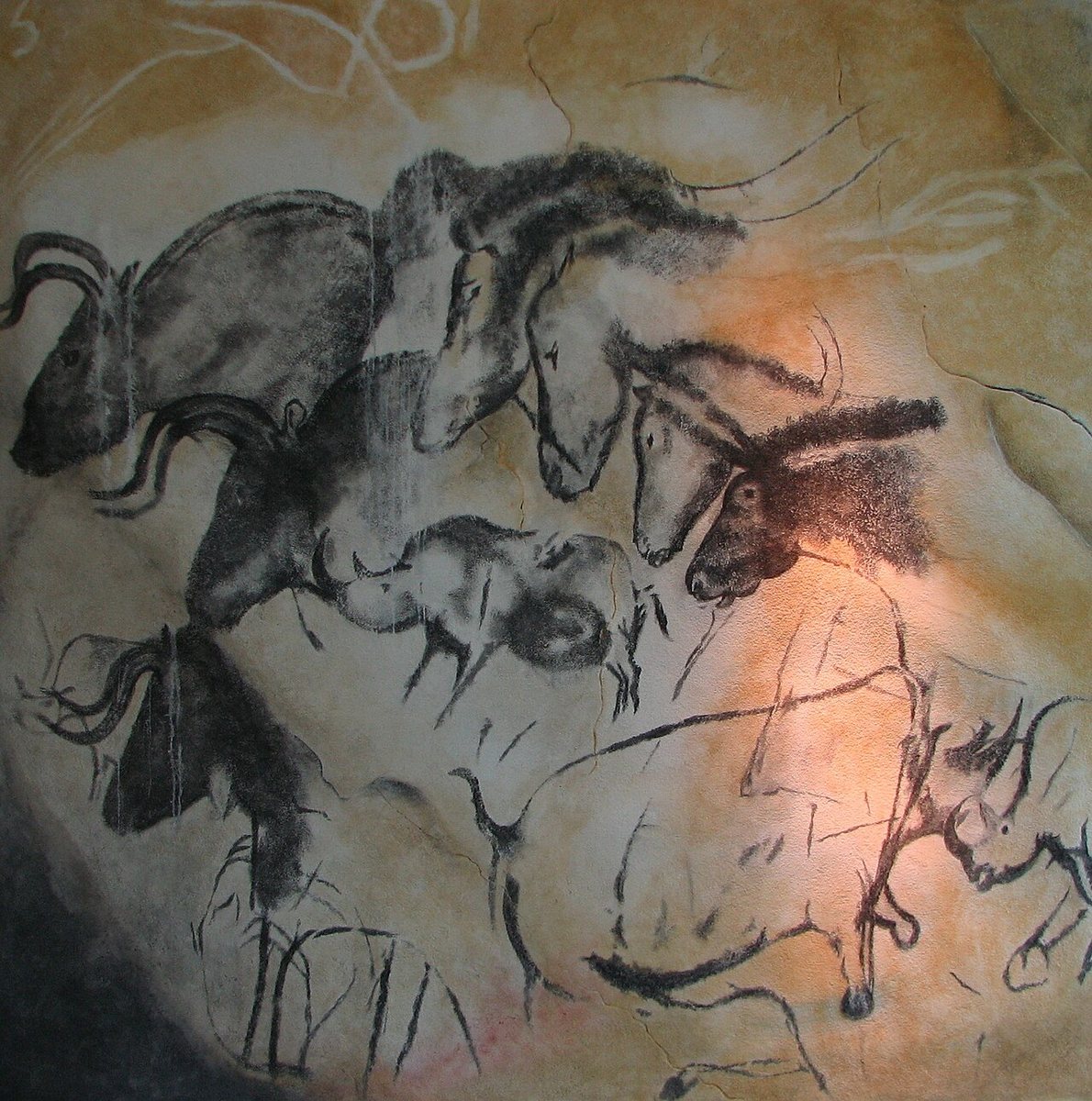
The oldest known figurative painting is in Sulawesi, at least fifty one thousand two hundred years old. The oldest engraved ochre is South African and the oldest beads are Moroccan. Europe is not where this starts.
已知最早的具象绘画在印尼苏拉威西,至少五万一千二百年前。最早的雕刻赭石在南非,最早的串珠在摩洛哥。起点并不在欧洲。
ภาพวาดเชิงรูปธรรมที่เก่าที่สุดเท่าที่รู้จักอยู่ที่สุลาเวสี อินโดนีเซีย อย่างน้อย 51,200 ปี ดินเทศแกะสลักที่เก่าที่สุดอยู่ในแอฟริกาใต้ และลูกปัดเปลือกหอยที่เก่าที่สุดอยู่ในโมร็อกโก จุดเริ่มต้นไม่ได้อยู่ในยุโรป
For most of the twentieth century, the story of early art was a European story — Chauvet, Lascaux, Altamira. That is no longer where the record sits, and the correction has come almost entirely from Asia, Africa and Australia.
In Africa, engraved ochre from Blombos Cave in South Africa carries deliberate cross-hatching at around 73,000 to 77,000 years ago, and shell beads from Bizmoune Cave in Morocco — pierced, and therefore meant to be strung and worn — date to roughly 142,000 years ago. Ornament, which is a statement about who you are to somebody looking at you, is that old.
And the oldest known picture of a scene is in Indonesia.
A painting in a limestone cave on Sulawesi shows a large wild pig with three human-like figures around it, one apparently holding something to the animal's throat. Laser-ablation uranium-series imaging of the overlying calcite dates it to at least 51,200 years ago.
It is the oldest known figurative art anywhere, and the oldest known depiction of a scene — figures doing something together. Chauvet, long treated as the beginning, is roughly 15,000 years younger.
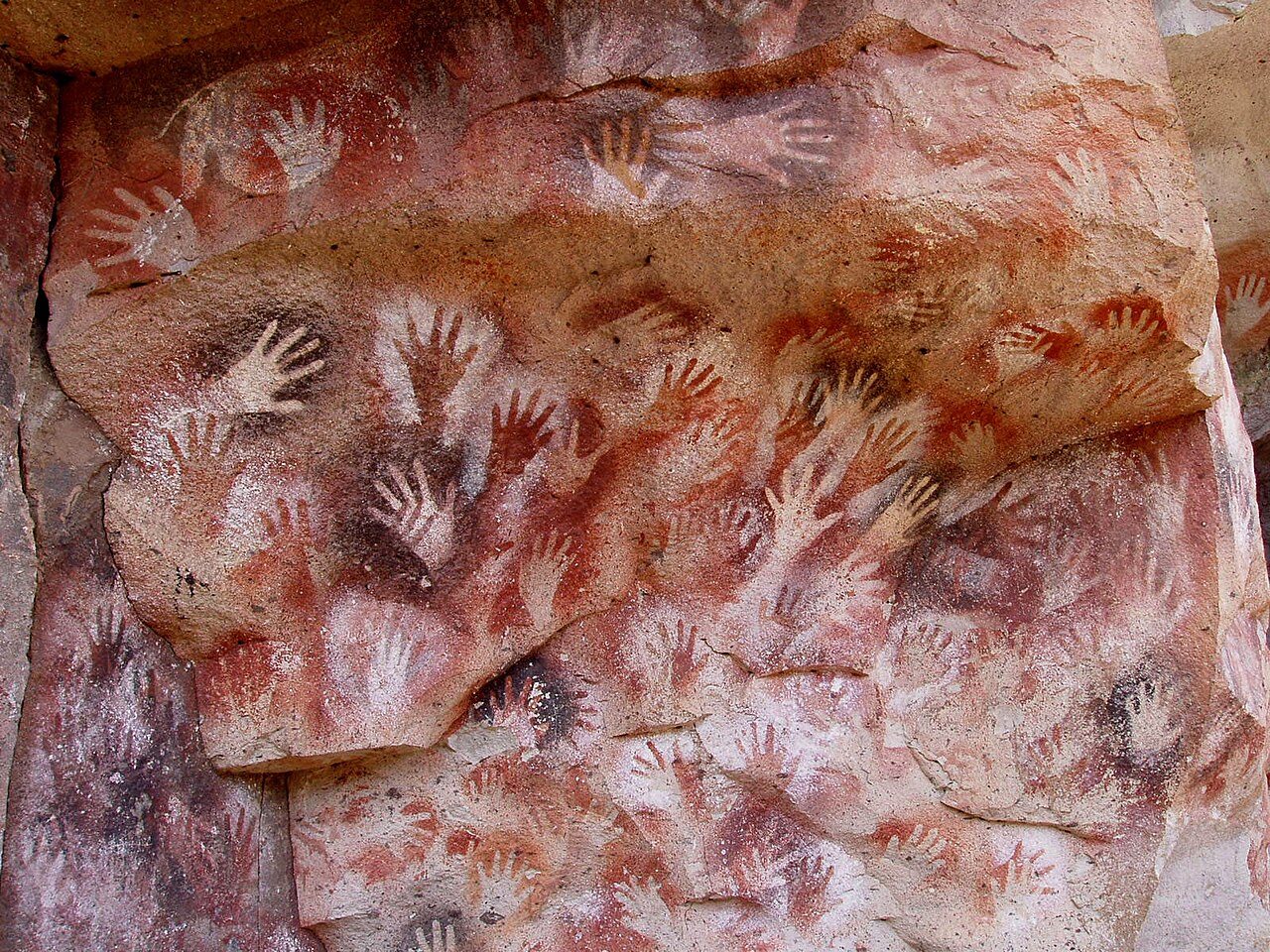
The hand stencil is worth pausing on, because it turns up everywhere: Sulawesi, Borneo, Spain, Argentina, Australia. It is the simplest possible self-portrait and requires no drawing skill at all — you put your hand on the wall and spray around it. People separated by oceans and tens of thousands of years arrived at the same idea, which is either a very dull coincidence or a fact about minds.
Music arrives in the record around 40,000 years ago, and in the same German caves as the ivory figures: flutes of bird bone and mammoth ivory from Hohle Fels and Geißenklösterle, drilled with finger holes and playable.
- Someone at Blombos scratched a deliberate pattern into a piece of ochre 73,000 years ago for no practical reason whatever. What do you think they were doing?
- The Sulawesi painting shows figures doing something together — a story, not a portrait. What changes when a picture starts telling a story?
- Shell beads are 142,000 years old, and an ornament only makes sense if somebody is going to look at you. What does that tell you about how those people lived together?
The other species are not entirely gone
Our ancestors had children with Neanderthals and Denisovans, and those genes are still circulating. The Tibetan altitude gene EPAS1 came from Denisovans and is carried by about ninety per cent of Tibetans.
走出非洲的祖先与尼安德特人、丹尼索瓦人通婚,那些基因至今仍在我们身上。藏族适应高原的 EPAS1 基因来自丹尼索瓦人,约九成藏族人带有。
บรรพบุรุษที่ออกจากแอฟริกาผสมกับนีแอนเดอร์ทัลและเดนิโซวาน ยีนเหล่านั้นยังอยู่กับเราถึงวันนี้ ยีน EPAS1 ที่ช่วยให้ชาวทิเบตอยู่ที่สูงได้มาจากเดนิโซวาน และพบในชาวทิเบตราว 90%
When our ancestors moved out of Africa they met these populations and had children with them. Those genomes are still circulating. Everyone whose ancestry lies outside sub-Saharan Africa carries Neanderthal DNA, and people in Oceania carry a substantial Denisovan component as well.
This is not a curiosity. Some of the inherited variants do real work.
At altitude, most people respond to thin air by overproducing red blood cells. It thickens the blood and is dangerous over a lifetime. Tibetans carry a variant of the gene EPAS1 that suppresses that response while improving how efficiently their cells extract oxygen.
The variant came from Denisovans. It is now carried by roughly 90% of Tibetans — a gene from an extinct human population, inherited through interbreeding, and now close to universal in the people who need it.
- About ninety per cent of Tibetans carry a gene that came from Denisovans, a people known mostly from DNA rather than bones. How does it sit with you that an extinct species is what makes life at altitude survivable?
- Everyone whose ancestry lies outside sub-Saharan Africa carries Neanderthal DNA. Does that make Neanderthals extinct, or not quite?
- The very first Denisovan genome sequenced turned out to be a first-generation hybrid. If mixing was that common, what does it suggest about how these groups treated each other?
Thousands of small figures, and an open question
The Palaeolithic and Neolithic left enormous numbers of small figures, and where a person is carved rather than an animal, that person is usually a woman. What they meant cannot be recovered. One argument is that the power to make life and then to feed it from your own body was simply the most consequential power anyone could watch happen.
旧石器与新石器时代留下大量小型雕像;凡是刻画人而非动物的,多半是女性。它们的含义无法确知。一种解释是:孕育生命、并以自身哺育生命的能力,是当时人们所能亲眼看到的最重要的力量。
ยุคหินเก่าและยุคหินใหม่ทิ้งรูปปั้นขนาดเล็กไว้จำนวนมาก และเมื่อใดที่สลักเป็นคนแทนที่จะเป็นสัตว์ คนผู้นั้นมักเป็นผู้หญิง เราไม่อาจรู้ความหมายที่แท้จริง คำอธิบายหนึ่งคือ อำนาจในการให้กำเนิดชีวิตและหล่อเลี้ยงชีวิตด้วยร่างกายของตนเอง คืออำนาจที่สำคัญที่สุดเท่าที่ผู้คนในเวลานั้นจะได้เห็น
Among the most numerous surviving objects from the Palaeolithic and Neolithic are small carved and modelled figures, a great many of them female. They appear from the Pyrenees to Siberia in ivory, limestone, bone and fired clay, across an enormous span of time.
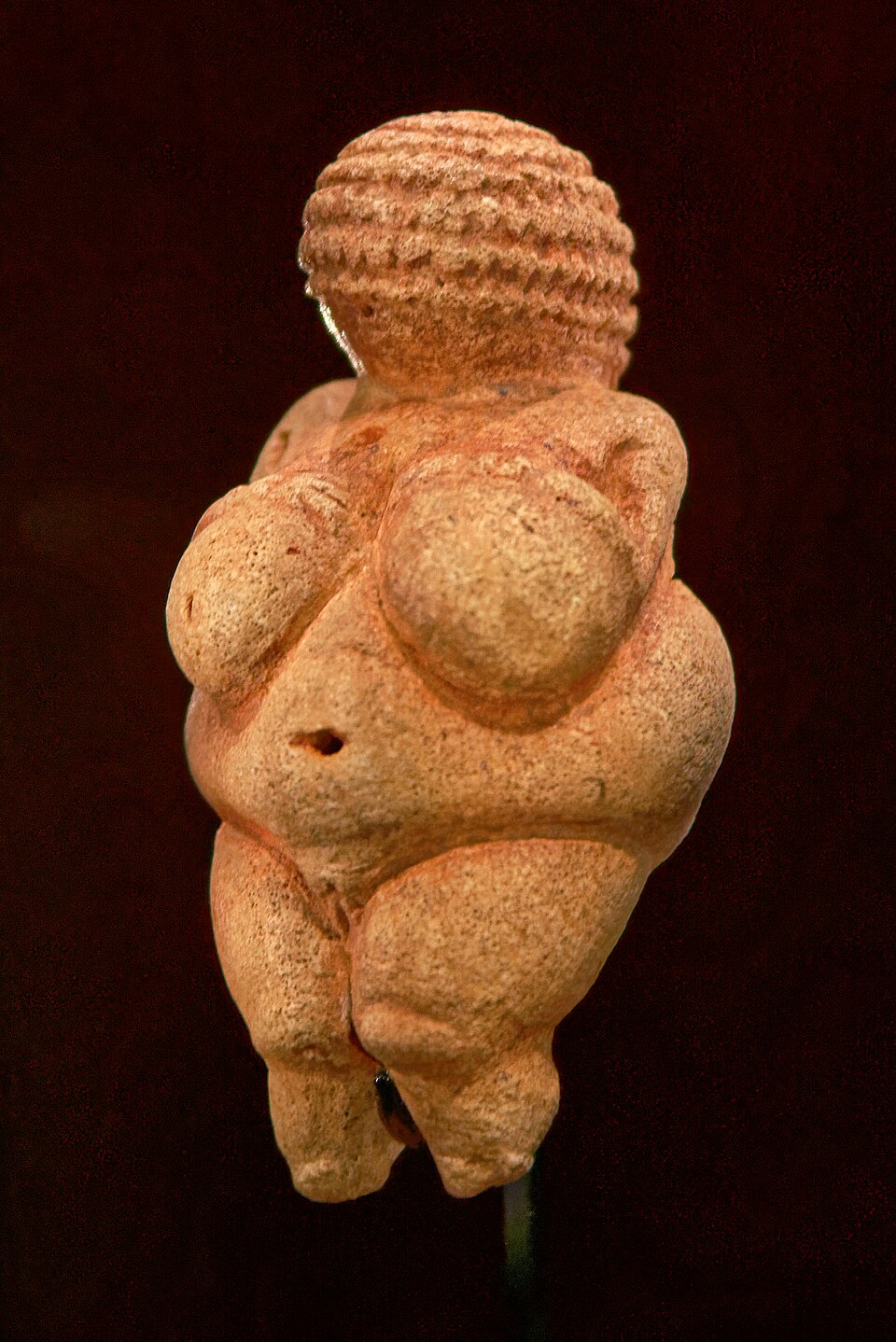
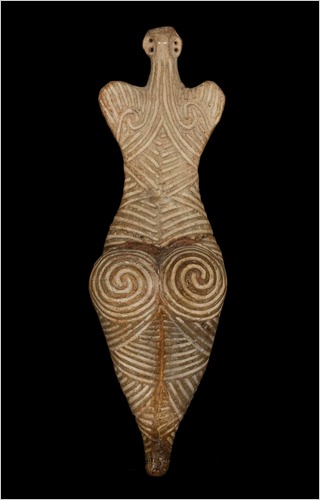
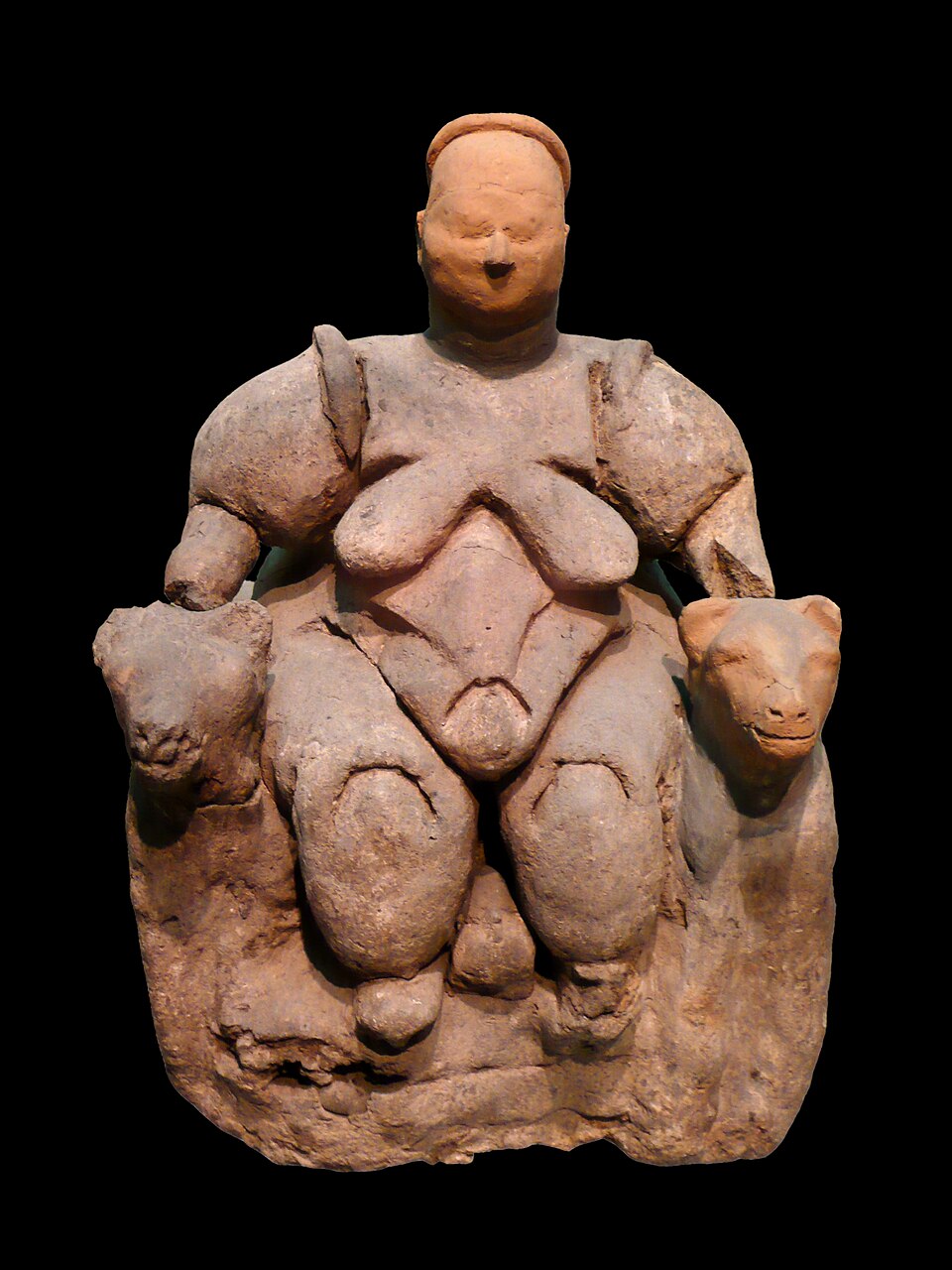
The assemblages are mixed. This matters, and it is often left out. At Çatalhöyük in Turkey, the great majority of the roughly two thousand figurines recovered are animals or abstract forms rather than the well-known fleshy female type.
What can be said with confidence is that they mattered. People carried the stone for them over long distances, spent many hours on objects a few centimetres high, and kept making them for tens of thousands of years. Nobody does that with something trivial.
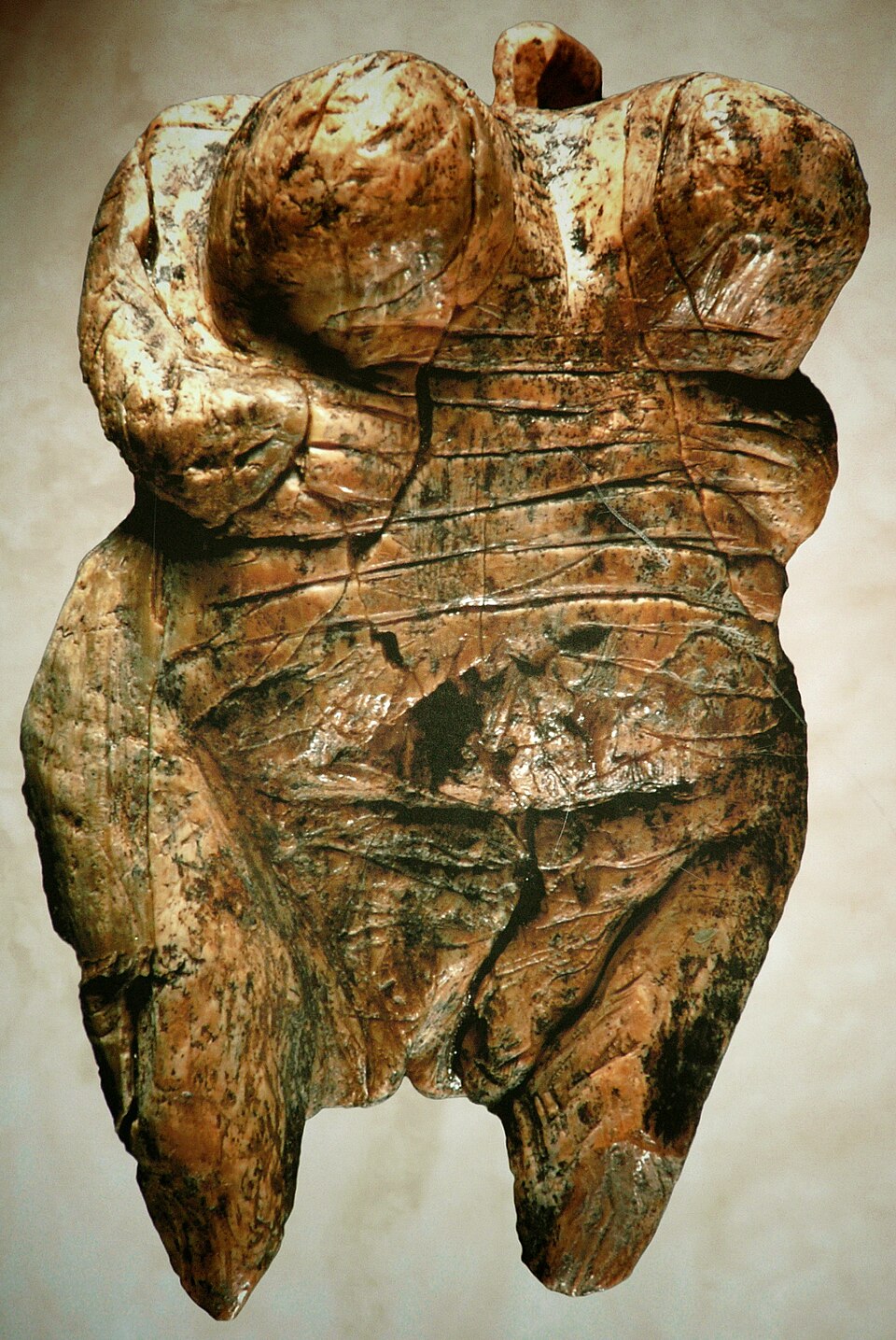
The asymmetry among the human figures is real, though. Mixed assemblages cut against a single Mother Goddess; they do not cut against this. Where Upper Palaeolithic people carved a person rather than an animal, the person is usually a woman. Male figures exist and are scarce. Whatever the figurines were for, the oldest images we have of ourselves are mostly of women — and the oldest undisputed one of all, the Venus of Hohle Fels, is a woman carved from mammoth ivory before anyone painted a cave in Europe.
Put the two facts side by side and the subject matter of the earliest art is strikingly narrow. It is animals, and it is women. Those are the categories that got carved, modelled and painted, for tens of thousands of years and across continents — the herds that fed people, and the bodies that made and fed people. Men are present and thin on the ground: human figures are the minority of the assemblage at Çatalhöyük to begin with, and identifiably male ones a minority of those. The painted caves run the same way, full of aurochs, horses and lions, with people rare and men rarer.
Both categories are the same category, on one reading: what keeps people alive. The herd is where food comes from, and a woman is where people come from — and, for years at a time, where a child's food also comes from. There is a material argument for that second half, and it starts with milk. In foraging societies recorded in the twentieth century, children nurse for three or four years and sometimes longer, and the nursing is near-continuous — short feeds many times an hour rather than a few meals a day. That pattern suppresses ovulation, so lactation is the birth spacing: among the !Kung, births fall roughly four years apart with nothing anyone would call contraception.
The spacing is not incidental, because a woman who moves with the band can carry one child, not two, and she carries that child nearly everywhere until it can keep up. For those same years her body is the child's main food supply. She could make a person, and then feed that person from herself, for years. Nothing about physical strength did anything comparable, and strength is not what the carvings are about.
The next step is the interpretive one, and it should be marked as one. If the power to make life and then to feed it was the most consequential power anyone could observe, it is not hard to see why that body is the one rendered in ivory — nor to see the shape of a long inheritance: earth imagined as a mother, fertility treated as sacred, the living world as something to be in accord with rather than mastered, and intuition and magic coded as female. Those are archetypes in the sense given in the vocabulary below — claims about which shapes the mind returns to, not facts about the physical world. Tracing them to this is a reasonable guess and a widely argued one. It is not a finding. The figurines themselves say nothing.
What one excavation actually found. At Çatalhöyük the figurines came mostly out of middens — household rubbish — rather than out of shrines, and Hodder reads them as closer to everyday objects than to deities. Take that for what it is: good evidence about the Çatalhöyük figurines, and about nothing else. Çatalhöyük is a single Neolithic town in Anatolia, and the ivory women of the Swabian Jura were carved roughly thirty thousand years earlier, in a different world, and came out of different deposits. A rubbish heap in Turkey does not tell you what people in Ice Age Europe did with theirs. Depicted holds everywhere; worshipped is a word we bring, and it has to be argued one site at a time.
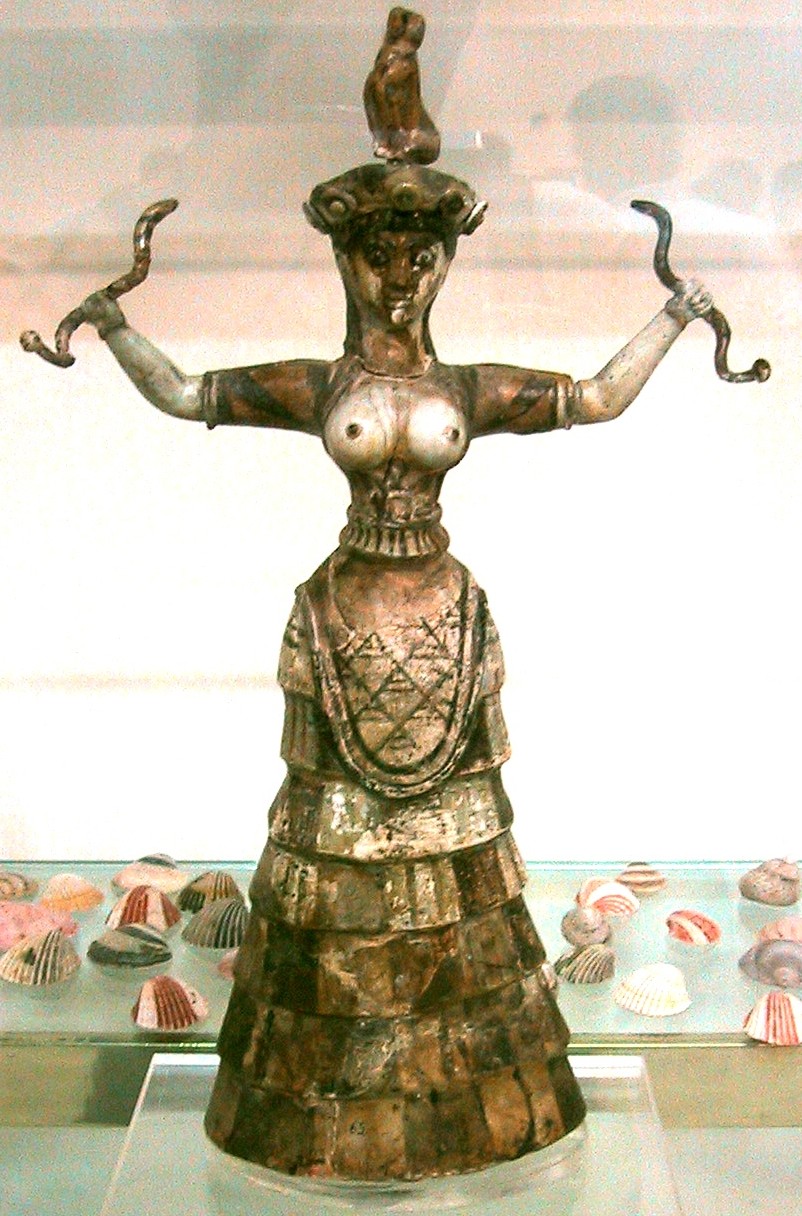
Reading the Snake Goddess, symbol by symbol
This figure is the most reproduced object in Minoan archaeology, and almost every element on it has been assigned a meaning at some point. It is worth going through them one at a time and asking, for each, what it actually rests on — because the answers are very uneven, and the object itself is partly a modern reconstruction.
Click any marker on the figure.
Pick a marker on the figure to read what that element is, what it rests on, and what it has been taken to mean.
Take only the elements with Minoan support — snakes, upraised arms, the flounced Minoan skirt, a shrine context, a household setting — and a coherent figure does emerge, though not the one on the postcards. Not a fertility idol and not a supreme Mother Goddess, but something narrower: a guardian of the threshold between a household and what lies under it.
Snakes come up out of the ground, live in the walls and stores of a house, kill and protect, and shed their skins. A figure holding them with raised arms in a domestic shrine is plausibly a way of managing exactly that boundary — the earth's powers, brought indoors and kept on terms. The forward evidence fits: Crete's own later Goddess with Upraised Arms is found with snake tubes, and the Greek household kept an agathos daimon, a benevolent house-serpent, for centuries afterward.
That reading is a hypothesis with decent support.
- People carried stone for these figures over long distances and spent hours on objects a few centimetres high. What would you put that kind of effort into?
- Most of the figurines at Çatalhöyük are animals or abstract shapes rather than women. Why do you think the female ones get nearly all the attention?
- We cannot recover what they meant. Is it better to say so plainly, or to offer the best guess anyway?
A date that has moved twice in a lifetime
Monte Verde in Chile, about fourteen and a half thousand years old, ended the Clovis first consensus. Footprints at White Sands may be far older, and that work is still being argued over.
智利的蒙特维尔德遗址约一万四千五百年前,推翻了“克洛维斯最早”的定论。新墨西哥白沙的脚印可能更早,但仍在争论中。
แหล่งมอนเตเบร์เดในชิลี อายุราว 14,500 ปี ล้มทฤษฎี “โคลวิสมาก่อน” ส่วนรอยเท้าที่ไวต์แซนด์อาจเก่ากว่านั้นมาก แต่ยังเป็นที่ถกเถียงกันอยู่
For most of the twentieth century the answer was fixed: people entered the Americas about 13,000 years ago, and the Clovis points found across North America marked their arrival. Monte Verde in southern Chile broke it. A waterlogged site preserved wooden stakes, cordage, worked timber and plant remains at around 14,500 years ago — south of the ice, and earlier than the supposed first arrival in the north. After a long fight the site was accepted, and "Clovis first" went with it.
Human footprints preserved in lakeshore sediments at White Sands in New Mexico have since been dated to roughly 21,000 to 23,000 years ago. That work is still being argued over, on the reliability of the material used to date it, and it deserves to be watched rather than banked.
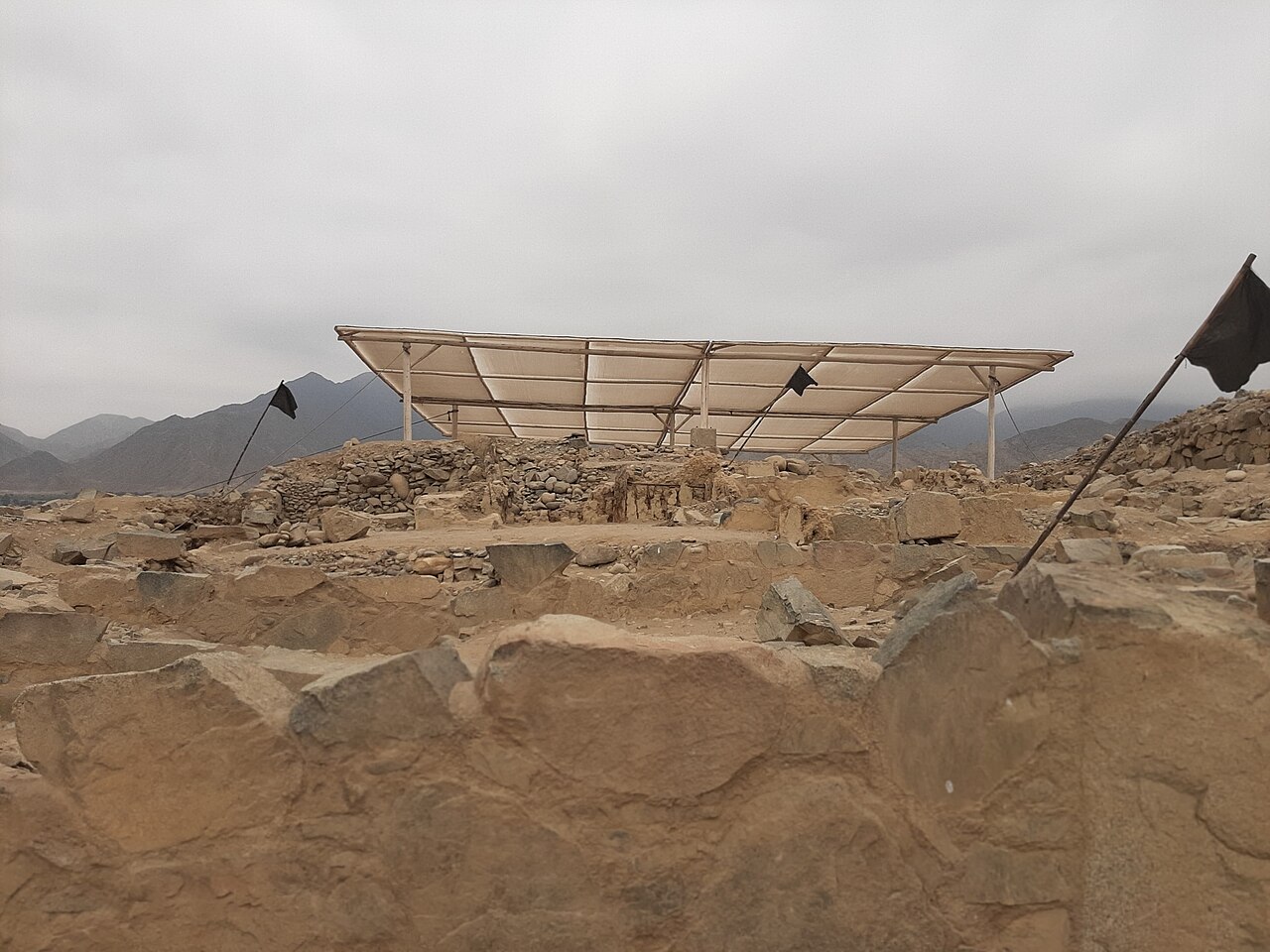
Caral is also notable for what has not been found there. Across roughly a thousand years of occupation, excavation has produced no weapons, no defensive walls and no mutilated remains. It does have elite residences and evident social ranking — this is not a society without status — but it appears to have been held together by ceremony and exchange rather than by force.
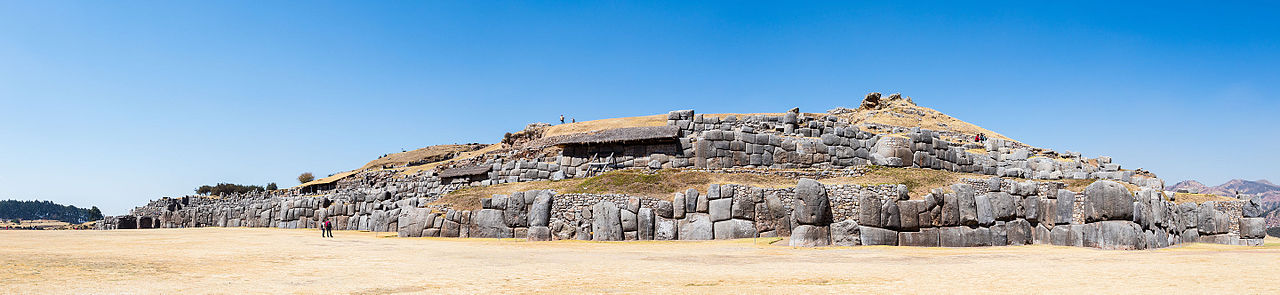
How the stone was actually fitted
This is documented rather than mysterious, and the documentation is better than the legends. Andean quarries at Rumiqolqa and Kachiqhata still show the working faces. Blocks were levered free along natural fracture planes, then shaped by pounding — not carving — with river-cobble hammerstones ranging from about 200 grams up to eight kilos, a graded set from rough reduction to fine finishing.
The joints were made by fitting, not by measuring. A block was lowered onto the one below, then lifted; the compressed stone dust left on the lower surface showed exactly where the two touched. Those high spots were pounded down, and the block was lowered again. Repeat until the dust smears evenly and the seam closes. It is slow, entirely reproducible, and experimental archaeology has done it.
Ollantaytambo, where the building stopped mid-sentence
Ollantaytambo is the best single site for this, because the Inca were still working on it when the Spanish arrived and the whole operation was abandoned in place.
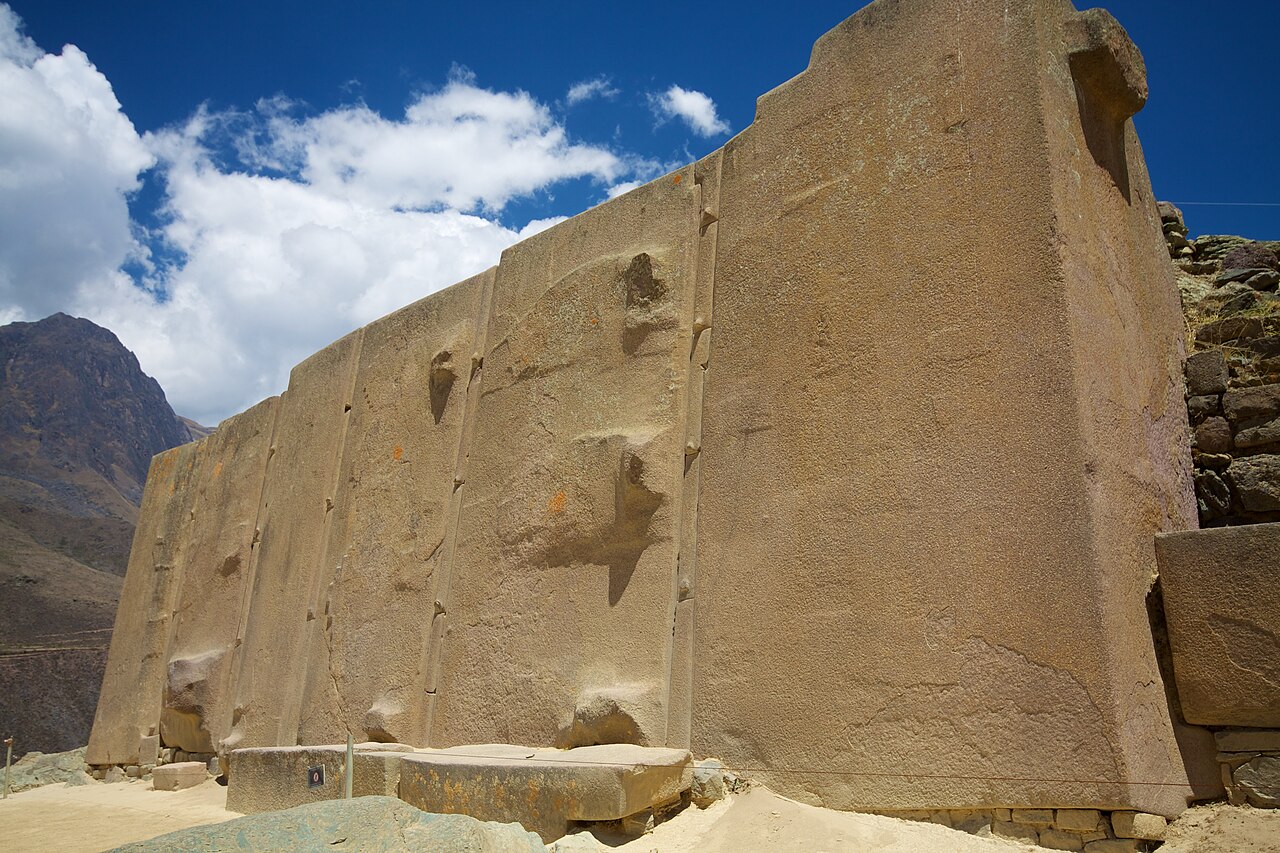
The rhyolite came from the Kachiqhata quarries on the slopes of Yana Urqu, four to five kilometres away and on the far side of the Urubamba river valley. The route is still legible on the ground: the transport roads, the earthen ramps, the wooden rollers — and the "tired stones," blocks that were dragged part of the way and then left where they stopped when the work ended.
A half-finished building site is worth more than a perfect one. Nothing has been cleared away, so the ramps, the abandoned blocks and the unfinished joints are all still lying in the sequence they were used in.
The stone surfaces carry whitish pit marks left by hammerstone impact, with finer pitting concentrated near the edges where smaller hammers were used to draft the joints. Some decorative grooves were made by genuine abrasion — a back-and-forth sawing motion — and sockets for metal cramps were pounded through from both faces until the centre could be punched out.
Jean-Pierre Protzen reproduced the whole method with hammerstones and reported it in 1985. There is no missing step in the account.
Who built them
The Inca ran a labour tax called mit'a: communities owed the state a rotation of workers rather than a share of goods. That is how the roads, terraces and walls were built — not by a permanent servile class, but by people serving a turn and going home. It is the same broad answer as at Giza, arrived at independently on the other side of the world, and it is the answer the evidence keeps returning for large ancient construction.
- Monte Verde was rejected for years before it was accepted. How should a field decide when evidence has finally become enough?
- The date of the first people in the Americas has moved twice within one lifetime. What would it take to convince you of a date twice as old again?
- Ollantaytambo was abandoned mid-build, which is exactly why we know how it was made. What can an unfinished building tell you that a finished one hides?
Monuments came before farming, and before kings
Gobekli Tepe was raised around nine thousand five hundred BCE by hunter-gatherers who farmed nothing, and so were the earthworks at Poverty Point. Monuments came before agriculture and before kings.
哥贝克力石阵约公元前九千五百年,由尚未务农的狩猎采集者建造;路易斯安那的贫穷点土方工程也是。纪念性建筑早于农业,也早于国王。
เกอเบกลีเตเปสร้างราว 9500 ปีก่อนคริสตกาล โดยคนล่าสัตว์เก็บของป่าที่ยังไม่ทำเกษตร เช่นเดียวกับงานดินที่พอเวอร์ตีพอยต์ สิ่งก่อสร้างขนาดใหญ่เกิดขึ้นก่อนการเกษตร และก่อนกษัตริย์
The textbook sequence used to run: agriculture produces surplus, surplus produces hierarchy, hierarchy produces monuments. The evidence no longer supports that order.
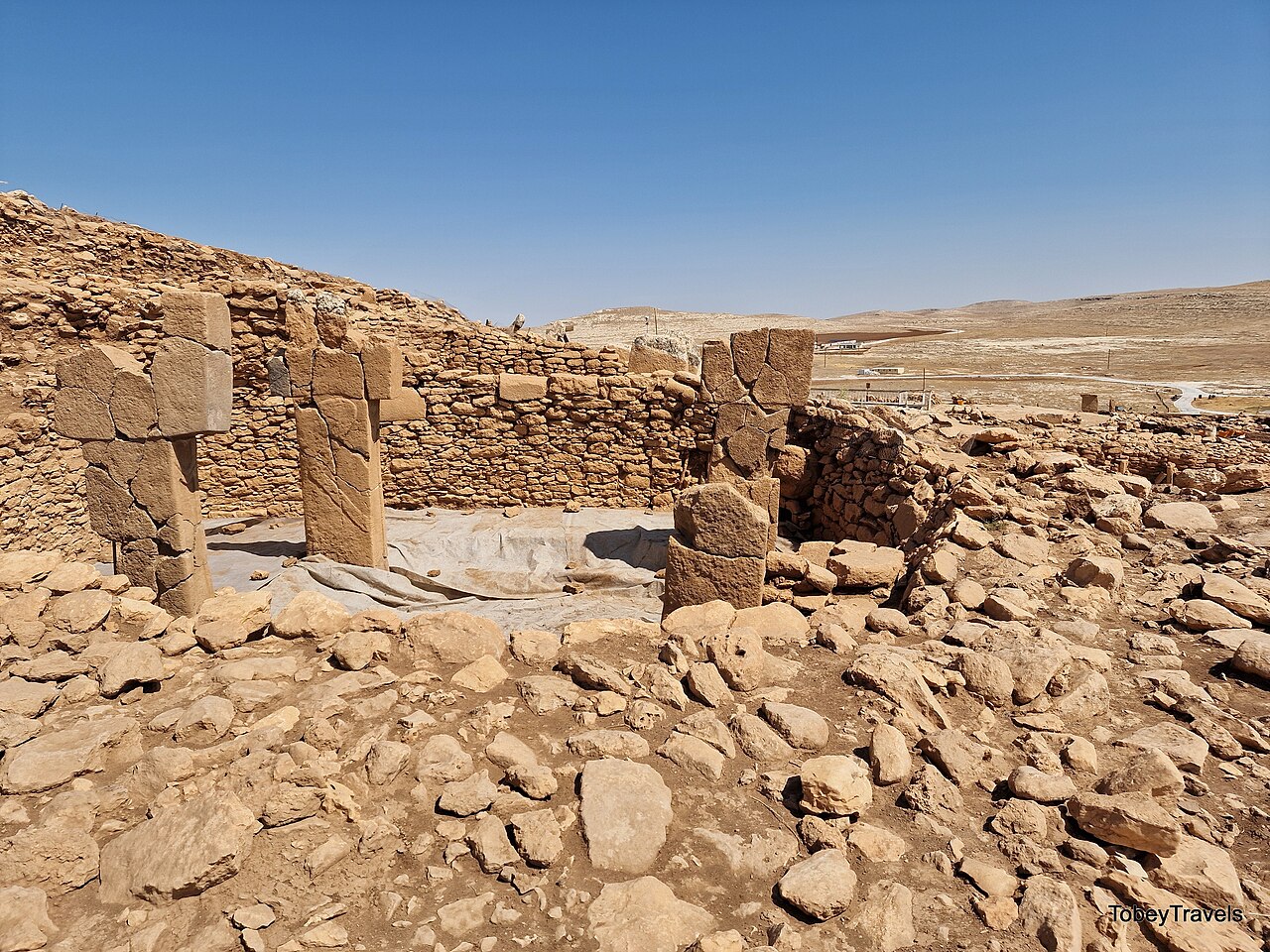
Göbekli Tepe and its neighbours were built by hunter-gatherers, millennia before agriculture reached the region. The excavations answer the obvious practical question directly: the limestone plateau immediately adjacent is the quarry, and it still holds cutting channels and unfinished pillars lying where they cracked, attached to the bedrock. The stone was worked on the spot, with stone.
The organising force appears to have been food and ceremony rather than command. Enclosure backfills are thick with smashed animal bone — gazelle, aurochs, wild ass — the residue of feasting on a scale that implies large gatherings. People came, ate, built, and went.
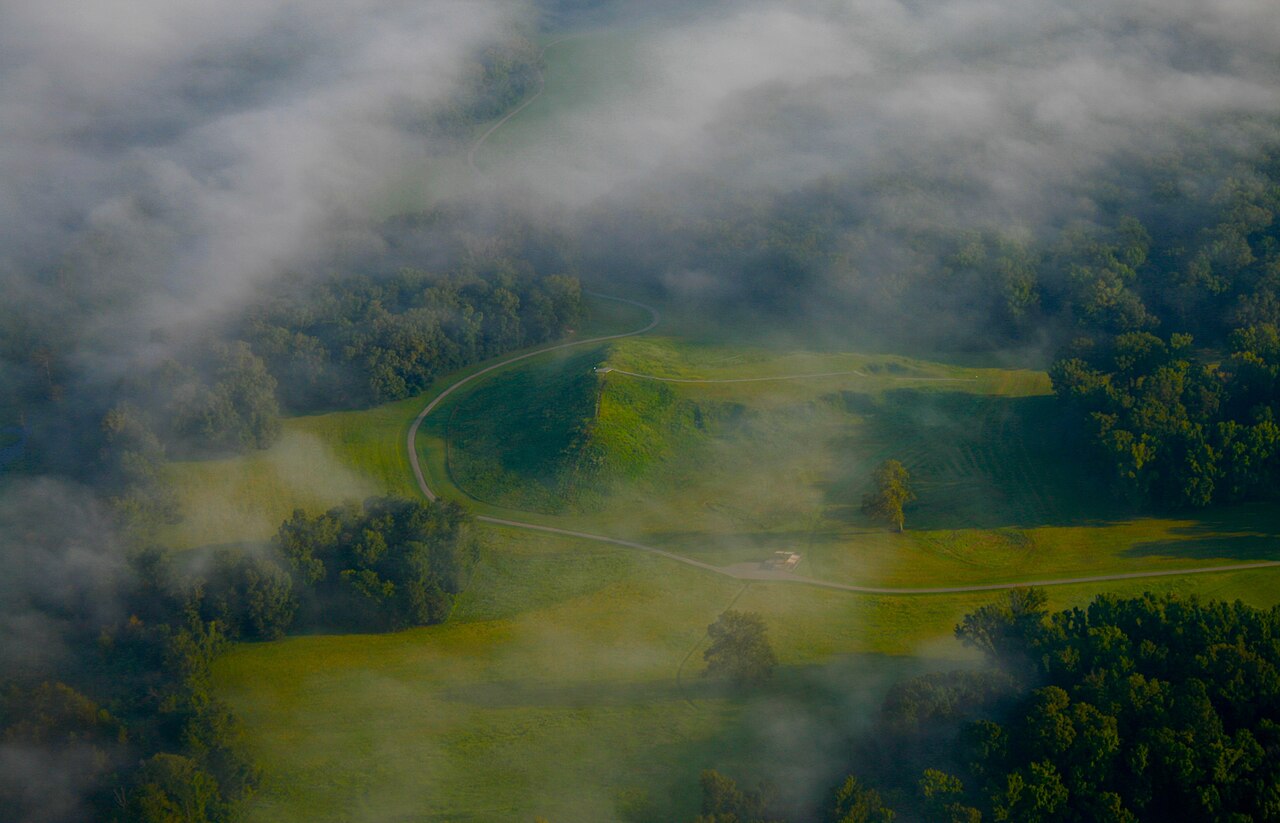
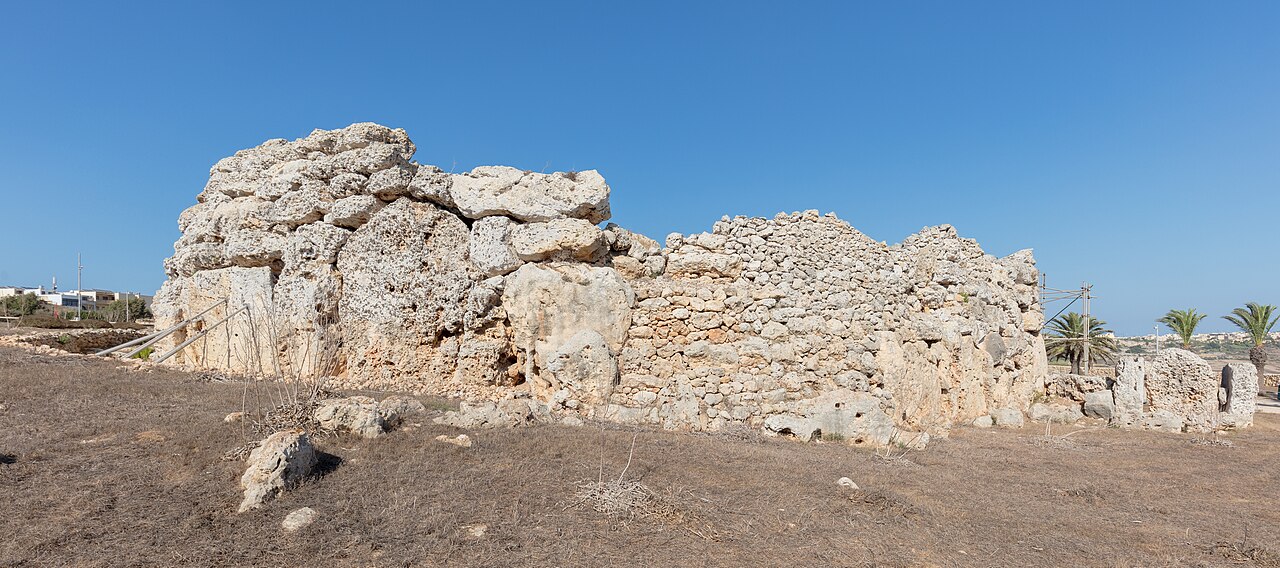
The same pattern recurs on other continents, independently.
- Göbekli Tepe was raised by people who farmed nothing at all. If they did not need it to survive, why do you think they built it?
- The enclosure fills are thick with the bones of enormous feasts. Would you work for weeks on somebody else's monument in exchange for a party?
- Mound A at Poverty Point went up in under three months with nobody in charge. How do you organise several hundred people without a boss?
Some of the largest early settlements have no palace in them
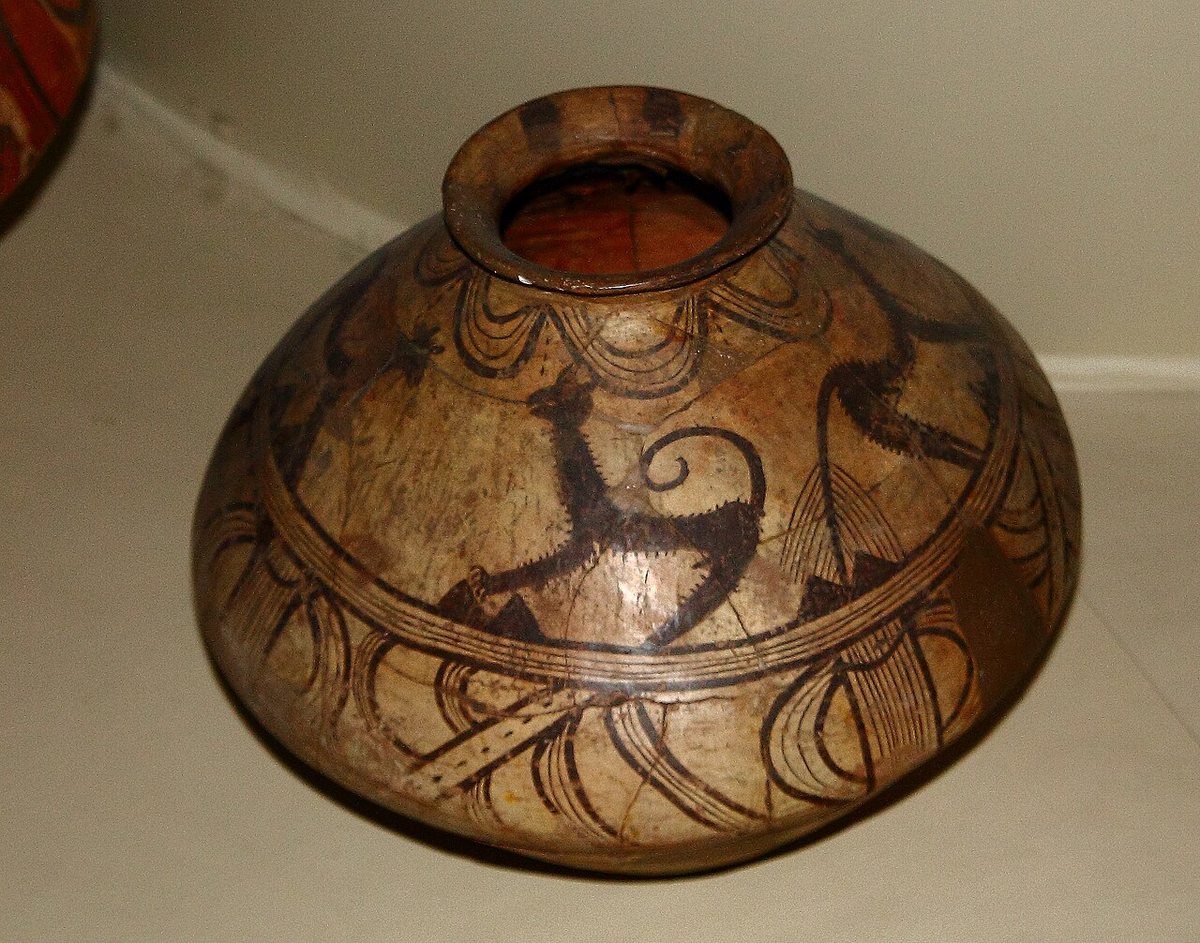
Catalhoyuk, the Trypillia megasites and Mohenjo-daro were all large, long-lived and technically accomplished, and none of them has a palace or a royal tomb in it.
恰塔霍裕克、特里波利耶巨型聚落和摩亨佐达罗都规模庞大、存续长久,却找不到宫殿,也找不到王陵。
ชาตัลเฮอยุก เมืองใหญ่ของวัฒนธรรมทริพิลเลีย และโมเฮนโจดาโร ล้วนมีขนาดใหญ่ อยู่มายาวนาน และมีเทคนิคขั้นสูง แต่ไม่พบพระราชวังหรือสุสานกษัตริย์
Çatalhöyük, occupied from about 7500 BCE, packed several thousand people into houses entered through the roof, with the dead buried beneath the floors. Twenty-five years of excavation under Ian Hodder found houses near-identical in size, layout and contents, no elite residences, no public buildings set apart from ordinary dwellings, and — from isotope analysis of bone — no differential access to food.
Further north, the Cucuteni-Trypillia culture built settlements of hundreds of hectares in rings of houses around 4000 BCE. Nebelivka, Taljanky and Maidanetske cover more ground than the earliest Mesopotamian cities and are older. They contain no palace, no central temple dominating the plan, and no royal burials. Roughly every sixty to eighty years the inhabitants appear to have burned the settlement deliberately and rebuilt it.
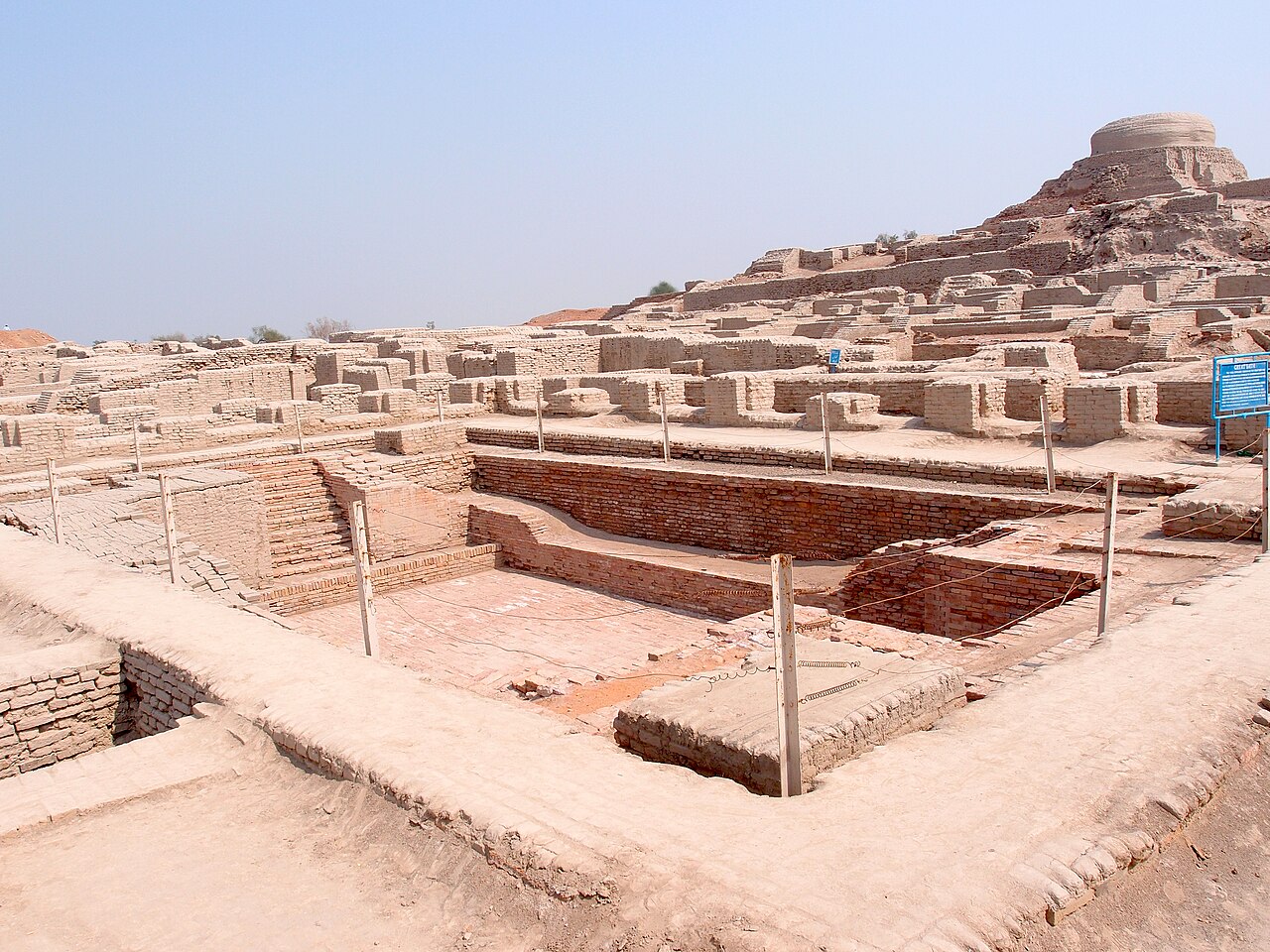
An absence of palaces is not by itself proof of an absence of rulers. The Indus script is undeciphered, much of Mohenjo-daro is unexcavated and the water table has put the earliest levels out of reach, and Trypillia population figures are disputed — the excavators Bisserka Gaydarska and John Chapman argue for lower numbers and partial occupation than older estimates assumed.
What can be said is narrower and still substantial: these places were large, long-lived and technically accomplished, and they left none of the archaeological signatures that rulers elsewhere reliably left behind.
- Mohenjo-daro had brick drains running under its streets and no palace anywhere in it. What kind of arrangement builds sewers but never a throne?
- Trypillia towns appear to have been burned deliberately every sixty to eighty years and rebuilt. What would make a whole community agree to that?
- At Çatalhöyük the dead were buried beneath the floors of the houses people lived in. How would living above your grandparents change a family?
Earthworks under the golf course
Watson Brake dates to about three thousand five hundred BCE. The Newark earthworks in Ohio align to the moon's eighteen point six year standstill cycle, became a World Heritage Site in 2023, and are now partly a golf course.
沃森布雷克土丘约公元前三千五百年。俄亥俄的纽瓦克土方工程对准月亮十八点六年的极点周期,二〇二三年列入世界遗产,如今一部分是高尔夫球场。
เนินดินวัตสันเบรกมีอายุราว 3500 ปีก่อนคริสตกาล ส่วนงานดินนวร์กในโอไฮโอวางแนวตรงกับวัฏจักรดวงจันทร์ 18.6 ปี ขึ้นทะเบียนมรดกโลกในปี 2023 และปัจจุบันบางส่วนเป็นสนามกอล์ฟ
The land that is now the United States holds monumental construction going back five and a half thousand years, and most of it is barely known outside the states it sits in.
The oldest is Watson Brake in Louisiana, an eleven-mound complex raised around 3500 BCE — older than Poverty Point, older than Stonehenge, and built by hunter-gatherers. Poverty Point follows on the same river system. Then, from about 100 BCE, the Hopewell earthworks of the Ohio valley.
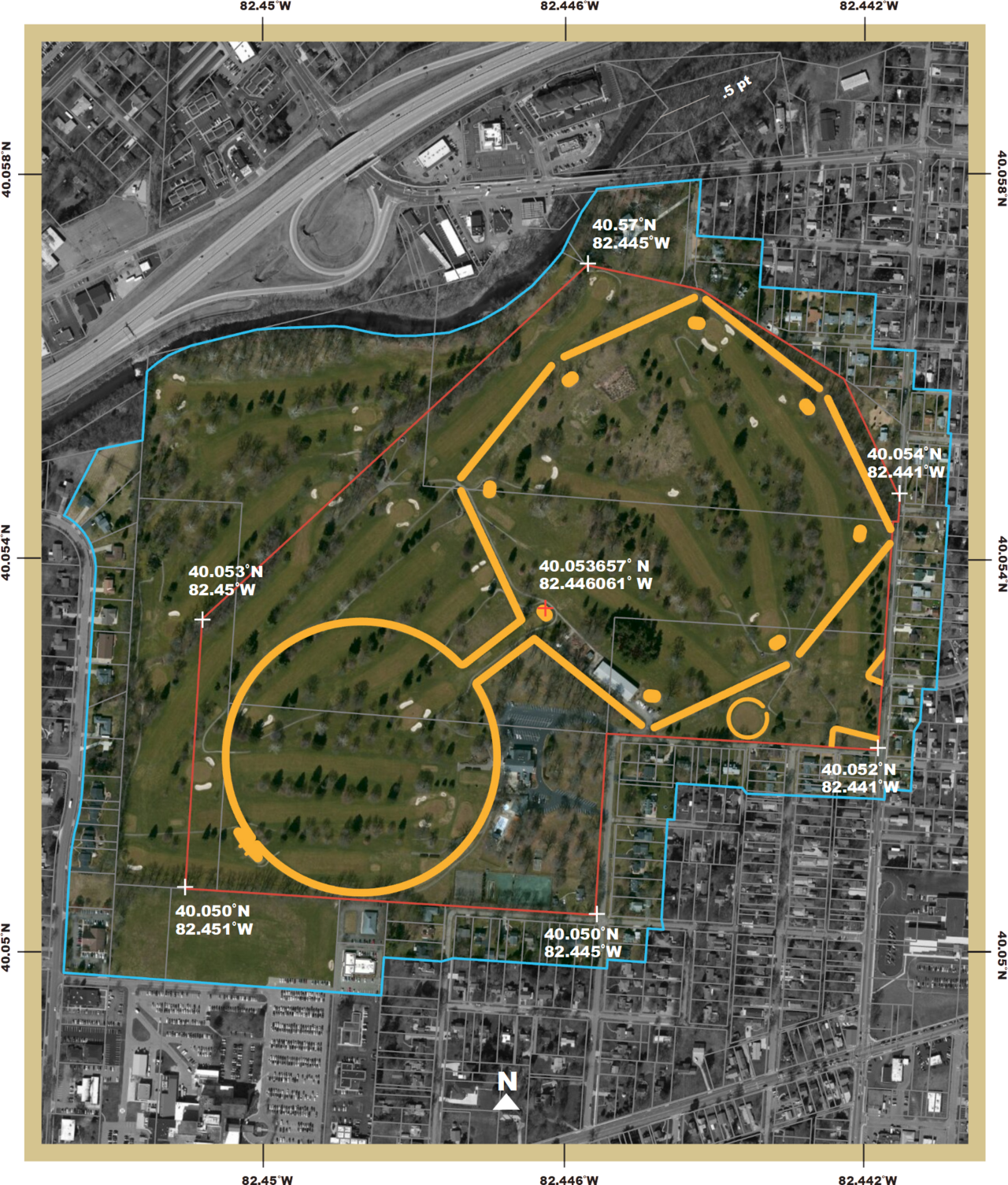
The octagon's walls are aligned to the moon's rising and setting points across the 18.6-year lunar standstill cycle — the slow wobble that shifts where the moon rises along the horizon and then returns.
To lay that out in earth you must watch the horizon for at least one full cycle, and realistically several, keeping records across generations. The alignment is the record.
Who built them
The Hopewell were not an empire and, as far as the evidence shows, had no centralised leadership and no kings. They were substantially hunter-gatherers, supplementing wild food with a few domesticated plants. What they did have was reach: obsidian from the Yellowstone region, copper from Lake Superior, mica from the southern Appalachians, and shark teeth and marine shell from the Gulf coast, all turning up in Ohio. Archaeologists call it the Hopewell Interaction Sphere, and it is a continental network without a capital.
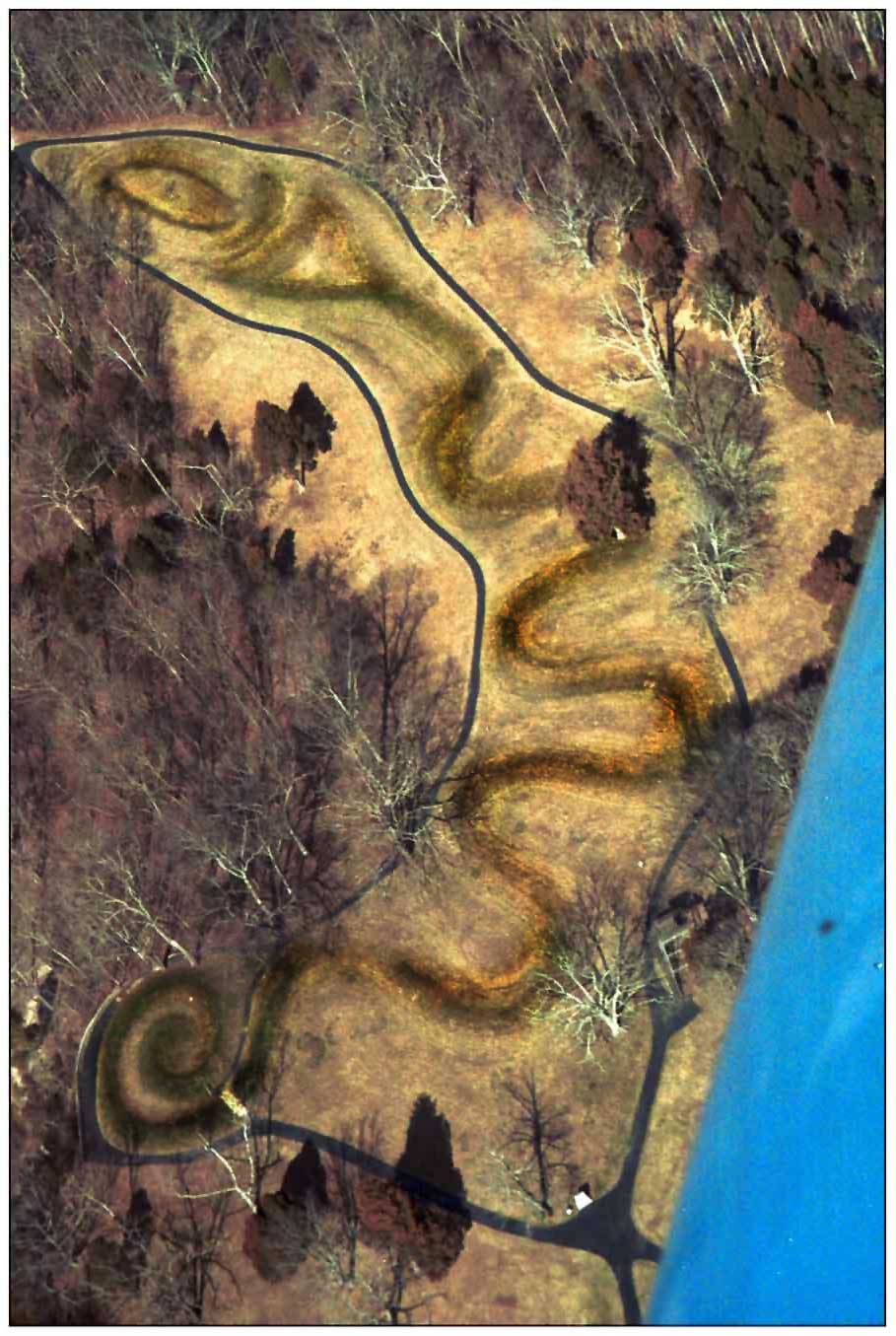
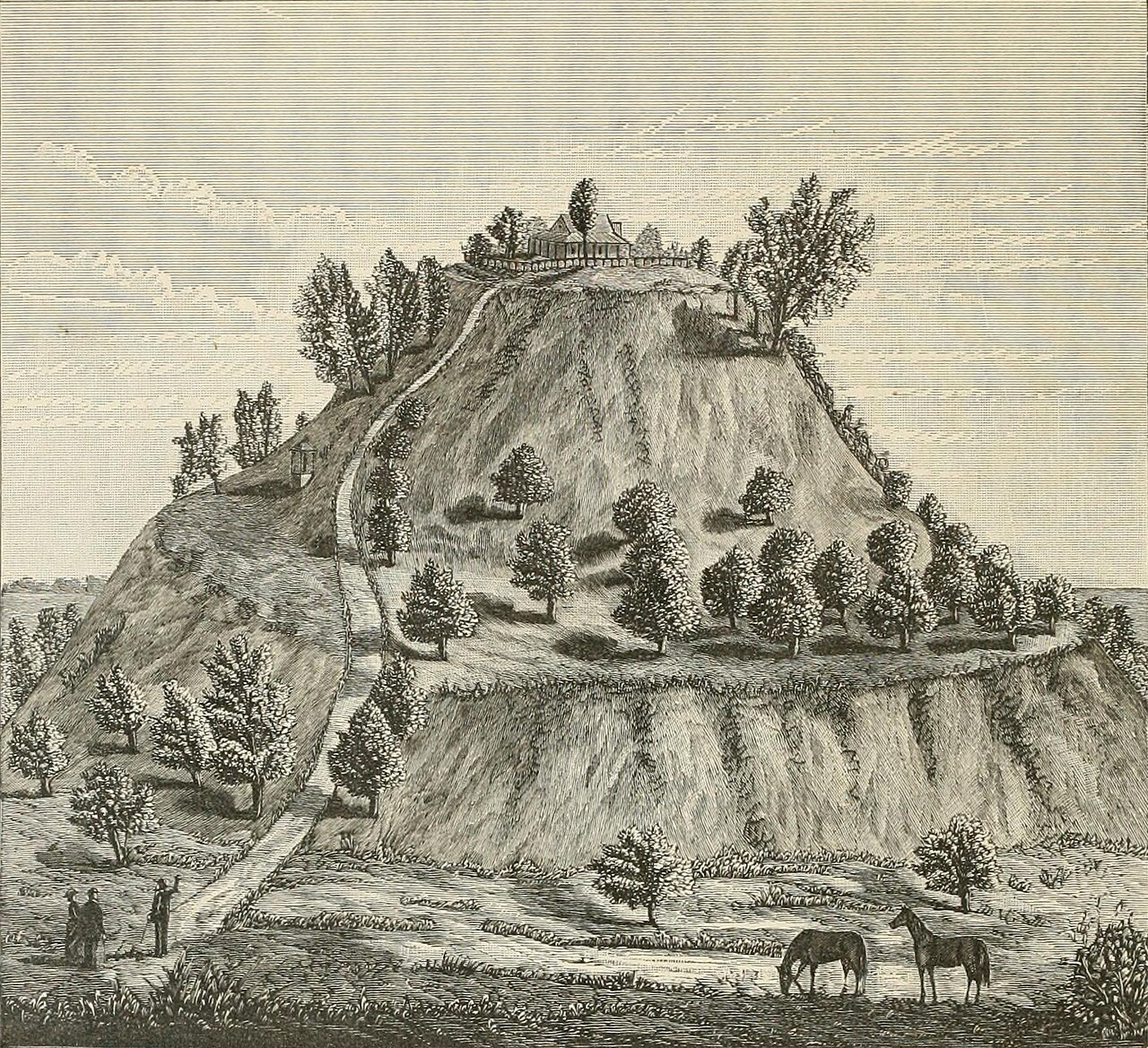
Further west, the Ancestral Puebloans built the great houses of Chaco Canyon in New Mexico between roughly 850 and 1250 CE — Pueblo Bonito alone rising four storeys and containing over six hundred rooms — together with astronomical alignments and a network of engineered roads running straight across the desert. Their descendants are the living Pueblo peoples of the southwest, which is worth stating plainly: these are not vanished civilisations, and the people who built them have not gone anywhere.
- The Newark octagon is aligned to a cycle that takes 18.6 years to come back round. What would it take for you to notice a pattern that slow — and then trust it enough to build on it?
- Part of the Newark earthworks is now a golf course. Who should get to decide what happens to a monument like that?
- Watson Brake is older than Stonehenge and almost nobody has heard of it. Why do you think some monuments become famous and others do not?
The pyramids record their own learning curve
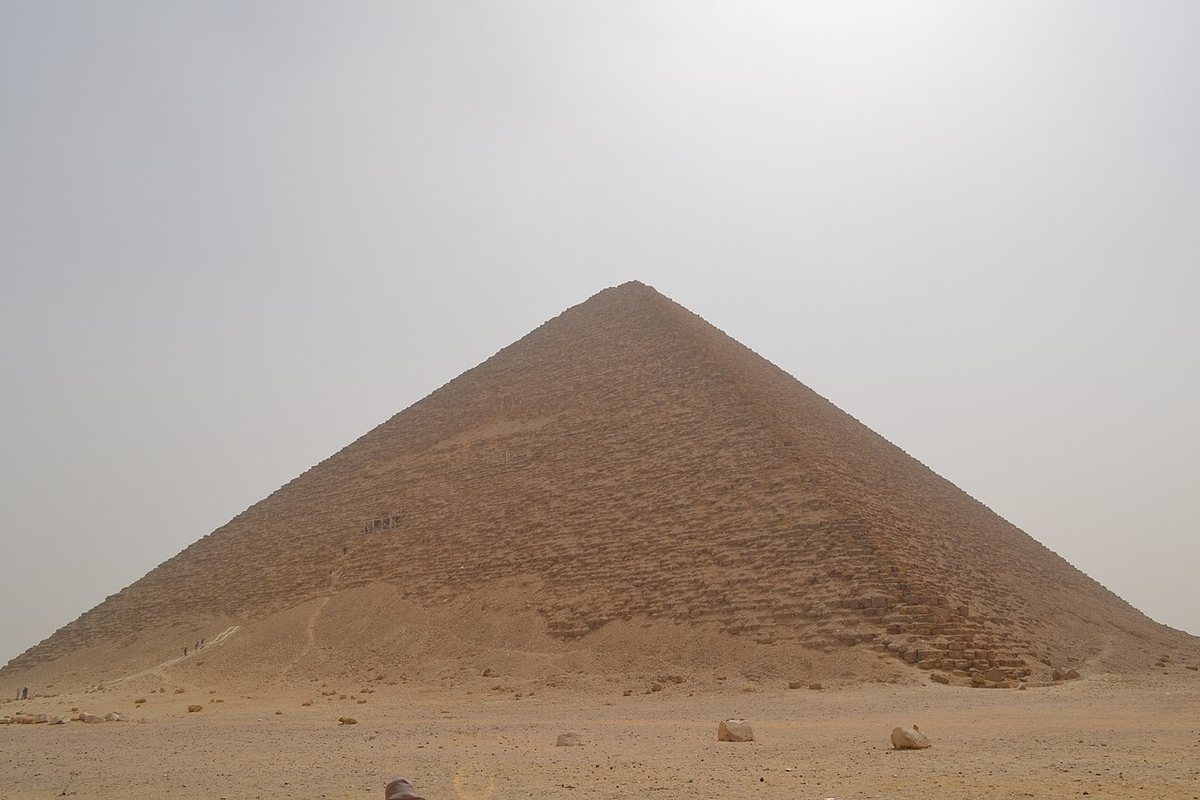
The first pyramid, Djoser's step pyramid, is the smallest of them. Meidum collapsed and the Bent Pyramid changed angle halfway up. The size grows step by step; it did not start at its largest.
第一座金字塔(左塞尔阶梯金字塔)是最小的。中间的美杜姆金字塔倒塌了,弯曲金字塔在施工中途改了角度。规模是一步步变大的,并非一开始就最大。
พีระมิดแห่งแรก คือพีระมิดขั้นบันไดของโจเซอร์ เป็นองค์ที่เล็กที่สุด พีระมิดเมย์ดุมพังทลาย และพีระมิดหักงอถูกเปลี่ยนมุมกลางคัน ขนาดค่อย ๆ ใหญ่ขึ้น ไม่ได้ใหญ่ที่สุดตั้งแต่แรก
It is sometimes said that the first Egyptian pyramid was the largest and most sophisticated, with no earlier architecture leading up to it — and that the knowledge must therefore have come from somewhere else. The physical record runs the other way, and it runs that way unusually clearly, because the Egyptians did not tidy away their failures.
Before any pyramid there were mastabas: flat-topped rectangular tombs built through the first two dynasties. The first pyramid, Djoser's at Saqqara around 2670 BCE, is essentially six of those stacked one on another. It is a step pyramid, not a smooth one, and at 330,400 cubic metres it is a fraction of what came later.
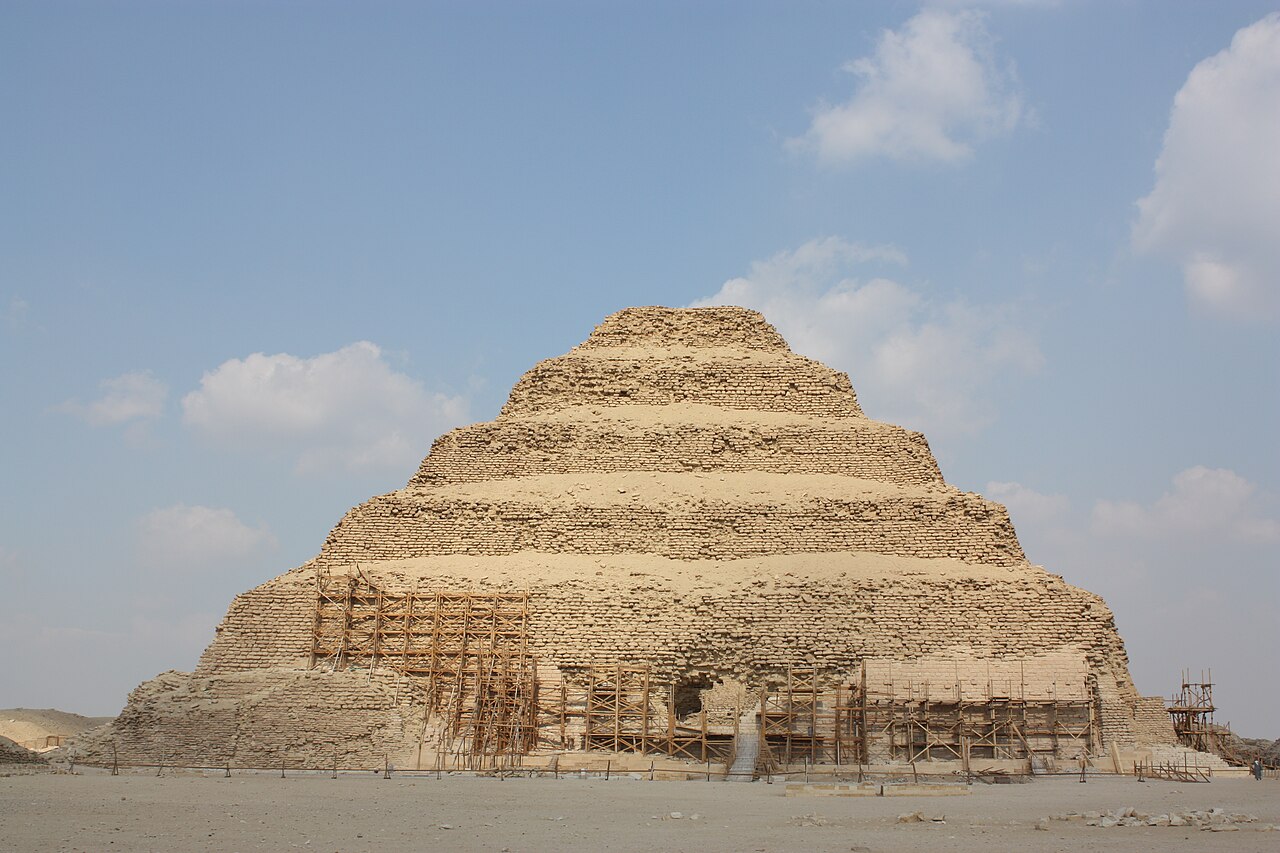
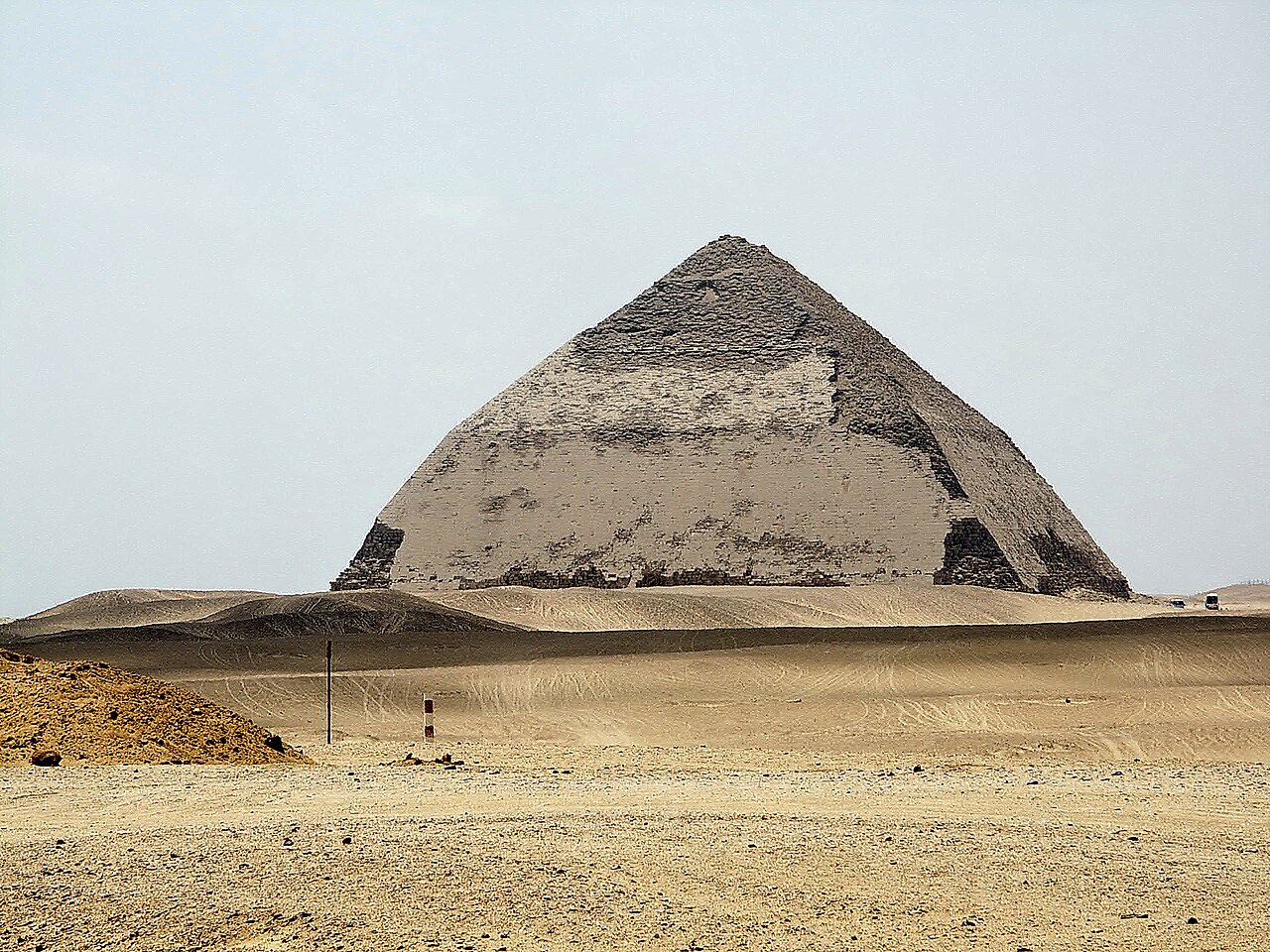
Between those two came the pyramid at Meidum, begun as a step pyramid and converted mid-project to a smooth-sided one. It collapsed. Sneferu then built the Bent Pyramid, met trouble again, and finished it at a compromise angle with its interior chambers unfinished. Only on his third attempt — the Red Pyramid, laid out at a safe 43°22' from the ground up — did anyone in Egypt complete a structurally sound true pyramid. His son Khufu built the Great Pyramid using what those three had cost to learn.
Who built them
The workers' settlements at Giza have been excavated, and they answer the question directly. There are bakeries and breweries on an industrial scale. The animal bone shows cattle, sheep and goat raised on estates elsewhere in Egypt and shipped in — the builders ate better than most Egyptians ever did.
The builders also left their own names on blocks hidden inside the masonry, and they organised themselves into competing gangs with names like "Friends of Khufu" and "Drunkards of Menkaure," subdivided into units that borrowed nautical terms — starboard, prow.
West of the workers' town lies a cemetery of more than 600 graves for ordinary labourers, built as small stepped domes and miniature mastabas, with grander tombs for overseers and artisans further up the slope. The skeletons show severe degenerative arthritis in spines and knees, and also show set bones and healed injuries — these people received medical care.
They were buried in the shadow of the pyramids they built. That placement was a privilege, and it is not what anyone does with disposable labour. The evidence describes a well-fed, medically treated, organised workforce of permanent artisans plus rotating conscripts serving an obligation to the state — not slaves.
- The Meidum pyramid collapsed and the Bent Pyramid had to change angle halfway up. Would you rather learn from a failure you can still see, or a success nobody explains?
- The builders left their own gang names inside the masonry — Friends of Khufu, Drunkards of Menkaure. What does that tell you about how they felt about the work?
- The pyramid workers ate better than most Egyptians and were buried in honourable tombs beside the king. Why do you think the slave story is the one that stuck?
Some of it never stopped
Thailand's Phra Mae Thorani and Mae Phosop: one descends the Indo-European stream, the other appears to have come up the rivers with rice from the Yangtze. Their ancestries have almost nothing in common.
泰国的大地女神帕梅托拉尼与稻米女神梅波索:一位沿印欧语系一路传来,另一位似乎是随稻作从长江流域上来的。两者来源完全不同。
พระแม่ธรณีและแม่โพสพของไทย องค์หนึ่งสืบสายมาทางตระกูลภาษาอินโด-ยูโรเปียน อีกองค์ดูจะเดินทางมากับข้าวจากลุ่มแม่น้ำแยงซี ทั้งสองมีที่มาต่างกันโดยสิ้นเชิง
Prehistory tends to be filed as a closed period, studied through objects dug out of the ground. But some of what it contains is not archaeological at all — it is still running.

Mae Thorani stands in wat compounds across the north. Mae Phosop (แม่โพสพ) is the rice mother, addressed at planting and harvest in ceremonies still performed in Lanna villages. Mae Khongkha (แม่คงคา) is the water, thanked each Loi Krathong when the krathongs go onto the Ping.
It is worth trying to trace two of them back and seeing how far the evidence carries. They stand in the same temple compounds and are addressed in the same breath — and their ancestries turn out to have almost nothing in common.
Phra Mae Thorani
Mae Phosop
The upper layers are documentary and secure: manuscripts, names, attested practice. The lower ones are inference of different kinds. Proto-Indo-European is a reconstruction — nobody ever wrote it down, and *Dʰéǵʰōm is an argument from cognates across daughter languages, not a recovered text. The rice-mother chain is weaker still, since it rests on the reasonable but unproven assumption that the rites travelled with the crop.
Neither column reaches the Neolithic figurines earlier on this page, and neither is a survival of them.
Two goddesses in the same courtyard. One arrived along the Indo-European stream, through Sanskrit and Pali and a fifteenth-century manuscript. The other appears to have been here already, and to have come up the rivers with the rice.
That is the honest answer to how far back they go, and the interesting part is that the answer is different for each. The categories that turn up in the deepest layers of the record — the earth, the water, the grain, the animal, the hand pressed against a wall — are not extinct. In much of the world, including the valley outside this window, they are simply ordinary.
- Mae Thorani came down through Sanskrit and Pali; Mae Phosop seems to have come up the rivers with rice. Two goddesses in one temple courtyard with almost nothing in common — does that matter to anyone praying there?
- In Europe the goddesses had to be dug up. In Thailand they never left. What difference does that continuity actually make?
- Which is the stronger evidence about the past: a text somebody wrote down, or a practice that never stopped?
Say the words out loud
Twenty-two terms this page uses, with pronunciation, meaning and an example sentence. Listen and Repeat drills them one at a time. Speaking drill opens the microphone and checks your pronunciation.
本页用到的二十二个术语,附发音、释义和例句。点“跟读”可逐词练习,点“口语练习”会打开麦克风检查发音。
คำศัพท์ยี่สิบสองคำที่ใช้ในหน้านี้ พร้อมคำอ่าน คำอธิบาย และประโยคตัวอย่าง กดปุ่มฟังแล้วพูดตามเพื่อฝึกทีละคำ หรือกดฝึกพูดเพื่อเปิดไมโครโฟนตรวจการออกเสียง
Prehistory has a vocabulary, and most of it is doing real work rather than showing off. These are the terms used above, with what each one actually means.
Listen & Repeat reads each word and then waits for you to say it back. Speaking drill turns on the microphone and checks whether the words came out clearly. On each card, say it reads the word, and tell me more opens a fuller explanation and a sentence to try.
🎤 Speaking drill — set 1 of 5
Press the microphone, then say all the words in the set out loud.