The words you need before you can argue about any of this
This page tests a claim about an invisible force, so the argument depends on words about evidence as much as words about the body. Learn what sham, blinding, effect size and mechanism mean here, because the whole disagreement turns on them. Say each word aloud at least once.
本页检验一种关于无形力量的说法,因此这场讨论既需要身体的词汇, 也需要证据的词汇。请先弄清"假针刺""盲法""效应量""机制"这几个词的意思,整场分歧都围绕它们展开。每个词至少大声读一遍。
หน้านี้ตรวจสอบข้ออ้างเกี่ยวกับพลังที่มองไม่เห็น การถกเถียงจึงต้องใช้คำศัพท์เรื่องหลักฐานพอ ๆ กับคำศัพท์เรื่องร่างกาย ทำความเข้าใจคำว่า sham, blinding, effect size และ mechanism ให้ดี เพราะข้อขัดแย้งทั้งหมดวนอยู่รอบคำเหล่านี้ อ่านออกเสียงทุกคำอย่างน้อยหนึ่งครั้ง
Two families of words. The first names things in the body. The second names the tools we use to decide whether a claim about them is true — and those are the ones most readers are missing. A person who cannot tell an effect from a mechanism cannot follow this argument, in any language.
- Which of these words did you already have in your own language but not in English? Does having the word change how carefully you can think about the idea?
- "Energy" is used on this page for electricity, for food, for qi and for marketing. Is one English word doing too many jobs? What would you split it into?
- Pick a health product advertised where you live. Which of these twenty words would you need to check whether its claim is honest?
What qi meant before anybody translated it as "energy"
The character for qi originally pictured vapour, and in ordinary Chinese it still does the most everyday work imaginable: weather, air, anger, breath. Classical writers used it for the stuff that gathers into a living thing and disperses when it dies. Translating that word as "energy" was a choice made in the last hundred years, and it quietly promised a measurable quantity that the original word never claimed to be.
"氣"字最初描绘的是蒸汽,而在日常汉语里它至今做着最普通的工作: 天氣、空氣、生氣、氣息。古代作者用它指聚则成生、散则为死的那种东西。把这个字译成"energy(能量)"是近百年才有的选择, 这个译法悄悄承诺了一个可测量的量,而原来的字从未如此自称。
อักษร "ชี่" เดิมวาดภาพไอน้ำ และในภาษาจีนทั่วไปมันยังทำงานธรรมดาที่สุด คือ อากาศ ลมหายใจ ความโกรธ ดินฟ้าอากาศ นักเขียนยุคคลาสสิกใช้คำนี้เรียกสิ่งที่รวมตัวกันเป็นชีวิตและสลายไปเมื่อตาย การแปลคำนี้ว่า "พลังงาน" เป็นทางเลือกในร้อยปีหลังนี้เอง และมันแอบสัญญาว่าเป็นปริมาณที่วัดได้ ทั้งที่คำเดิมไม่เคยอ้างเช่นนั้น
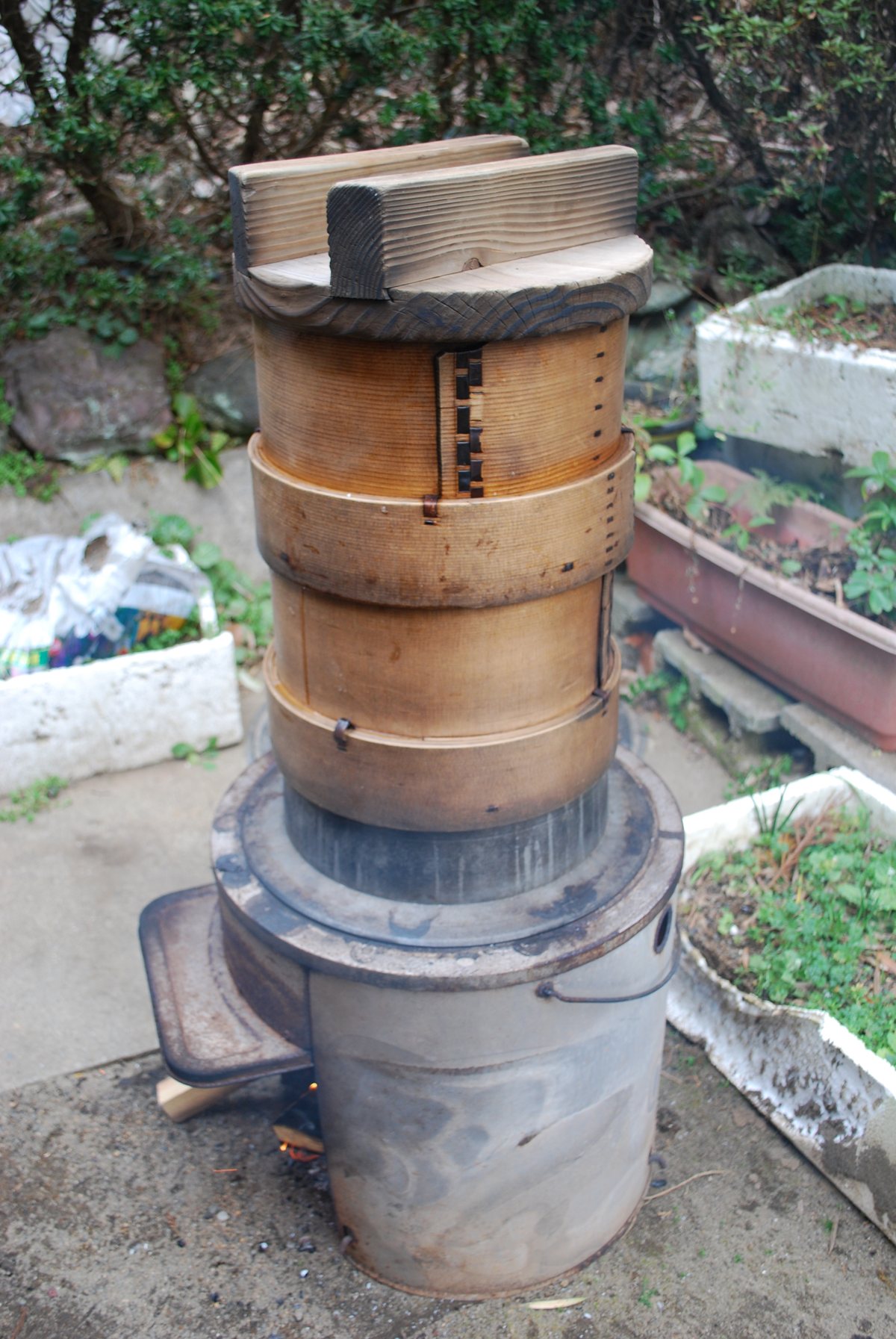
Start with the character, because it settles more of the argument than any laboratory has. 氣 is built from 气 — a picture of vapour drifting — over 米, grain. Steam coming off cooking rice. That is the root image: not a force, not a field. Something you can see rising off hot food on a cold morning.
And it never really left. If you learn Mandarin today, qi is one of the first words you meet, and it is entirely ordinary. The weather is 天氣 — sky-qi. Air is 空氣 — empty-qi. To get angry is 生氣 — to grow qi. A balloon is 氣球, a qi-ball. None of this is mystical to a Chinese speaker any more than "spirit" is mystical in "team spirit."
The classical uses, which are not one idea
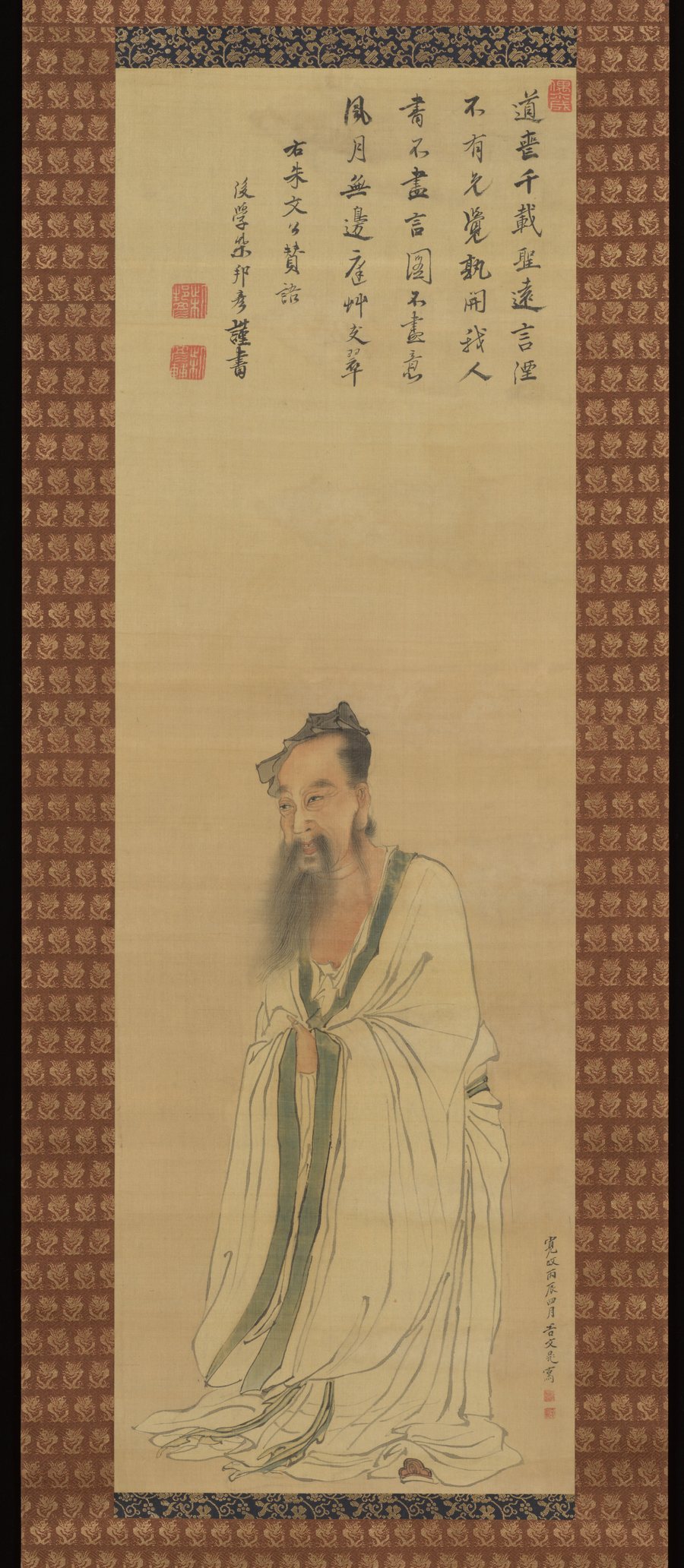
By the Warring States period the word is doing philosophical work, but not consistently. Mencius, in the fourth century BCE, writes of 浩然之氣 — a "flood-like qi" that a person accumulates by acting rightly over and over. That is a moral quality, closer to what English means by integrity or nerve than to anything electrical. Zhuangzi, in the same era, uses it cosmologically: a human life is qi gathering, and death is the same qi dispersing again — no more remarkable, he says, than the turn of the seasons.
Classical Chinese texts use qi across at least four distinct registers — meteorological (mist, weather), physiological (breath, vitality), moral (Mencius's cultivated flood-like qi) and cosmological (Zhuangzi's gathering and dispersal). These are related by metaphor, not by a shared definition.
A thousand years later the Neo-Confucians made it systematic. For Zhu Xi in the twelfth century, everything that exists is 理 li, its pattern or principle, together with 氣 qi, the stuff-and-activity that the pattern is expressed in. Qi there is nearer to "matter in motion" than to "energy" — it is what there is, rather than a quantity that flows through what there is.
What the translation did
"Energy" is a hard-edged word in English. Since the middle of the nineteenth century it has meant a conserved scalar quantity measured in joules, and the whole reason it is useful is that you can count it and find it has not changed. When qi is rendered as "energy," that promise comes along for free — and the moment a reader accepts it, they expect a meter.
A good part of the modern quarrel about qi is a translation artefact. "There is no instrument that detects qi" is true, and it is also close to meaningless as a criticism of a word whose ordinary sense is nearer to breath, weather and vigour than to joules. The interesting question is not whether qi passes as a physical quantity. It is what the practices organised around the word actually do to a body — which is measurable, and section 05 measures it.
Whether qi should be translated at all is genuinely disputed. Historians of Chinese science have argued for leaving it untranslated precisely because no English word carries its range. Much clinical and commercial writing keeps "energy" anyway, because it is the word patients already have. The cost of that convenience is the argument this page is about.
- Is there a word in your first language that English has to mistranslate? What gets lost, and does anyone gain from the mistranslation?
- If a practice helps people but its explanation is wrong, should the explanation be corrected publicly, quietly, or left alone? Who is harmed by each choice?
- English uses "energy" for electricity bills, for food, for enthusiasm and for qi. Choose two of those and explain to a partner exactly how they differ — without using the word "energy."
Drive the evidence yourself before anyone tells you what it means
Five benches, each holding a claim about qi to the same standard. Sort the claims by how much evidence each one has. Breathe at six breaths a minute and watch the heart follow. Twist a needle and watch the tissue grip it. Then run a detection test and see how easily chance imitates a real power.
五个操作台,用同一把尺子衡量关于"氣"的各种说法。 先按证据强弱给它们排序;接着以每分钟六次呼吸,看心率如何跟随;再旋转一根针,看组织如何抓住它; 最后跑一次检测实验,看看纯粹的运气有多容易冒充真本事。
ห้าโต๊ะทดลอง วัดข้ออ้างเรื่อง "ชี่" ด้วยมาตรฐานเดียวกัน จัดอันดับข้ออ้างตามน้ำหนักหลักฐาน หายใจหกครั้งต่อนาทีแล้วดูหัวใจตอบสนอง หมุนเข็มแล้วดูเนื้อเยื่อยึดจับ จากนั้นลองทดสอบการรับรู้ เพื่อดูว่าความบังเอิญเลียนแบบพลังจริงได้ง่ายแค่ไหน
Everything below is a working instrument, not an illustration. The numbers move because they are computed, and where a figure is showing a published result the citation is on the panel. Where something is not established, the instrument says so in the same voice it uses for the things that are — which is the habit worth taking away.
⚖️ The claim ladder
Four rungs, from "can it be counted at all" up to "is the mechanism proved". Each marker sits on the rung its claim is about; its colour says whether the claim got there. Click any marker. Notice the shape: solid green in the middle, hollow red at both ends — the claim fails hardest at the bottom, where the measuring is, and at the top, where the explanation is.
Pick a marker
Each one names a specific claim and where the evidence for it actually stops.
🫁 Breathe slowly and watch the heart follow
Qigong, tai chi, pranayama and Christian rosary prayer all converge on a breathing rate near six breaths a minute — and that is not a coincidence, it is a property of the circulatory control loop. Drag the slider and find the peak yourself. This is the strongest "the practice does something measurable" figure on the page.
📊 How big is the effect, really?
A result can be real and tiny at the same time, and headlines almost never say which. Each bar is a published finding drawn to the same scale, with the honest uncertainty around it. Pick a comparison; read what the number actually licenses you to say.
🪡 Needle grasp — a mechanism that really was found
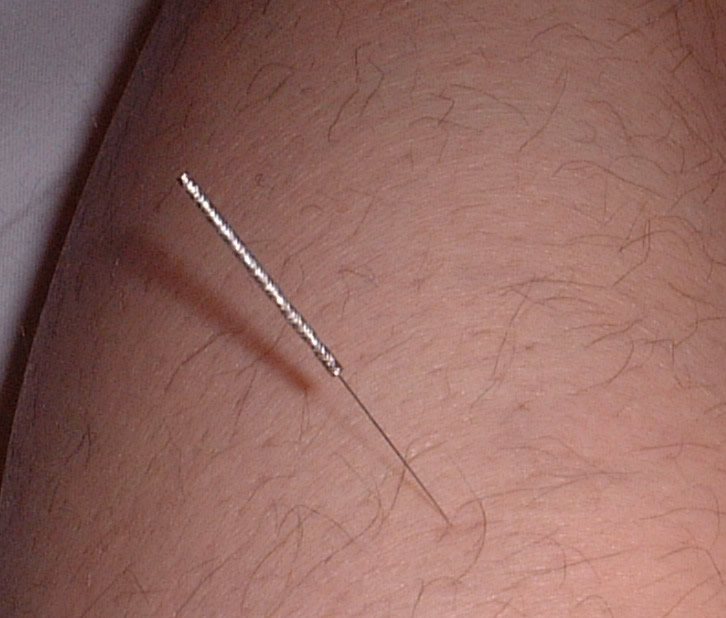
Rotate an acupuncture needle in connective tissue and collagen fibres wind around the shaft like thread on a spindle. The tissue grips; the pull force needed to withdraw the needle rises sharply. This is measured, filmed and reproducible. It is also not a meridian — it is ordinary loose connective tissue doing ordinary mechanics.
🎲 Can you feel it? — chance versus a real ability
A practitioner claims to sense a field with their hands. You hide your hand over one of theirs; they guess which. Set the true ability and run the trials. With a handful of attempts, pure luck looks convincing. This is why the number of trials, decided before you start, is the whole ballgame.
- On the claim ladder, several claims reach rung three and none reaches rung four. Explain to your partner, in your own words, what it means for a treatment to work without anyone knowing why — then say whether that should worry a patient.
- The needle bench shows the twist mattering about nine times more than the location. If the map turns out not to be doing the work, should practitioners keep teaching it? Whose call is that — the practitioner's, the regulator's, or the patient's?
- On the chance bench, how many trials did you need before luck stopped looking like skill? Where else in your life do you judge someone on far fewer attempts than that?
What has actually been measured, with the awkward parts left in
Needling grips connective tissue and releases adenosine, slow breathing swings the heart, and tai chi keeps old people off the floor. All measured, all real, none of it requiring qi to flow anywhere. Every number below carries its own caveat, because a citation without its limitations is not evidence, it is decoration.
針刺會抓住結締組織並釋放腺苷,緩慢呼吸使心率大幅擺動, 太極拳讓老人少跌倒。這些都經過測量、都是真實的,但沒有一項需要"氣"在體內流動。 下面每個數字都附帶它自己的限制,因為只給出處而不給限制的引用不是證據,只是裝飾。
การฝังเข็มยึดเนื้อเยื่อเกี่ยวพันและปล่อยอะดีโนซีน การหายใจช้าทำให้หัวใจแกว่งมาก และไทเก๊กทำให้ผู้สูงอายุล้มน้อยลง ทั้งหมดวัดได้จริง แต่ไม่มีข้อใดต้องอาศัยการไหลของชี่ ทุกตัวเลขด้านล่างมีข้อจำกัดกำกับไว้ด้วย เพราะการอ้างอิงที่ไม่บอกข้อจำกัดไม่ใช่หลักฐาน แต่เป็นเครื่องประดับ
Four things that are true
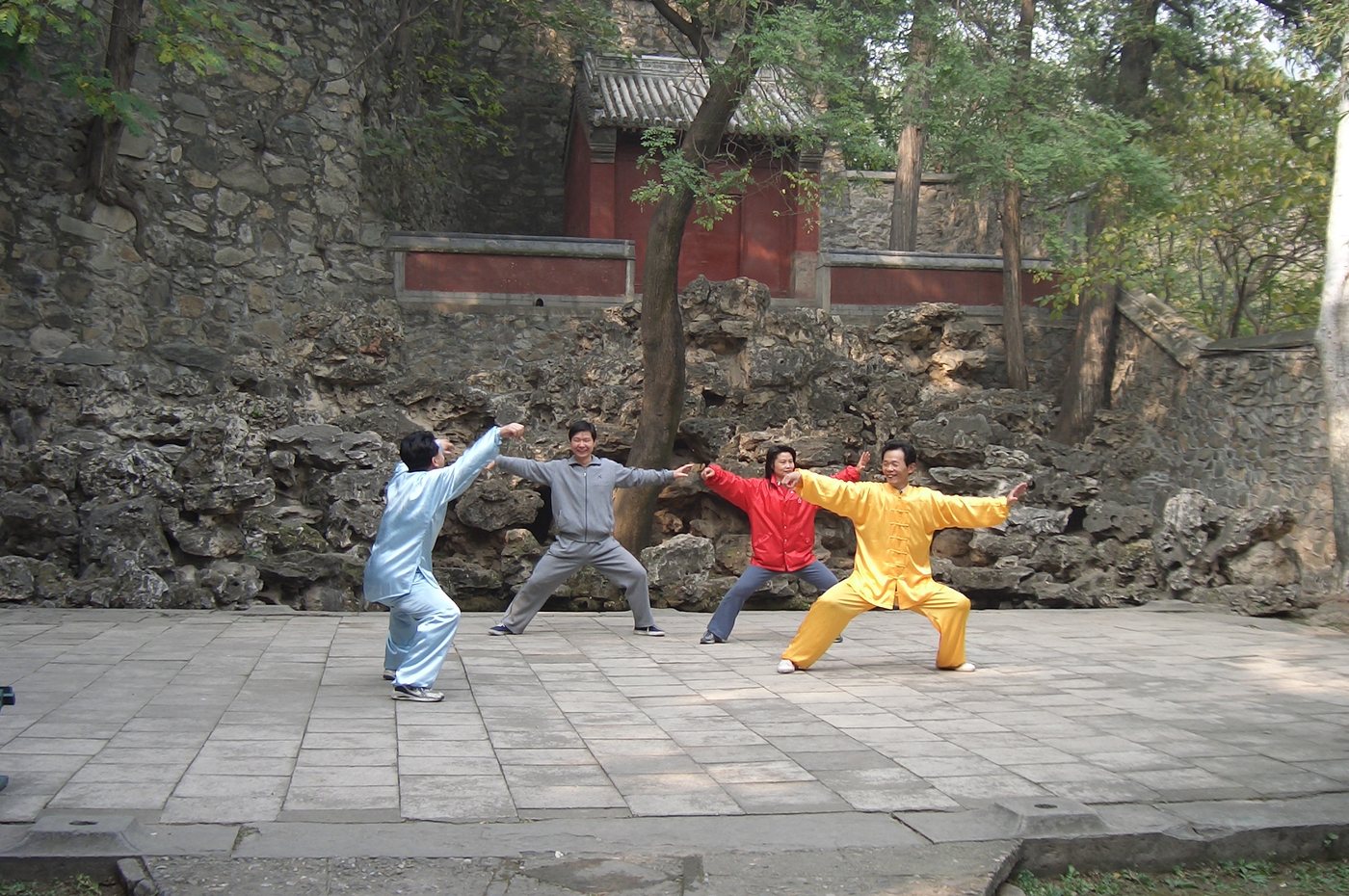
Start with the strongest, which is also the least exotic. In the Cochrane review of exercise for preventing falls — 108 trials and more than 23,000 people — tai chi reduced the number of older people who fell by about a fifth, and that particular outcome was rated high-certainty. Read the neighbouring row honestly too: the reduction in the overall rate of falls was rated low-certainty, with an interval running to 0.99. And ordinary balance and functional exercise did better than tai chi in the same review.
Second, the needle really does something mechanical. Sixty people, a robotic needling instrument, subjects blinded: rotating the needle one way raised the force needed to pull it out by 167%. That is not subtle and it is not disputed. But the same paper reports that needling at acupuncture points beat control points by only 18% — so the twist matters about nine times more than the location — and its author states plainly that the effect "is not unique to acupuncture points."
Unidirectional needle rotation increased pull-out force from about 36.5 to 97.5 grams (+167%, p < 0.001). Bidirectional rotation increased it by 52%. Acupuncture points differed from control points by 18%, reaching significance at only three of eight locations.
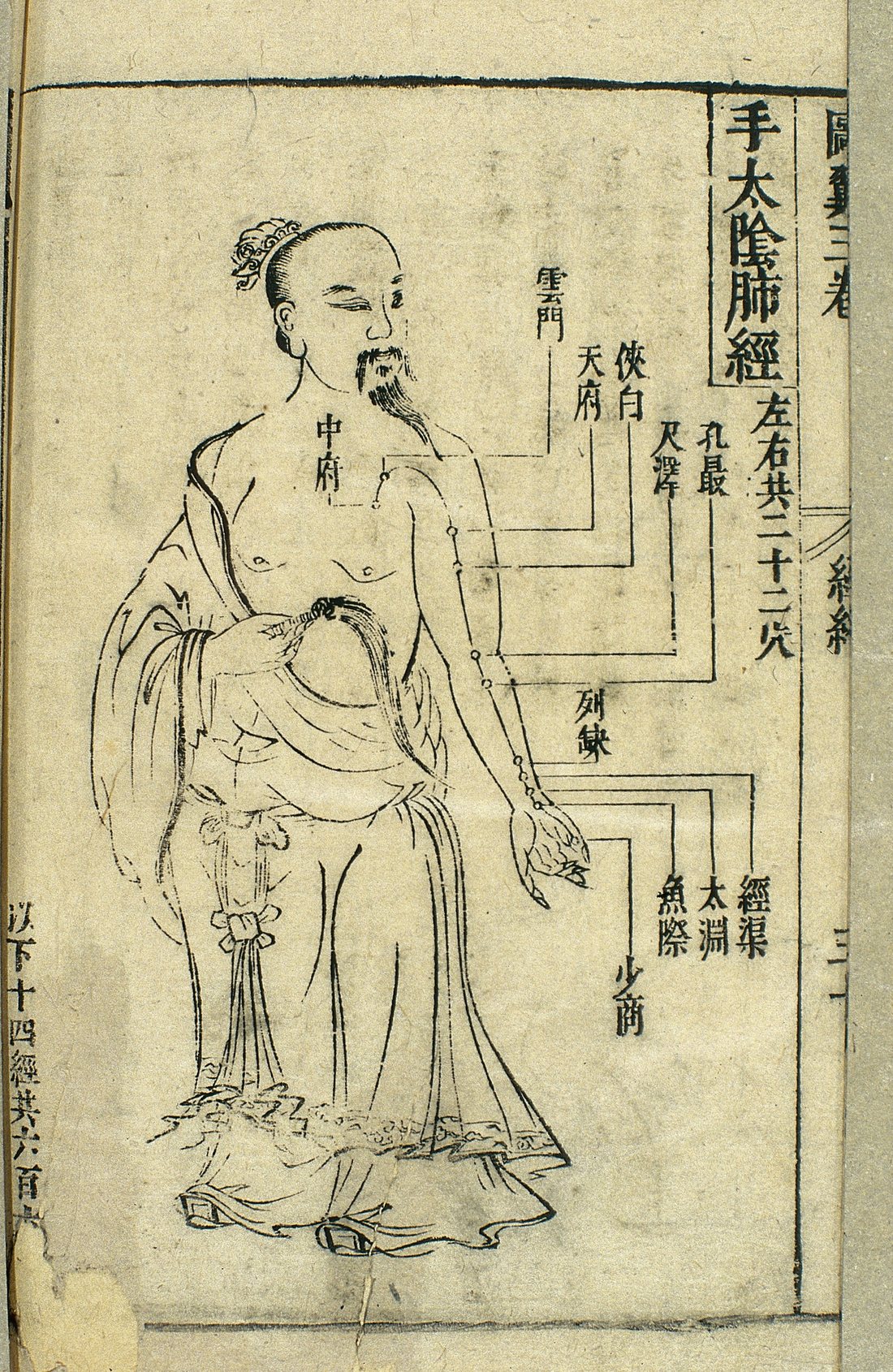
Third, the chemistry. In mice, thirty minutes of needling at a hind-leg point raised extracellular adenosine roughly twenty-four-fold, and the pain relief disappeared entirely in animals bred without the adenosine A1 receptor. That is a proper mechanism, of the kind this field is usually accused of never producing. It is also a mouse, there was no sham needling arm to test whether the point mattered, the human follow-up managed only a 1.8-fold rise while measuring no pain outcome at all, and nobody outside that laboratory has reproduced the chain.
Fourth, the breathing, which is bench two. There is nothing controversial about it: the pressure-regulating loop between heart, vessels and brainstem has a resonance near a tenth of a cycle per second, and breathing at that rate — about six breaths a minute — produces the largest heart-rate swing the system can make. Qigong, tai chi, pranayama and the recited rosary all land in that neighbourhood without having consulted each other.
Every one of these results survives the deletion of the word qi. Tissue mechanics, local chemistry, a control-loop resonance and balance training account for all of it. What the classical framework supplied was not the mechanism but the protocol — breathe at this rate, stand this way, move this slowly, keep doing it for years — and it arrived at those protocols centuries before anyone could measure why they worked.
And the acupuncture number everyone quotes
The largest analysis pooled the original records of individual patients from 29 trials and 17,922 people. Real acupuncture beat sham acupuncture — genuinely, statistically. It beat it by 0.23 standard deviations for back and neck pain, 0.16 for osteoarthritis and 0.15 for chronic headache. Against no acupuncture the same comparisons were 0.55, 0.57 and 0.42.
Those two rows are the whole argument in six numbers. The treatment works. Most of what it delivers is also delivered by fake needles at wrong places — which means the needling specifics contribute the smaller share, and the consultation, the attention, the ritual and the expectation contribute the larger one.
What that gap means is argued over by serious people. One reading: the sham-vs-real difference is statistically real and therefore acupuncture has a specific effect. The other: an effect that small, in trials where patients cannot be perfectly blinded to whether a needle broke the skin, is what residual bias looks like. Both camps are working from the identical numbers.
- The mouse adenosine study is beautiful and has never been reproduced elsewhere. How much should a result you cannot repeat count for? Would your answer change if it agreed with something you already believed?
- Every finding in this section survives the deletion of the word qi. Does that make the word useless, or is it doing a job the physiology cannot do?
- Acupuncture beats fake acupuncture by a little and beats nothing by a lot. If you were a health minister with a fixed budget, what would you actually do with that fact?
The benefit is there. The mechanism it is credited to is not.
Qi cannot be measured at all, and no instrument has ever read it. But the practices built around it produce effects that do appear in trials. Evidence is not one score. A claim can be empty at the bottom and solid at the top, and knowing which end failed is the whole skill.
"氣"根本無法測量,也從未有儀器讀出過它。 然而圍繞它建立的練習確實在試驗中產生了可觀察的效果。證據不是單一分數:一個主張可能底層空洞而頂層扎實, 分辨是哪一端失敗,正是這項技能的全部。
"ชี่" วัดไม่ได้เลย และไม่เคยมีเครื่องมือใดอ่านค่ามันได้ แต่การฝึกที่สร้างขึ้นรอบคำนี้กลับให้ผลที่ปรากฏจริงในงานวิจัย หลักฐานไม่ใช่คะแนนเดียว ข้ออ้างหนึ่งอาจกลวงที่ฐานแต่แน่นที่ยอด และการรู้ว่าปลายไหนล้มเหลวคือทักษะทั้งหมด
Set the whole case out in one ledger and the argument stops being about mysticism versus science. It becomes about where on the ladder the claim stopped climbing — and the answer is not where most people expect.
| Question | Answer |
|---|---|
| Is there a unit for it? | No |
| Can you buy an instrument that reads it? | No |
| Is the proposed mechanism confirmed? | No — meridians unfound |
| Does it change the body measurably? | Yes — needle grasp, adenosine, heart-rate swing |
| Does it help people in controlled trials? | Yes — fewer falls; pain, modestly |
| Is that what it is sold on? | Sometimes — often sold on the unproven mechanism instead |
Read the column downwards, because the order is the finding. Everything at the bottom of the ladder — the unit, the instrument, the mechanism — is a No. Everything near the top, where a treatment either helps a person or does not, is a Yes. That is upside down compared with how most claims fail, and it is why qi is worth spending a whole page on.
Benefit without mechanism, and what to do about it
Something works, and the explanation attached to it is wrong or unverifiable. This is an ordinary situation in medicine rather than a scandal: aspirin was in use for about seventy years before anyone could say why it worked, and it did not stop working while we waited. The correct response is to keep the practice, keep testing it, and stop defending the explanation.
What makes it awkward is that the practice and the explanation arrive as a single package, taught together for two thousand years. Pulling them apart is unfamiliar work. It is much easier to accept both or reject both, and both of those shortcuts get the answer wrong — one by keeping a mechanism the evidence never supported, the other by throwing away balance training that demonstrably keeps people off the floor.
The commoner error here is not credulity, it is the tidy dismissal. "There is no instrument that detects qi" is true and is treated as though it settled the clinical question, which it does not touch. A wrong explanation is a reason to correct the explanation. It is not, by itself, evidence that the practice does nothing — and on this subject the trials say plainly that it does something.
What a practitioner should say to a patient when the treatment helps and the explanation is false is not settled. One camp says the explanation is part of what makes it work and dismantling it harms the patient. Another says informed consent is not optional and a patient told a false story cannot give it. This page has no authority to settle that, and neither side is being stupid.
- Would you take a treatment that works for reasons nobody can explain? Defend your answer with something you have actually taken or done.
- The page argues that dismissing the practice along with the explanation is the commoner error. Is that true of you? Describe a time you rejected something whole because one part of it was wrong.
- Your friend's grandmother does tai chi every morning and says it is because of qi. She falls over less than her neighbours. What, exactly, do you say to her — and does it change if she has started paying a great deal for it?
Four questions that survive after you forget everything else here
Ask four things of any claim about an invisible force: what is the unit, compared to what, how big is the difference, and what result would prove it wrong. A claim that cannot answer the fourth question is not losing the argument — it is not having one.
面對任何關於無形力量的說法,請問四件事:單位是什麼、 與什麼相比、差異有多大、什麼結果會證明它是錯的。答不出第四個問題的主張並不是輸掉了辯論,而是根本沒有在辯論。
ถามสี่ข้อกับทุกข้ออ้างเรื่องพลังที่มองไม่เห็น หน่วยคืออะไร เทียบกับอะไร ต่างกันมากแค่ไหน และผลแบบใดจะพิสูจน์ว่ามันผิด ข้ออ้างที่ตอบข้อสี่ไม่ได้ ไม่ได้กำลังแพ้การถกเถียง แต่มันไม่ได้อยู่ในการถกเถียงเลย
You will not remember the adenosine study. You might remember these.
1 · What is the unit?
Not "is it real" — what would you write on the axis. Millimetres of mercury is a unit. Beats per minute is a unit. "Vibrational frequency" as used in a shop is not a unit, even though frequency genuinely is one, because nobody will tell you of what. If the answer is a shrug, everything above that point on the ladder is decoration.
2 · Compared to what?
The single most useful question in this whole subject, and the one bench three was built around. Acupuncture beats nothing by a lot and beats sham by a little, and those two sentences describe the same treatment. A study with no comparison group is a story about people who got better, which is a story you can tell about almost any group of people who waited.
3 · How big?
"Statistically significant" answers a different question than the one you are asking. With enough participants a difference far too small to feel becomes certain. Insist on the size, in units you understand — a fifth of a standard deviation, a fifth fewer falls — and a lot of confident headlines quietly deflate.
4 · What would prove it wrong?
The sharpest of the four. "Qi flows through meridians" cannot answer it as usually stated. "A practitioner can tell which hand is near theirs, better than chance" answers it completely — and so it could be tested, and it was, and it failed. Notice that the second version is the friendlier one: it gave the claim a way to win.
Label claims as you read them — verifiable, contested, or somebody's argument — and refuse to let one wear another's clothes. It costs a second per sentence. It works on advertising, on politics, on your own confident opinions, and on this page, which has been labelling itself in front of you the whole way down so that you can practise on it.

Qi was chosen for this page because it fails in the direction people do not expect. The usual worry is an explanation with nothing under it, and that worry is correct here — but the practice underneath the explanation kept passing its tests anyway. Once you have seen a claim come apart into a part that survives and a part that does not, you stop grading things with a single mark.
- Apply all four questions to something you or your family currently buys for health — a supplement, a machine, a practice. Report back honestly, including if it survives.
- Which question is hardest to ask out loud to a person you love, and why is that the one that matters?
- This page labelled its own opinions as arguments rather than facts. Find one you disagree with and make the opposite case as strongly as you can.