🎯 ทิศทางและการเดินทาง
What is Directions & Transportation?
🇹🇭 ภาษาไทย
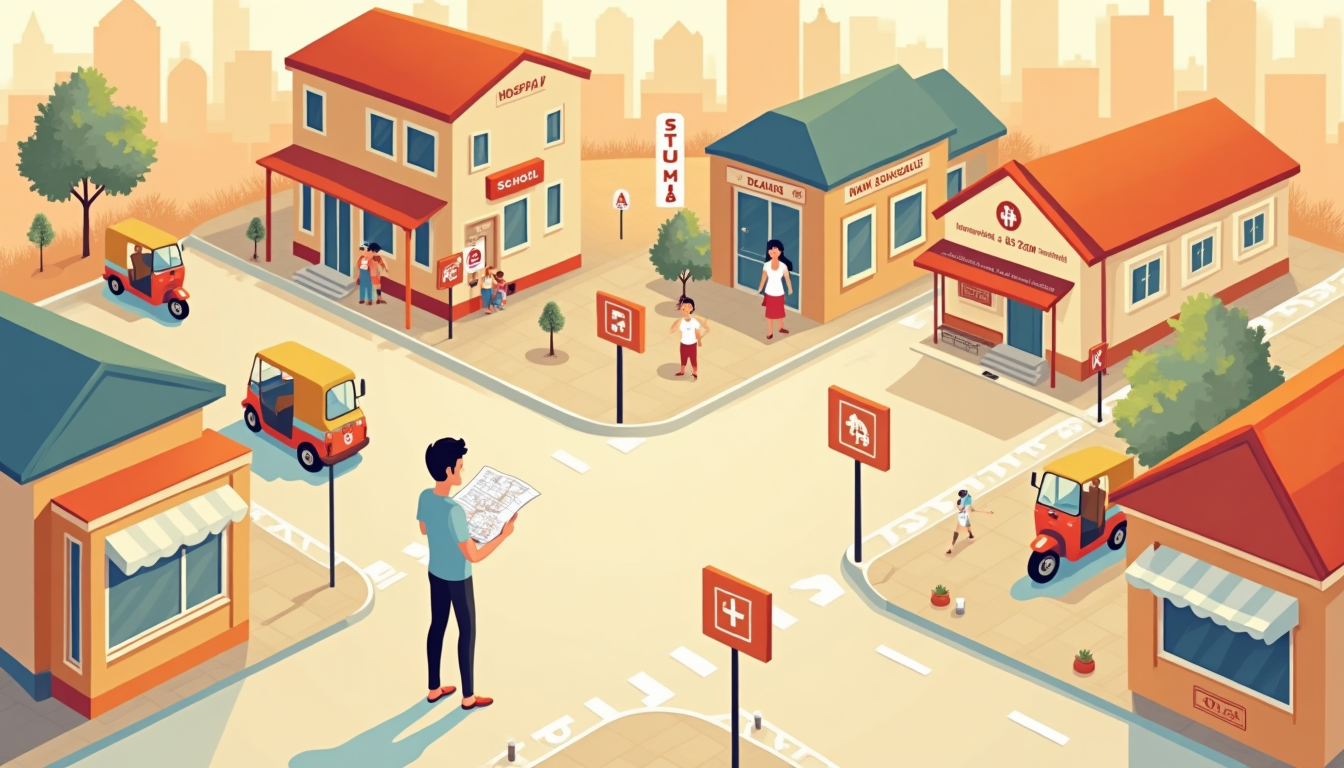
เมื่อคุณอยู่ในเมืองใหม่ คุณต้องถามทางและเข้าใจคำตอบ สัปดาห์นี้เราเรียนรู้คำสั่ง (Imperatives) เช่น "Go straight," "Turn left," "Stop here" และ Prepositions of place เช่น "near the station," "on the street," "at the bus stop" Imperatives คือประโยคคำสั่งที่ไม่มีประธาน — ขึ้นต้นด้วยกริยาเลย เช่น "Go!" "Turn!" "Stop!"
🇬🇧 English
When you are in a new city, you need to ask for directions and understand answers. This week, we learn imperatives (commands) like "Go straight," "Turn left," "Stop here," and prepositions of place: "near the station," "on the street," "at the bus stop." Imperatives start with the verb — no subject: "Go!" "Turn!" "Stop!"
🤩 Fun Facts — ข้อเท็จจริงน่ารู้
🔹 In Thailand, people often say "go straight and turn left at the 7-Eleven."
ในประเทศไทย คนมักบอกว่า "ตรงไปเลี้ยวซ้ายที่ 7-Eleven"
🔹 Bangkok has the BTS (Skytrain) and MRT (subway) — both use English announcements.
กรุงเทพมี BTS และ MRT — ทั้งคู่ใช้ประกาศภาษาอังกฤษ
🔹 Thai taxis are famous for their colorful decorations!
แท็กซี่ไทยมีชื่อเสียงเรื่องการตกแต่งที่สีสันสดใส!
🔹 "Right" in English means both "correct" and "the direction opposite of left."
"Right" ในภาษาอังกฤษแปลได้ทั้ง "ถูกต้อง" และ "ขวา"
🧪 Quick Check — ตรวจสอบด่วน
Test your understanding — ทดสอบความเข้าใจ
What is "go" in Thai?
"go" แปลว่าอะไร?
Which is the definition of "turn"?
คำนิยามของ "turn" คือข้อใด?
Which grammar topic are we studying this week?
เราเรียนหัวข้อไวยากรณ์อะไรสัปดาห์นี้?
📚 คำศัพท์สำคัญ
Key Vocabulary
🧪 Quick Check — ตรวจสอบด่วน
Test your understanding — ทดสอบความเข้าใจ
What does "straight" mean?
"straight" หมายถึงอะไร?
"stop" in Thai is:
"stop" ภาษาไทยคือ:
Which word means: "A place where buses or trains stop...."?
คำใดหมายถึง: "A place where buses or trains stop...."?
📖 ไวยากรณ์: Imperatives + Prepositions of place
Grammar Focus
📖 Grammar Focus: Imperatives + Prepositions of place
Go straight. (ตรงไป)
Turn left at the station. (เลี้ยวซ้ายที่สถานี)
Don't turn right. (อย่าเลี้ยวขวา)
Don't stop here. (อย่าหยุดที่นี่)
The bus stop is near the office. (ป้ายรถเมล์ใกล้ออฟฟิศ)
The station is on this street. (สถานีอยู่บนถนนนี้)
three (สาม) ≠ tree (ต้นไม้) — กัดลิ้นสำหรับ /θ/
Straight — ตัว "gh" ไม่ออกเสียง! พูดว่า /streɪt/
🚀 บทเรียนทีละขั้น
Step-by-Step Practice
1Learn Direction Words — เรียนรู้คำบอกทิศทาง
2Give Directions — บอกทาง
3Ask for Directions — ถามทาง
4Take a Taxi — ขึ้นแท็กซี่
🌎 การใช้งานจริง
Real World Application
💼 In Real Life — ในชีวิตจริง
When international visitors come to Thailand, they ask for directions in English. Being able to say "Go straight and turn left. The BTS station is near here" is very helpful.
เมื่อนักท่องเที่ยวต่างชาติมาประเทศไทย เขาถามทางเป็นภาษาอังกฤษ การพูดได้ว่า "Go straight and turn left. The BTS station is near here" มีประโยชน์มาก
🧪 Quick Check — ตรวจสอบด่วน
Test your understanding — ทดสอบความเข้าใจ
Which sentence correctly uses Imperatives + Prepositions of place?
ประโยคใดใช้ Imperatives + Prepositions of place ถูกต้อง?
What is the Thai meaning of "taxi"?
"taxi" แปลว่าอะไร?
In everyday life, directions & transportation is important because:
ในชีวิตประจำวัน ทิศทางและการเดินทาง สำคัญเพราะ:
📝 การบ้าน
Homework
วาดแผนที่ง่ายๆ และเขียนทางจากบ้านไปที่ทำงาน/โรงเรียน
เขียน 5 ประโยคคำสั่ง: "Go...", "Turn...", "Stop...", "Don't..."
ฝึกถาม: "Where is the...?" "Is it near/far?" — 5 คำถาม
ฝึก /θ/: three, think, thank, this, that — พูดแต่ละคำ 5 ครั้ง
🎉 ยินดีด้วย! / Congratulations!
คุณจบบทเรียนสัปดาห์ที่ 9 แล้ว!
You have completed Week 9: Directions & Transportation! Keep learning! ไปต่อกันเลย!