药理学
药代动力学 (Pharmacokinetics)
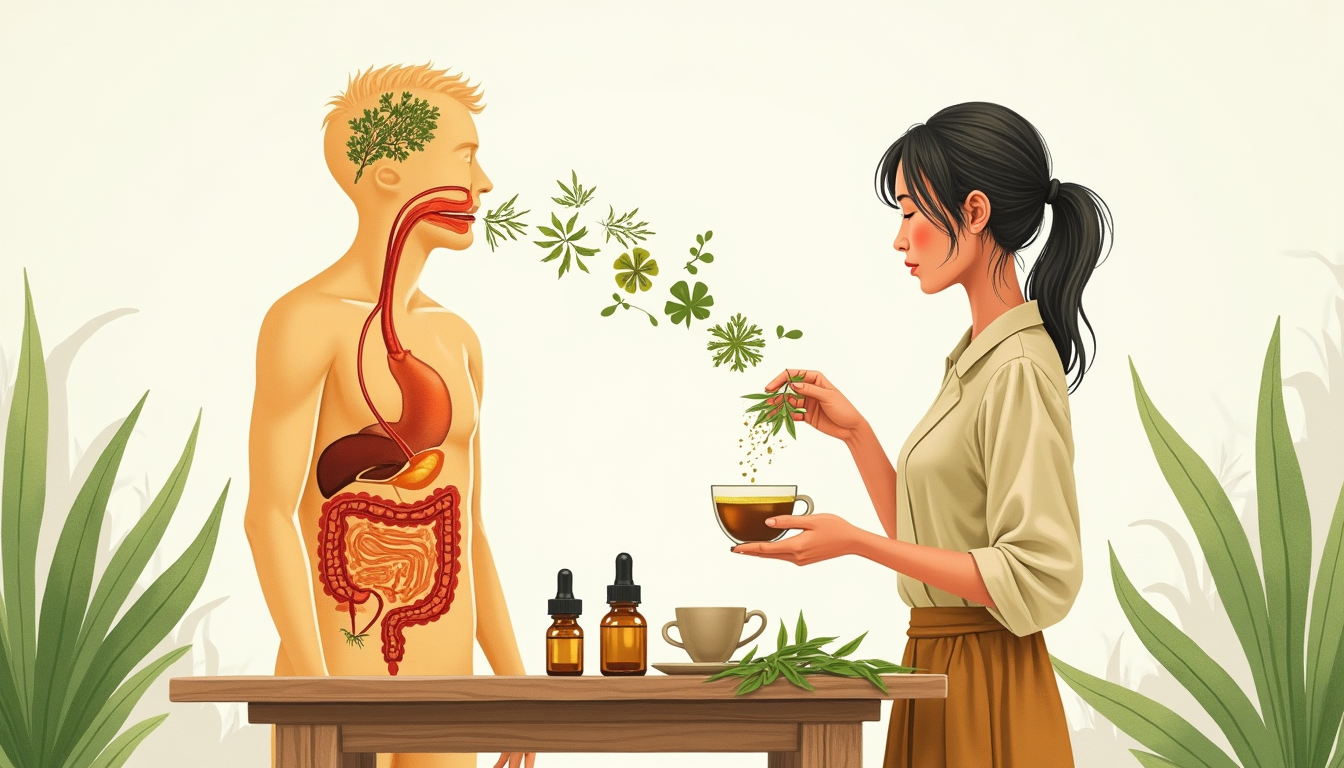
Pharmacokinetics studies factors modifying drug effects: administration, absorption, distribution, biotransformation, and elimination. Oral administration is the most common route but subjects constituents to first-pass hepatic metabolism. Liquid forms absorb faster than tablets or capsules. Other routes include inhalation, mucous membranes (sublingual, rectal), and topical application.
药代动力学 (pharmacokinetics) 是一门研究影响药物与草药提取物在体内作用的各种因素的学科。如果说药效学(pharmacodynamics) 感兴趣 "药物对身体有什么作用" 药代动力学会关注 "身体对药物有什么作用" — 即身体如何处理摄入的物质
药代动力学研究的 5 个关键因素包括:
- 给药方式(administration): 给药方法
- 吸收 (absorption): 药物从给药部位进入血液的过程
- 分布 (distribution): 物质从血液流向各种组织
- 生物转化 (biotransformation): 体内物质的化学结构改变
- 排泄 (elimination/excretion): 清除或代谢物从身体中清除
ปัจจัยทั้ง 5 ประการนี้ร่วมกันกำหนดว่าสารสกัดสมุนไพรจะมีความเข้มข้นเท่าใดที่ตำแหน่งออกฤทธิ์ในเวลาใด และนานเท่าใด ซึ่งเป็นสิ่งที่สำคัญอย่างยิ่งต่อประสิทธิผลของการรักษา
Oral administration requires that the drug constituent be soluble and stable in stomach fluid, capable of crossing the intestinal lining, and able to survive first-pass metabolism in the liver. Liquid preparations (teas, tinctures) are absorbed faster than solid forms (tablets, capsules) because they bypass the dissolution step. The rate of gastric emptying and intestinal motility also affect absorption speed.
口服给药 (oral administration) เป็นวิธีที่พบบ่อยที่สุดและสะดวกที่สุดสำหรับการใช้สมุนไพร ยาที่รับประทานทางปากต้องผ่านเงื่อนไขสำคัญหลายประการจึงจะสามารถออกฤทธิ์ได้ ประการแรก สารต้องมีความสามารถในการละลาย (solubility) 和稳定性(stability) 在胃液条件下,其次,物质必须能够穿过肠壁(intestinal lining) 进入血液
第三点,至关重要的是,从消化道吸收的物质将通过门静脉 (portal vein) 进入血液循环之前到达肝脏,这个过程被称为 "首次通过肝脏出现" (first-pass effect) 肝脏会改变部分物质的结构,然后再进入全身循环系统,从而减少有效物质的含量
液体剂型,如草药茶(herbal teas) 及酊剂(tinctures) 比固体剂型药物吸收更快,如片剂 (tablets) 和胶囊 (capsules) 因为它不需要溶解步骤 (dissolution) 之前。此外,胃排空率 (gastric emptying) 以及肠道运动 (intestinal motility) 它还影响吸收速度
Alternative routes bypass first-pass metabolism. Inhalation through the lungs provides rapid absorption due to the large surface area and thin alveolar membrane. Mucous membrane routes include buccal (cheek), sublingual (under tongue), nasal, rectal, and transdermal absorption. Topical application carries some risk of hypersensitivity but is generally safe with herbal preparations.
除了口服外,还有其他给药途径可以避免初次肝脏代谢(first-pass effect) 这些途径特别重要,当需要快速起效的药物或药物被消化系统破坏时
吸入 (inhalation): 肺具有很大的表面积和肺泡膜(alveolar membrane) 渗透性高,导致快速吸收。挥发性物质(volatile substances) 来自草药,如精油(essential oils) 可以通过肺部在几秒钟内被吸收进入血液
粘膜mucous membranes): 有多种途径,包括通过颊粘膜吸收(buccal) 舌下吸收 (sublingual) 可以避免初次肝脏代谢,因为口腔血液流入口咽静脉 (]jugular vein) 不直接通过肝门静脉,此外还有鼻腔途径 (nasal) 经直肠给药(rectal) 适用于恶心呕吐和皮肤吸收的患者(transdermal) 可以持续稳定地提供药物
外用 (topical application): 将草药涂抹在皮肤上存在过敏反应的风险(hypersensitivity) อยู่บ้าง ซึ่งหมายถึงปฏิกิริยาแพ้ที่ผิวหนัง อย่างไรก็ตาม สมุนไพรส่วนใหญ่มีความปลอดภัยในการใช้ภายนอกมากกว่ายาสังเคราะห์ โดยเฉพาะเมื่อเป็นการใช้ครีม ขี้ผึ้ง หรือน้ำมันหมักจากสมุนไพร
Once absorbed into the bloodstream, a drug distributes throughout the body. Only a small proportion of the total drug reaches the specific receptor site at any given time. Wide distribution throughout body tissues is responsible for many side effects, as the drug interacts with receptors in organs other than the target. This is a fundamental challenge of pharmacotherapy.
当草药提取物或药物被吸收进入血液后,它会被分布(distributed) 通过血液循环系统分布全身。然而,只有一小部分到达受体位置(receptor site) 所需在特定时间,大部分药物会扩散至身体各组织
这种广泛分布是副作用的重要原因 (side effects) 由于药物与非靶器官中的受体相互作用,这是药物治疗的基本挑战(pharmacotherapy) 导致药物治疗无法完全针对所需部位
ในกรณีของสมุนไพร สารประกอบหลากหลายชนิดในพืชอาจช่วยบรรเทาปัญหานี้ได้บ้าง เนื่องจากสารบางชนิดอาจช่วยปรับเปลี่ยนหรือลดผลข้างเคียงของสารอื่นๆ ในสูตรตำรับเดียวกัน ซึ่งเป็นข้อได้เปรียบหนึ่งของการใช้สมุนไพรทั้งต้น (whole herb) 与单一纯化物质相比
生物利用度和生物转化 (Bioavailability & Biotransformation)
Bioavailability is the percentage of an administered drug that reaches systemic circulation in its active form. Multiple dosing is used to achieve a constant serum level. Lipid solubility is a key factor determining how well a drug crosses cell membranes. The lipid bilayer of cell membranes controls all drug transport via passive diffusion, protein channels, and mediated transport mechanisms.
生物利用度 (bioavailability) 指的是进入血液循环系统的药物的百分比(systemic circulation) ในรูปแบบที่ยังคงออกฤทธิ์ได้ ตัวอย่างเช่น หากรับประทานสมุนไพร 100 มิลลิกรัม แต่มีเพียง 30 มิลลิกรัมที่ผ่านเข้าสู่กระแสเลือดในรูปที่ออกฤทธิ์ได้ ชีวปริมาณออกฤทธิ์จะเท่ากับ 30%
在实践中,多次给药(multiple dosing) 是一种用于获得血清中药物水平的方法(serum level) 稳定一致,在适当的时间间隔重复给药,以维持血液中药物浓度在有效范围内therapeutic range) 整个治疗期间
脂溶性(lipid solubility) 是决定药物穿透细胞膜好坏的关键因素 细胞膜主要由双层脂肪构成(lipid bilayer) 因此,脂溶性物质更容易穿过细胞膜,而水溶性物质(water-soluble) 可能需要特殊的转运机制
Cell membranes consist of a lipid bilayer containing membrane lipids, proteins, and carbohydrates. Transport across membranes occurs through three main mechanisms: passive diffusion (movement down concentration gradient, no energy required), protein channels (allow passage of specific ions like Na+, K+, Ca++), and mediated transport (carrier-facilitated movement that can work against concentration gradients).
细胞膜cell membrane) 包含双层脂质 (lipid bilayer) 是控制细胞膜内外物质进出的主要结构,还包含 3 种重要成分,包括膜脂 (membrane lipids) Protein (proteins) 具有多种功能和碳水化合物(carbohydrates) 位于细胞表面
物质通过细胞膜的运输有 3 个主要机制:
- 被动扩散 (passive diffusion): 物质从高浓度区域移动到低浓度区域(根据浓度梯度 — concentration gradient) 无需能量,这种机制是大多数药物穿过细胞膜的主要方式
- 蛋白质通道protein channels): 是蛋白质,它在细胞膜上形成通道,允许特定的离子通过,如钠(Na+) 钾K+) 及钙(Ca++) 这些通道具有高度特异性,可以根据信号打开和关闭
- 载体转运(mediated transport): 使用载蛋白(carrier protein) 帮助物质穿过细胞膜。这一机制能够逆浓度梯度转运物质(against concentration gradient) 但需要能量 (active transport)
Biological barriers protect sensitive organs. The blood-brain barrier blocks most proteins and water-soluble drugs but allows lipid-soluble molecules to pass; it is less developed in children, making them more vulnerable to neurotoxins. The blood-testis barrier protects developing sperm. The placental barrier is the leakiest of all — it poorly blocks chemicals, making drug use during pregnancy particularly risky.
身体有生物屏障 (biological barriers) 以保护重要而敏感的器官。最重要的屏障如下:
血脑屏障(blood-brain barrier): 此步骤防止大分子蛋白和水溶性药物 (water-soluble) 主要进入大脑,但脂溶性物质(lipid-soluble) 可以穿透。重要的观察是儿童的血脑屏障children) 尚未发育完全,使儿童面对神经毒素的风险更高(neurotoxins) 这就是为什么在儿童使用某些草药时需要特别谨慎的原因
血睾屏障(blood-testis barrier): 该屏障保护正在发育的精子(developing sperm) 从血液中的化学物质和毒素中,以维持为产生精子创造的合适环境
Placenta barrier (placental barrier): 作为屏障 "漏" 最多 (the leakiest) ในบรรดาด่านกั้นทางชีวภาพทั้งหมด กั้นรกมีความสามารถในการกรองสารเคมีออกได้ไม่ดีนัก หมายความว่ายาและสารเคมีส่วนใหญ่สามารถผ่านรกเข้าถึงทารกในครรภ์ได้ ด้วยเหตุนี้ การใช้ยาและสมุนไพรในระหว่างตั้งครรภ์จึงต้องระมัดระวังเป็นอย่างยิ่ง เพราะสิ่งที่แม่รับประทานเข้าไปมีโอกาสสูงที่จะส่งผลกระทบต่อทารกในครรภ์ด้วย
Biotransformation is the structural modification of a chemical compound by enzymes, occurring mainly in the liver. Phase I reactions (oxidation, reduction, hydrolysis) add or expose functional groups on the drug molecule, making it more reactive. Phase II reactions (conjugation) attach water-soluble groups to the drug, increasing its polarity and facilitating excretion through the kidneys. Some drugs require both phases before elimination.
生物转化 (biotransformation) 是体内酶对化学物质进行结构性变化的過程。这个過程主要发生在肝脏(liver) 是药物转化的主要器官,通常分为 2 个阶段:
第一相反应 (Phase I reactions): 包含氧化反应(oxidation) 还原 (reduction) 和水解 (hydrolysis) 这些反应的目的是增加或暴露功能基团 (functional groups) 在药物分子上,使分子反应性更高(more reactive) 增加的功能基团可能是羟基(-OH) 羧基(-COOH) 或氨基(-NH2) 这将是第二阶段反应的结合点
第二相反应 (Phase II reactions): 是一种连接反应(conjugation) 增加水溶性基团 (water-soluble groups) 与药物分子结合,如葡萄糖醛酸 (glucuronic acid) Sulfate (sulfate) 或谷胱甘肽(glutathione) 这种连接增加了极性(polarity) 的分子,使其更易溶于水并能通过肾脏轻松排出
ยาบางชนิดต้องผ่านทั้งสองระยะก่อนที่จะถูกขับออกจากร่างกายได้ ในขณะที่บางชนิดอาจผ่านเพียงระยะเดียว ขึ้นอยู่กับโครงสร้างทางเคมีเดิมของสาร กระบวนการเปลี่ยนแปลงทางชีวภาพนี้อาจทำให้ยามีฤทธิ์ลดลง (inactivation) 或在某些情况下可能会增强效力(bioactivation) 正如…的情况 prodrugs 必须首先改变才能发挥作用
The cytochrome P450 enzyme system is the most important group of enzymes for drug metabolism. Three main families — CYP1, CYP2, and CYP3 — handle the biotransformation of most drugs and herbal constituents. These enzymes can be induced (increased activity) or inhibited (decreased activity) by various substances. Binding can be reversible or irreversible, with irreversible binding permanently disabling the enzyme.
细胞色素酶系统 P450 (cytochrome P450) 是药物转化的最重要的一组酶(drug metabolism) 在人体内,名称 "P450" 来源于对 450 纳米波长光的吸收特性。这种酶群主要存在于肝脏,但也存在于其他器官。
3个主要家族负责大部分药物的转化,包括:
- CYP1: 与致癌物质的改变有关(carcinogens) 和某些药物
- CYP2: 是最大的家族,有许多亚家族,如 CYP2D6, CYP2C9 改变多种药物
- CYP3: 尤其是 CYP3A4 改变了超过50%的临床使用的药物
这些酶可以被诱导(induced) 是增强作用还是被抑制(inhibited) คือลดการทำงาน โดยสารต่างๆ รวมถึงสารสกัดจากสมุนไพร การเหนี่ยวนำทำให้ยาถูกเปลี่ยนแปลงเร็วขึ้น (ออกฤทธิ์สั้นลง) ในขณะที่การยับยั้งทำให้ยาถูกเปลี่ยนแปลงช้าลง (ออกฤทธิ์นานขึ้น ความเป็นพิษเพิ่มขึ้น)
物质与酶之间的结合 P450 分为 2 种:可逆结合(reversible binding) 其中酶可以在物质脱落后恢复功能,以及永久结合:irreversible binding) ซึ่งเอนไซม์ถูกทำลายอย่างถาวรและร่างกายต้องสร้างเอนไซม์ใหม่ขึ้นทดแทน สิ่งนี้มีความสำคัญอย่างมากต่อปฏิกิริยาระหว่างสมุนไพรกับยา (herb-drug interactions)
Multiple factors affect drug metabolism rates. Genetic polymorphisms cause individuals to be extensive metabolizers (normal) or poor metabolizers (slow), dramatically affecting drug response. Liver disease reduces metabolic capacity. Age is critical: newborn infants lack cytochrome P450 enzymes for approximately 2 weeks after birth, while elderly patients show decreased hepatic function. Nutritional status — particularly protein, mineral, and vitamin intake — also influences enzyme activity.
每个人体内的药物代谢速率不同,有许多因素对之产生显著影响:
遗传多样性 (genetic polymorphisms): 控制酶生成的基因 P450 存在个体差异,导致人群可分为组,例如 "快速药物代谢者" (extensive metabolizers) 这会改变药物的正常速率与 "慢代谢酶" (poor metabolizers) ซึ่งเปลี่ยนแปลงยาได้ช้ากว่าปกติ ความแตกต่างนี้ส่งผลอย่างมากต่อการตอบสนองต่อยา ผู้ที่เปลี่ยนแปลงยาช้าอาจมีระดับยาในเลือดสูงกว่าคาด ทำให้เกิดผลข้างเคียงได้
病理生理 (pathology): Liver disease (liver disease) ทั้งแบบเฉียบพลันและเรื้อรัง ส่งผลโดยตรงต่อความสามารถของตับในการเปลี่ยนแปลงยา ผู้ป่วยที่มีโรคตับอาจต้องลดขนาดยาลงเนื่องจากตับไม่สามารถเปลี่ยนแปลงยาได้อย่างมีประสิทธิภาพ
年龄 (age): 是一个至关重要的因素,新生儿(newborn infants) 还没有细胞色素酶 P450 在最初约2周内发挥最大作用,使婴儿对药物和化学物质非常敏感。相反,老年人(elderly) 肝功能下降 (decreased hepatic function) 减慢药物的改变,可能需要调整剂量以适应
营养状态 (nutritional status): 食物在药物代谢酶的功能中起着重要作用,尤其是:
- Protein (protein): 对于酶的生成是必要的 P450 蛋白质缺乏的人酶会减少
- 矿物质minerals): 铁(iron) 是酶的重要组成部分 P450 其他元素,如锌 (zinc) 和镁 (magnesium) 对于酶的功能至关重要
- 维生素vitamins): 多种维生素充当辅因子 (cofactors) 酶改变药物
Excretion removes drugs from the body, primarily through the kidneys via glomerular filtration and renal tubular mechanisms. Biliary excretion via the enterohepatic cycle can prolong drug effects: drugs excreted in bile may be reabsorbed from the intestine and recirculated. Minor excretion routes include sweat, saliva, tears, and breast milk — the latter being clinically important for nursing mothers. Tachyphylaxis (rapidly decreasing response) and desensitization can occur with repeated dosing.
排泄 (excretion) 这是药代动力学的最后阶段,身体将药物或药物代谢产物排出体外。主要的排泄途径如下:
肾 (kidneys) — 主要途径: 肾脏是药物排出体的主要器官,这个过程是通过球状滤泡进行的(glomerular filtration) 血液通过肾脏的球泡体过滤,足够小的物质会被初步过滤到尿液中,然后是肾小管(renal tubules) 会吸收某些物质返回 (reabsorption) 和排出一些额外的物质(secretion) 进入尿液
经胆汁排泄(biliary excretion) 以及肝-肠循环 (enterohepatic cycle): 某些药物通过胆汁从肝脏排出(bile) เข้าสู่ลำไส้ อย่างไรก็ตาม สารเหล่านี้อาจถูกดูดซึมกลับจากลำไส้เข้าสู่กระแสเลือดและกลับไปที่ตับอีกครั้ง เกิดเป็นวงจรที่เรียกว่า enterohepatic cycle 这个环路可以大大延长药物的作用时间,因为药物在体内反复循环
二级途径: 身体还可以通过其他途径以少量排出药物,包括:
- Sweat (sweat): 某些药物通过汗腺排出
- Saliva (saliva): 在某些情况下,可以测量血液中的药物水平
- 眼泪(tears): 非常少量,但可能对某些药物很重要
- 乳汁breast milk): เป็นเส้นทางที่มีความสำคัญทางคลินิกอย่างมาก เนื่องจากยาที่ขับผ่านน้ำนมจะส่งผลกระทบต่อทารกที่กินนมแม่ มารดาที่ให้นมบุตรจึงต้องระมัดระวังในการใช้ยาและสมุนไพร
药物耐药性(tachyphylaxis): 是一种现象,药物反应在短时间内重复给药时迅速下降。这种机制与脱敏不同(desensitization) ซึ่งเป็นการลดลงของการตอบสนองอย่างค่อยเป็นค่อยไปเมื่อใช้ยาเป็นระยะเวลานาน ทั้งสองปรากฏการณ์นี้มีความสำคัญในการวางแผนการรักษาด้วยสมุนไพรระยะยาว เนื่องจากอาจจำเป็นต้องปรับขนาดยาหรือหมุนเวียนสมุนไพรที่ใช้